
KOHIMA, SEP 29 (NPN): Chief Secretary Sentiyanger Imchen on Tuesday called upon village authorities to uphold transparency, accountability, fairness and public interest in the discharge of their responsibilities.
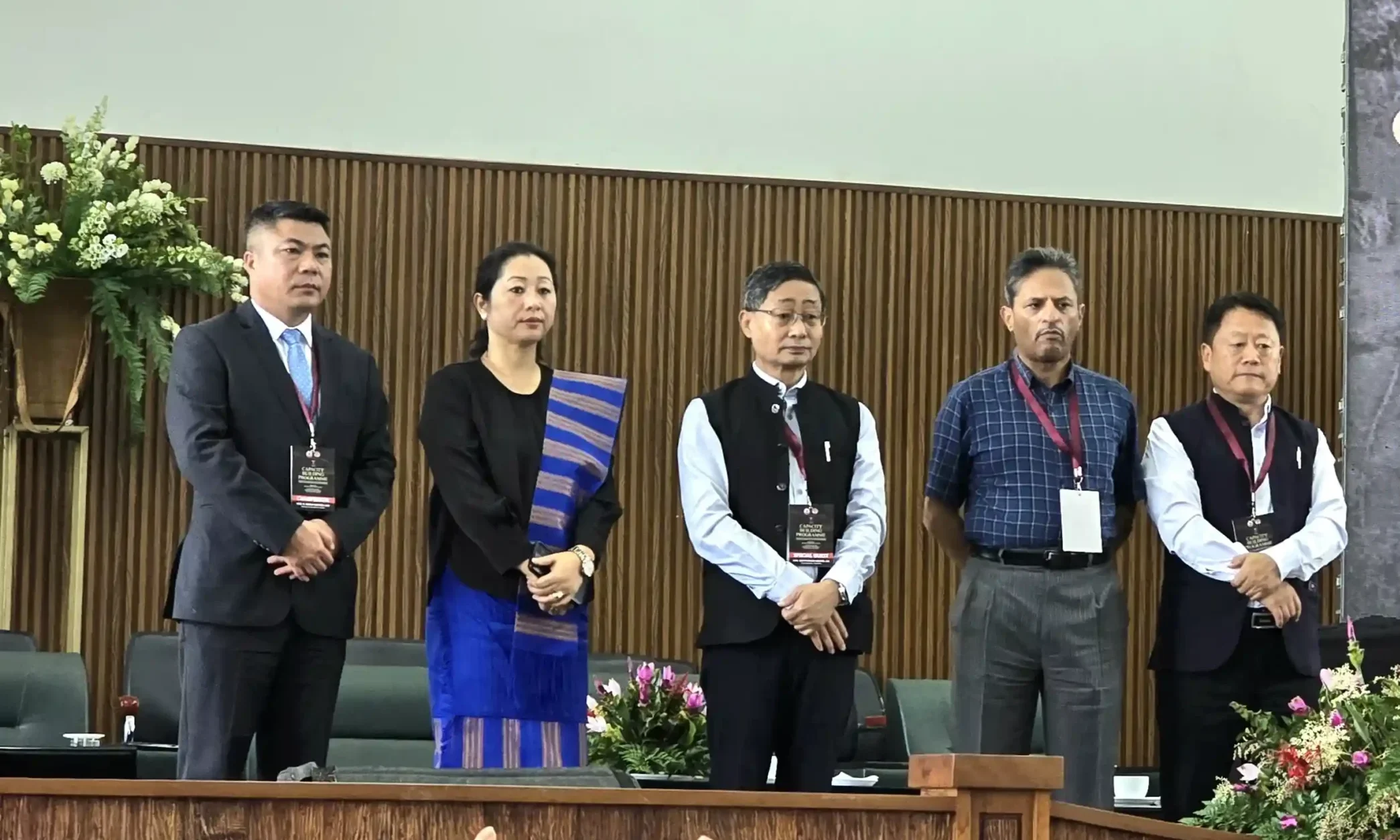
He was speaking at the capacity building programme for Village Level Functionaries in Kohima district, held at the Kohima Village Multi Purpose Building, organised by the District Administration, Kohima, in collaboration with the Department of Tribal Affairs, Government of Nagaland.
The programme aimed to familiarise newly constituted Village Councils and other village functionaries with important laws, rules, government schemes and guidelines relevant to their responsibilities.
Delivering the keynote address, Imchen said Nagaland’s governance system comprised three tiers-State, district and village-with the latter represented by village councils. He noted that Nagaland had a long tradition of self governance based on community decision making and customary institutions, which continued to provide a strong foundation for social cohesion and local governance.
He said the governance landscape was evolving rapidly, with village institutions facing increasingly complex responsibilities as government programmes expanded, financial systems became more structured, service delivery moved towards digital platforms, and environmental and development issues assumed greater importance. He emphasised the need to blend traditional and modern systems of governance to ensure progressive and effective administration.
Imchen said the programme covered four important areas-statutory laws and village administration; decentralised planning, development and communitisation; social security and digital platforms; and environmental protection and land laws. He also stressed the importance of disaster management, noting that unforeseen events in recent years had resulted in loss of lives.
Highlighting village level governance, Imchen said the State had 1,338 recognised villages, and for most people, governance was experienced not at the State capital or district headquarters but in their villages-through water, sanitation, roads, livelihoods, healthcare, social welfare, education, employment and law and order.
He stressed that village authorities must exercise their powers with fairness, transparency, wisdom and in the larger public interest.
On development planning, he said village development plans should be decided collectively by all adults in the village as envisaged under the VDB rules.
He questioned how many villages were holding annual meetings to decide their plans responsibly. He underscored the importance of financial management, proper record keeping and timely audits, noting that the absence of audited accounts had led to forfeiture of Finance Commission funds for about three years.
Imchen also urged village councils and Gaon Burahs to act as a bridge between the government and the people by disseminating information about schemes such as CMHIS, Ayushman Bharat PMJAY and CMLIS, and facilitating access for eligible households.
He cautioned that verification and certification of documents such as Scheduled Tribe, Indigenous Inhabitant and Permanent Residential Certificates must be based on facts and due procedure, not influence or pressure.
Referring to Article 371(A), he said land and resources in Nagaland carried deep social and cultural significance and must be handled with care, transparency and proper documentation, while balancing traditional rights with development needs. He also stressed the importance of environmental protection, citing waste, plastic pollution and degradation of water sources as pressing issues requiring village level enforcement of rules.
Imchen reminded village authorities to understand the limits of their powers and follow due processes rather than issue ultimatums to government officials. He said instances of Gaon Burah unions opposing government decisions had come to the Cabinet’s notice and were taken seriously.
Chairing the programme, Deputy Commissioner Kohima B. Henok Buchem, said village functionaries were the closest link between the government and the people and played a vital role in ensuring that schemes reached genuine beneficiaries. He informed that presentations by resource persons had been compiled into a book for distribution to villages, while important Acts and rules translated into Tenyidie were also provided.
The programme included a prayer of blessings by Rev. Keviyiekielie Linyü, former executive director, ABCC, and pastor of Ebenezer Baptist Church, Kohima. Short speeches were also delivered by DGP Nagaland Rupin Sharma, and Commissioner Nagaland Gregory Thejawelie.
CS urges village councils to uphold transparency, accountability
Correspondent