
KOHIMA, SEP 29 (NPN): Minister for Women Resource Development and Horticulture, Salhoutuonuo Kruse, has called for greater flexibility in the implementation of the Mission for Integrated Development of Horticulture (MIDH) to address the specific geographical, agro climatic and socio economic needs of the North Eastern states.
Addressing the two day National Conference on Agriculture for Rabi Campaign 2026, held on September 28-29 at Bharat Ratna C. Subramaniam Auditorium, NASC Complex, PUSA, New Delhi, Salhoutuonuo thanked the Ministry of Agriculture and Farmers Welfare for organising the conference and providing states an opportunity to share their experiences and concerns. She also expressed gratitude for the Ministry’s continued support to Nagaland, particularly in developing the horticulture sector through MIDH.
Salhoutuonuo said horticulture plays an important role in the livelihoods of the people and highlighted the North Eastern region’s potential due to its diverse agro climatic conditions, rich biodiversity, favourable climate and traditional farming knowledge. She noted that the region has considerable scope for producing fruits, vegetables, spices and other high value horticultural crops.
For Nagaland, she said horticulture offers opportunities to diversify livelihoods and improve farmers’ income, particularly through indigenous products such as Naga King Chilli, Naga Tree Tomato and Naga Cucumber, which could be further developed through production, processing, branding and market support.
She also highlighted the potential for organic and natural horticulture, processing and value addition in crops such as pineapple, kiwi, passion fruit, ginger, turmeric and vegetables. However, she pointed out that difficult terrain, scattered settlements, inadequate connectivity, high transportation costs and limited storage and cold chain infrastructure remain major challenges.
Salhoutuonuo stressed the need to strengthen the entire horticulture value chain, from quality planting materials and production to aggregation, post harvest management, processing, value addition, branding, marketing and exports. She emphasised greater support for irrigation, water management, nurseries, mother blocks, protected cultivation, cold chain infrastructure, transportation and market linkages.
Highlighting the importance of indigenous and GI tagged products, she said geographical identity and regional branding could help commercialise unique local produce. However, she cautioned that GI registration must be supported by quality planting materials, processing, packaging, branding, market promotion and access to ensure farmers benefit.
She further noted that climate change was affecting crop calendars, water availability, pest and disease incidence and productivity. To address these challenges, she called for promotion of protected cultivation, climate resilient varieties, water conservation, integrated pest and disease management, soil health management and other climate smart technologies.
On MIDH implementation, Salhoutuonuo said uniform cost norms, admissible components and implementation models may not adequately reflect the actual requirements of farmers in the North Eastern states.
She called for greater flexibility in reallocating funds among admissible components based on field requirements, as well as in selecting crops and varieties according to local suitability, market demand and emerging opportunities.
She expressed confidence that with appropriate support and greater flexibility under MIDH, the North Eastern region could better harness its horticultural potential, create employment, reduce post harvest losses and improve farmers’ income. Reaffirming the Nagaland government’s commitment, she thanked the Union Minister and the Ministry of Agriculture and Farmers Welfare for their continued support and cooperation.
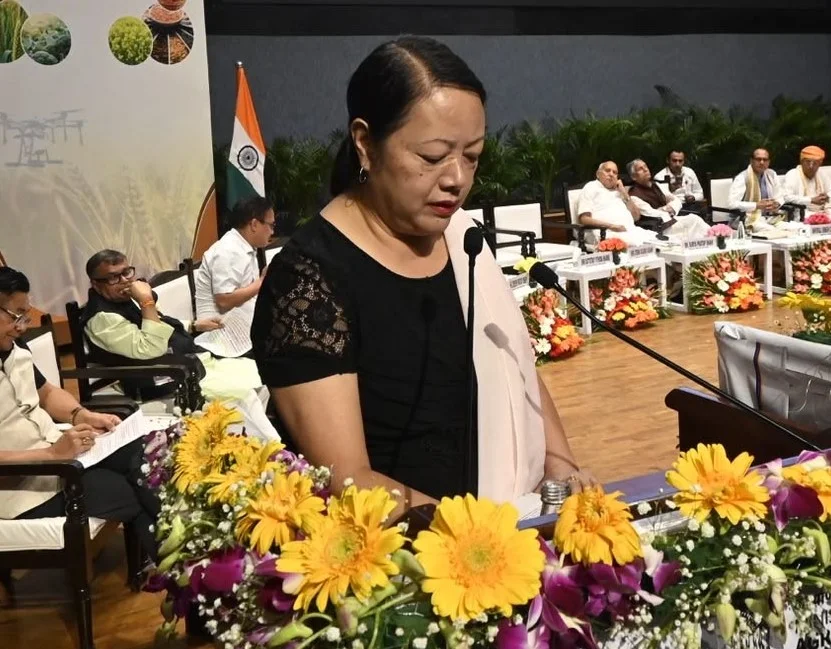
Kruse calls for flexibility in MIDH
Correspondent