
Correspondent
KOHIMA, OCT 9 (NPN): Department of School Education, Nagaland is exploring long term partnerships with international organisations and corporate stakeholders to strengthen the state’s school education system, with discussions focusing on digital infrastructure, inclusive education, vocational training, learning outcomes and sustainable financing.
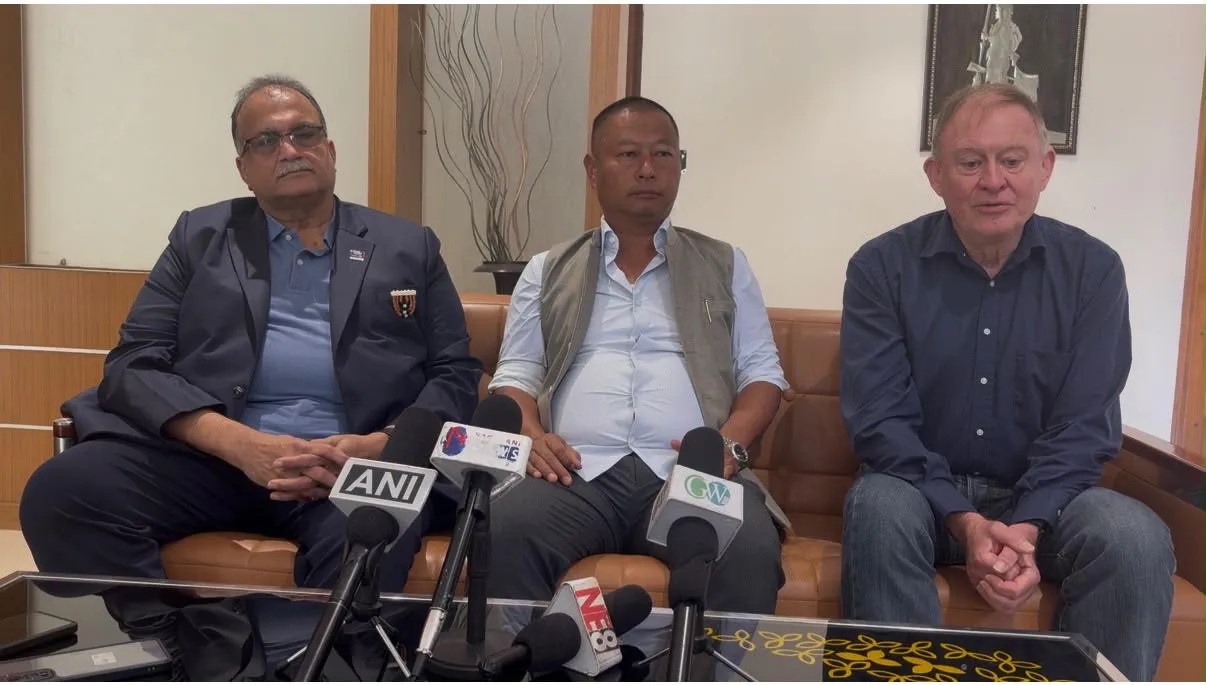
Addressing a press conference at Hotel Vivor, Kohima, advisor for School Education Kekhrielhoulie Yhome said a delegation from Germany, along with corporate representatives and businesspersons from Mumbai, had been in Nagaland since October 5 for a series of engagements with the department.
The discussions culminated in departmental meetings and closed door deliberations, during which the delegation gained insights into Nagaland’s education ecosystem and identified areas requiring targeted interventions. Yhome said the initiative aimed to move beyond conventional state level measures by drawing on external expertise, knowledge sharing and strategic partnerships to improve education quality.
Key areas of discussion included strengthening classroom digital infrastructure, early childhood care, vocational education, teacher support and interventions to improve learning outcomes. The department has also undertaken a gap analysis and examined global education models that could be adapted to Nagaland’s context.
Acknowledging challenges posed by limited resources and lack of adequate knowledge partners, Yhome said collaboration with external stakeholders could help introduce high quality interventions that might otherwise be difficult to implement independently.
He added that the delegation’s international networks could help bring additional partners on board, expanding opportunities for technical expertise, institutional collaboration and financing.
On sustainable financing, Yhome stressed the need for efficient utilisation of resources and explored alternative approaches, including blended finance. He said the department was open to examining corporate financial models while ensuring that proposed interventions strengthened public schools over the long term.
Rotary Club of Queen’s Necklace, Mumbai president Nikunj Jhaveri said the partnership would focus on developing a long term roadmap to improve learning outcomes and create opportunities for children to contribute to Nagaland’s future. He emphasised that meaningful transformation required sustained commitment, mentioning, “This cannot be solved in one year. This is going to be a five year plan at the minimum.”
Jhaveri said Rotary would contribute not only through funding but also by connecting Nagaland with corporate organisations and institutions capable of supporting educational development. The initiative would combine domestic and international philanthropic support through a joint effort involving Childaid Network and Rotary, with Nagaland identified as a key focus area in the Northeast.
Dr. Martin Kasper of Childaid Network Foundation said the organisation’s engagement aimed to support Naga children in accessing quality education and preparing for 21st century challenges. He informed that Childaid Network is currently working across around 1,500 project locations in the region, and the visit to Nagaland was intended to explore ways to contribute more directly to children’s educational development in the state. He said Childaid Network, which spends around two to three million euros annually on education, intended to work closely with the state government to strengthen government schools rather than establish parallel systems.
Kasper highlighted project based learning as a proposed intervention to encourage active participation and practical understanding among students. He said the collaboration would combine international experience with locally relevant expertise, leveraging digital platforms to reach remote schools.
He further envisioned opportunities for Naga youth to work in global markets from within the state, as improved connectivity and infrastructure could attract companies to establish centres in Kohima or Dimapur.
Both Rotary and Childaid Network reiterated their commitment to long term engagement, stressing that collective action, sustained monitoring and effective utilisation of resources were essential to improving educational outcomes and creating better opportunities for Nagaland’s next generation.