
MOKOKCHUNG, OCT 25 (NPN): Nüoshi, a traditional Ao delicacy prepared from fermented taro leaves, has emerged as a major source of livelihood for Süngratsü village, with annual production estimated to have a market value of around Rs 1.5 crore.
Also known as Anishi, Nüoshi is prepared from fermented taro (Colocasia esculenta) leaves and has evolved from a cultural heritage food into a thriving agro-based enterprise. Growing demand and profitability have prompted many farmers in Süngratsü to shift from paddy cultivation to taro farming.
Speaking at the Nüoshi Festival organised by the Süngratsü Students’ Union at the village gate on October 24, Süngratsü Village Council chairman S. Bendang Aier said the village produces between 25,000 and 30,000 kg of Nüoshi annually, of which around 20,000 kg enters the market.
With the village council fixing the price at Rs 600 per kg, the product’s annual market value is estimated at approximately Rs 1.5 crore, making it a significant contributor to the village economy. The festival was organised to celebrate and preserve the traditional delicacy, regarded as an important part of Ao cultural heritage.
Tracing its origins, Aier referred to Ao oral traditions from the prehistoric “Tar era”, which recount that the deity Lijaba Tsüngrem gifted the food to the Aos. He said early attempts to consume it caused throat irritation, but repeated experimentation and prolonged cooking over embers helped villagers develop a processing method that removed the discomfort. “We do not claim we discovered it. It is our heritage,” Aier remarked.
While taro has long been a staple ingredient in Ao cuisine, used in curries and soups, its economic significance has increased substantially over the past decade. According to Aier, Süngratsü, once largely dependent on jhum cultivation and paddy farming, has steadily shifted towards taro cultivation because of its higher returns. He pointed out that the village no longer has rice mills, reflecting the change in agricultural practices.
Highlighting the nutritional value of the traditional food, senior professor in the Department of Botany, Nagaland University, Lumami, Prof. Chitta Ranjan Deb, said research had found that Anishi contains 34.19 grams of protein and 12.26 grams of crude fibre per 100 grams, besides exhibiting high antioxidant activity.
He observed that the product could serve as an alternative source of protein, particularly for people following vegan diets.
Deb explained that the traditional processing technique effectively removes compounds responsible for throat irritation. The food is subsequently smoke-dried, enabling it to be stored for several months and, under suitable conditions, up to two years without chemical preservatives.
He, however, stressed the need to maintain food safety and hygiene standards as production expands. Measures suggested included using potable water, improving hygiene during handling and processing, wearing gloves and adopting hygienic solar dryers. The festival also highlighted efforts to position Nüoshi as a driver of tourism, entrepreneurship and cultural preservation.
Deputy Director of Agriculture, Kohima, Amongla C, proposed developing Süngratsü village and the Asetkong range into hubs for sustainable tourism, ecotourism, agro-enterprise and cultural experiences.
Amongla also advocated securing a Geographical Indication (GI) tag for Süngratsü Nüoshi, improving packaging and shelf life, and promoting culinary tourism through tasting trails and master classes. She said such initiatives could strengthen rural livelihoods while preserving local traditions and knowledge systems.
Calling for a collaborative approach, she urged government departments, development agencies, researchers, scholars, corporate social responsibility (CSR) initiatives and private stakeholders to work together to realise the vision.
District Agriculture Officer, Mokokchung, Dr. Lanunochetla, emphasised that long-term success would depend on sustained community participation. She identified marketing, branding, storage, packaging and pricing as key areas requiring attention.
SDO (Civil), Mokokchung, Temsuchuba also underscored Nüoshi’s potential to contribute to sustainable development and economic growth in the region.
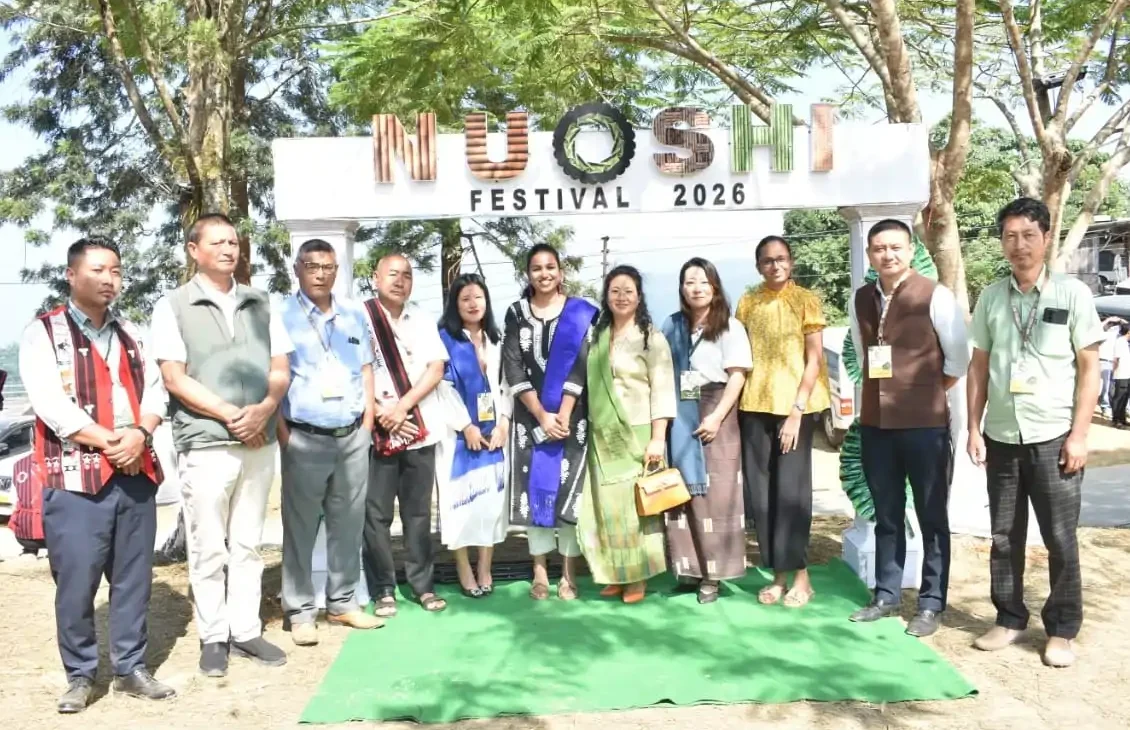
Süngratsü’s Nüoshi set to generate Rs 1.5 cr annually
Correspondent