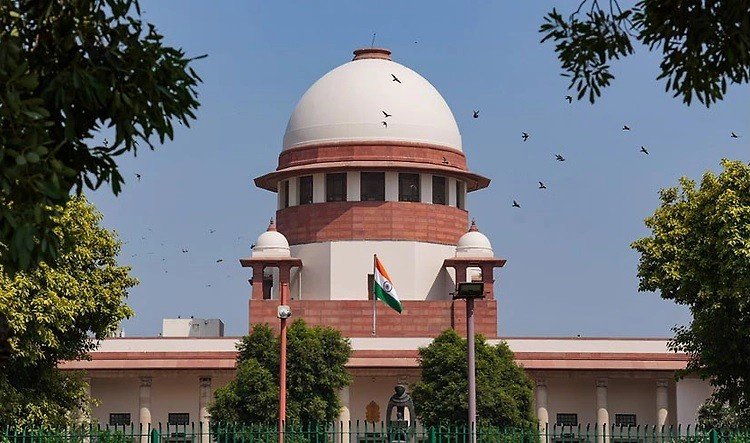
NEW DELHI, OCT 27 (PTI): The Supreme Court on Tuesday came down heavily on the Centre over exorbitant hospital charges and medicine pricing, questioning whether healthcare institutions could justify steep costs in the name of maintaining infrastructure and profitability.
Hearing a plea on high medical expenses, the apex court said, “Hospitals can survive through other means, not through this dacoity”, while expressing concern over the financial burden on patients. It also questioned the commercial approach to healthcare, asking, “Should we have such capitalistic thinking when it comes to patients and life?” whether the government could justify what it termed “loot” and allow manufacturers to “run amok”.
A bench of Justices Vikram Nath and Sandeep Mehta observed that the National Pharmaceutical Pricing Authority (NPPA), established to ensure affordable medicines, appeared to be a “totally defunct” body and questioned why the system seemed to favour pharmaceutical manufacturers.
The court reserved its verdict on two petitions concerning medicine pricing and the need for stricter price controls. During the hearing, Additional Solicitor General Aishwarya Bhati, appearing for the Centre, said the government had decided to cap trade margins on anti-cancer drugs at 30 per cent of the MRP. The bench, however, questioned why a uniform 16 per cent margin could not be applied to all medicines.
Citing an example of a medicine with a PTR of Rs 15 and an MRP of Rs 250, the bench asked what justified such a steep difference. It questioned where the additional amount went and why the entire system appeared to work in favour of manufacturers.
The bench also referred to a case in which a medical distributor’s wife, undergoing cancer treatment, was charged Rs 1.30 lakh for an injection available to the distributor for Rs 11,000.
Bhati submitted that medicine prices in India were among the lowest globally and referred to the Centre’s affidavit stating that competition among pharmaceutical companies helped keep prices low. She also stressed the need for a calibrated approach to regulation.
The bench, however, said patients lacked bargaining power and were forced to pay exorbitant prices. “Don’t weigh patients against commerce,” it told the law officer, questioning whether patients’ lives could be viewed through a capitalist lens. The court also expressed the wish that every medicine be considered a generic medicine.
Questioning why it took the government so long to cap anti-cancer drug trade margins, the bench said the decision appeared to have come only after the court began raising questions.
On October 12, the court had described the Centre’s response on capping anti-cancer drug margins as “hardly anything to be happy about” and questioned why similar controls could not be extended to other medicines. It had also cited a saline drip costing Rs 11 but selling for Rs 270.
One petition seeks measures to prevent alleged unethical overpricing of essential medicines and enforce the Drugs (Prices Control) Order, 2013, to curb disproportionate profits and violations across the supply chain. The other seeks disciplinary action against medical practitioners who do not prescribe generic medicines.