
DIMAPUR, OCT 28 (NPN): Nagaland on Wednesday hosted the first Sector Connect training programme in the Northeast under the Field Epidemiology Programme in One Health (FEP-OH), aimed at strengthening multi-sectoral preparedness and coordinated response to disease outbreaks.
The three-day programme, organised by the National Centre for Disease Control (NCDC), Ministry of Health and Family Welfare (MoHFW), Government of India, in collaboration with the Department of Health and Family Welfare (DHFW), Nagaland, was inaugurated at Hotel Saramati, Dimapur. The One Health approach recognises the interconnectedness of human, animal, wildlife and environmental health. Globally, around 60% of known human infectious diseases originate from animals, while 75% of emerging infectious diseases are zoonotic. Such diseases are estimated to cause 2.5 billion illnesses and 2.7 million deaths annually, underscoring the need for coordinated action across health, veterinary, wildlife, food safety and environmental sectors.
Addressing the inaugural session, NCDC joint director, Dr. Sanket Kulkarni, said disease prevention and outbreak control required collaboration beyond the human health sector, as many diseases were linked to environmental conditions, animal health, contaminated water and unsafe food. Citing diarrhoea and typhoid as examples, he said outbreaks caused by contaminated water or sewage leakage required the involvement of departments responsible for water supply, sanitation and related services. He emphasised that various sectors must understand their roles and work together to ensure timely interventions. Kulkarni said the Sector Connect initiative was launched in 2023 by NCDC and the Department of Animal Husbandry and Dairying, Government of India, to expand field epidemiology training through a multidisciplinary approach. The programme follows a three-month on-the-job training format, consisting of three-day classroom contact sessions every month, complemented by field assignments and mentored group activities.
He noted that the Nagaland programme marked the first contact session for the state’s batch and the first Sector Connect training of its kind in the Northeast.
The training will cover epidemiological concepts, disease surveillance, data analysis and interpretation, joint outbreak investigation, biosafety and biosecurity, risk communication, community engagement and scientific communication. Participants will also receive hands-on training in data analysis using MS Excel and geographic information system software, including QGIS.
Kulkarni said the programme would strengthen District Joint Outbreak Response Teams by equipping personnel with skills to identify early warning signals, analyse surveillance data and investigate outbreaks through a coordinated One Health approach. He also stressed the importance of establishing joint outbreak response mechanisms at national, state and district levels to effectively respond to public health emergencies.
Speaking from the animal research perspective, scientist at ICAR-National Research Centre on Mithun, Medziphema, Dr Girish Patel, said the One Health approach was particularly relevant to Nagaland and the Northeast due to the region’s rich biodiversity, close human-animal interactions and the movement of people and livestock across geographical boundaries.
Patel observed that close interaction between people and livestock in rural communities increased the importance of coordinated disease surveillance and research. He called for greater data sharing among departments and institutions, along with stronger laboratory facilities in Nagaland to improve local disease testing and diagnosis. He also stressed the need for research and early warning systems to detect emerging infectious diseases and prevent zoonotic transmission. Referring to antimicrobial resistance, Patel cautioned against the excessive and inappropriate use of antibiotics in both humans and livestock. Director of Animal Husbandry and Veterinary Services, Kohima, Dr Kuokehebi Gwirie, said the One Health approach recognised the close links between human, animal and environmental health and required multidisciplinary collaboration to prevent and control diseases.
He said the department was monitoring animal diseases through surveillance, sampling and collaboration with national and regional laboratories. Zoonotic diseases detected in Nagaland in recent years included rabies, anthrax, leptospirosis, tuberculosis, paragonimiasis and cysticercosis. According to Gwirie, the department was also conducting sampling and testing for diseases and pathogens including bovine spongiform encephalopathy, Crimean-Congo haemorrhagic fever, Q fever, swine influenza, Japanese encephalitis, Nipah virus, Listeria, Salmonella, Brucella and Mycobacterium.
Earlier, the welcome address was delivered by DHFW Kohima state nodal officer for One Health, Dr. Nyanthung Kikon, while the vote of thanks was proposed by CMO (NSFG) and officer-in-charge of the NCDC Nagaland branch, Dr. Lawrence.
The training brought together participants from the departments of Health and Family Welfare, Animal Husbandry and Veterinary Services, Food Safety, and Forest, Environment and Climate Change, fostering inter-sectoral collaboration and strengthening Nagaland’s coordinated One Health response framework.
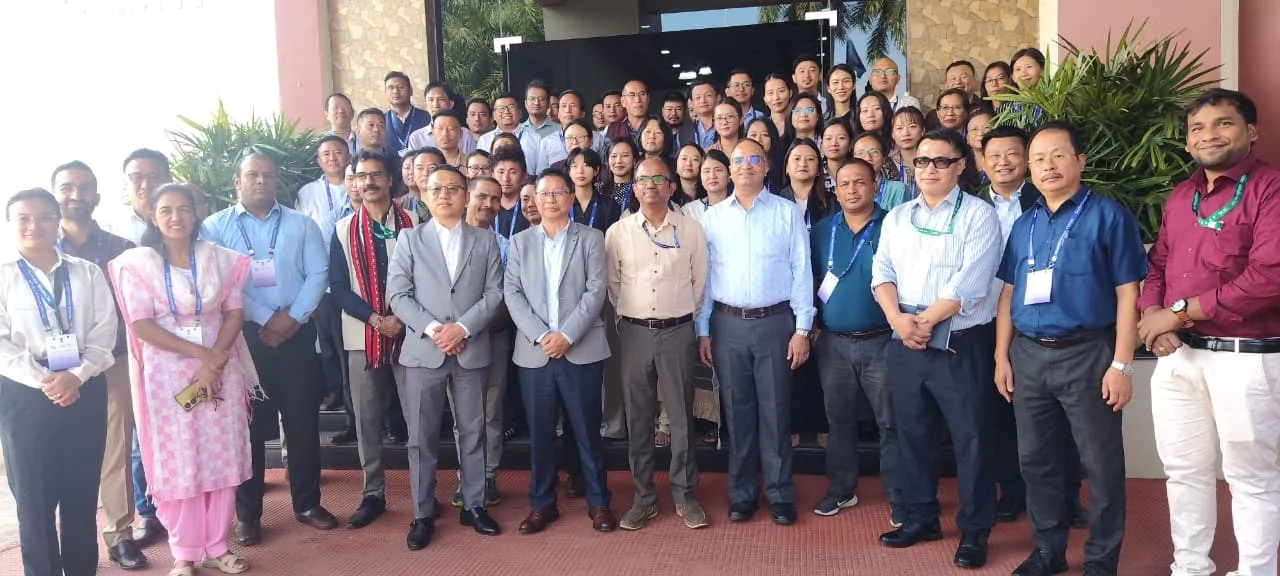
State launches pioneering One Health training programme
Staff Reporter