
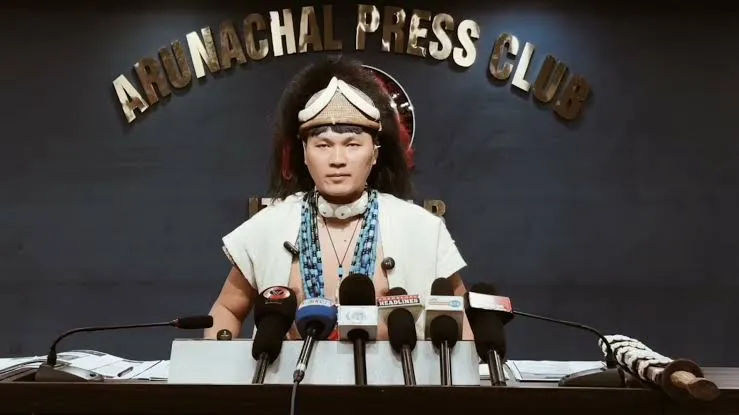
Itanagar, Nov 6 (PTI): Katon Moyong, popularly known as ‘Abor Man’ and a prominent voice opposing the proposed 11,200-MW hydropower project in Arunachal Pradesh’s Siang valley, has rejected the state government’s offer of talks, saying the time for negotiations has passed.
The engineer-turned-activist, whom Delhi Police detained recently for protesting the project in the national capital, dismissed the government’s national security argument for building the dam on the Siang River as an attempt to overcome public resistance.
Siang Upper Multipurpose Project (SUMP), one of the biggest hydropower projects planned in the northeastern state, envisages the construction of a large dam across the Siang river in Arunachal Pradesh. The project will be executed by the power major National Hydroelectric Power Corporation.
The project has been facing stiff resistance from the Adi community, particularly in the Siang region, over concerns about the potential displacement of people, submergence of ancestral lands and forests, and the impact on their cultural and ecological heritage.
Arunachal Pradesh government has said the proposed project was primarily aimed at storing and managing water in the Siang basin, particularly in view of concerns over China’s proposed mega dam on the river upstream.
Moyong said the Adi community’s position against the proposed dam remains unchanged, alleging the government’s push for the project was politically motivated with an eye on the 2029 Assembly elections.
He appealed to the indigenous communities of Arunachal Pradesh to remain united against the proposed project and cautioned them against “attempts to divide” different tribes over the issue.
“The time for discussion on the Siang Upper Multipurpose Project (SUMP) has passed,” he told a press conference at the Arunachal Press Club on Thursday. “Let there be dams on smaller rivers, but not on the Siang. Either the entire Adi community will have to be exterminated to build the Siang dam, or there will be no Siang dam.”
Moyong claimed the first proposal for a dam on the Siang River was introduced in 1979 under the banner of Brahmaputra flood control, but was rejected by the Adi community.
He blamed late chief minister Dorjee Khandu’s government for signing 145 MoUs with power developers and private companies, which he alleged had pushed the state into a huge debt burden. Successive governments changed the justification for the project over the years, describing it as a flood mitigation initiative, a project of national interest and a national project, before the present government began promoting it as a national security imperative, Moyong claimed.
Protesters have been demanding an immediate stop to the ongoing Pre-Feasibility Report (PFR) activities and survey work for the project proposed on the Siang River. They have also sought withdrawal of security forces deployed in areas likely to be affected by the proposed project.
However, the government has maintained that the 11,000 MW project would drive economic and social growth, generate employment and self-employment opportunities for the youth, and strengthen water and energy security for the state and the nation.
Arunachal Cong seeks release of Siang project protesters
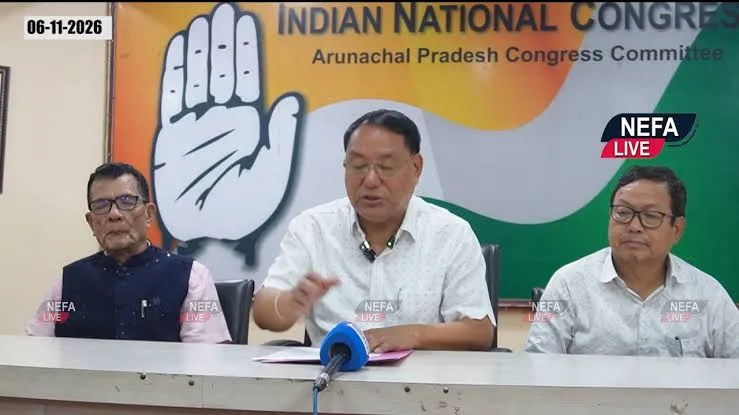
Itanagar, Nov 6 (PTI): The Congress in Arunachal Pradesh on Friday demanded the release of protesters opposing the proposed 11,200-MW Siang Upper Multipurpose Project (SUMP), withdrawal of cases against them and revocation of the suspension of government employees and village functionaries.
The party also sought the withdrawal of additional security forces from the affected areas and demanded details of the proposed Rs 350-crore livelihood and development package linked to the project, as well as upfront payments received by the state government from hydropower developers.
The opposition party also sought a white paper on the proposed package linked to the project and upfront payments received by the state government from hydropower developers, alleging that transparency and accountability were essential to address public concerns.
Arunachal Pradesh Congress Committee (APCC) president Bosiram Siram told reporters at Rajiv Gandhi Bhawan here that the government should address the ongoing protests through dialogue and democratic engagement rather than detention, punitive action and excessive deployment of security personnel.
He expressed concern over the detention of protesters, registration of cases under the Arunachal Pradesh Unlawful Activities (Prevention) Act (APUAPA) against them, suspension of government employees and Gaonburahs and Gaonburis, and deployment of additional paramilitary forces, including CAPF, ITBP and RAF, in the SUMP-affected areas.
Siram said peaceful protests over ancestral land, displacement, livelihood, cultural identity and the future of the Siang river were legitimate democratic expressions and should not invite disproportionate legal action.
The party demanded withdrawal of all cases registered by the State Investigation Cell (SIC) against SUMP protesters and revocation of suspension orders issued against government employees and traditional village representatives for their alleged involvement in the agitation.
It also called for immediate withdrawal of additional security personnel from the affected villages, stating that their continued presence could aggravate tensions and undermine public confidence.
On the proposed livelihood and development package, the Congress sought details of its funding source, availability, implementation mechanism, beneficiary selection criteria, village-wise allocation and utilisation, besides the status of disbursement and monitoring.
Siram urged Chief Minister Pema Khandu and Deputy Chief Minister Chowna Mein, who holds the Finance and Power portfolios, to clarify the state’s financial arrangements with hydropower developers and the revenue generated from such agreements.
The APCC maintained that the SUMP controversy could not be resolved through force, detention or legal intimidation, and said concerns of indigenous communities over land, displacement, customary institutions and environmental security must be addressed through democratic consultations.
The SUMP, among the largest hydropower ventures planned in the northeastern state, is proposed to be implemented by the National Hydroelectric Power Corporation (NHPC).
The project has drawn strong opposition from the Adi community, particularly in the Siang belt, amid fears of displacement, loss of ancestral land and forests, and possible damage to the region’s rich cultural traditions and fragile ecology.
The state government, however, has maintained that the project is primarily intended to regulate and store water in the Siang basin, especially against the backdrop of China’s plans to construct a massive dam on the river upstream.
Opponents of the project have been seeking an immediate suspension of the ongoing Pre-Feasibility Report (PFR) activities and survey operations along the Siang River. They have also demanded the removal of security personnel stationed in areas expected to be affected by the proposed dam.
The state government, meanwhile, has maintained that the proposed 11,000-MW project would accelerate socio-economic development, create employment and self-employment opportunities for local youth, and enhance water and energy security for both Arunachal Pradesh and the country.