
Correspondent/Agencies
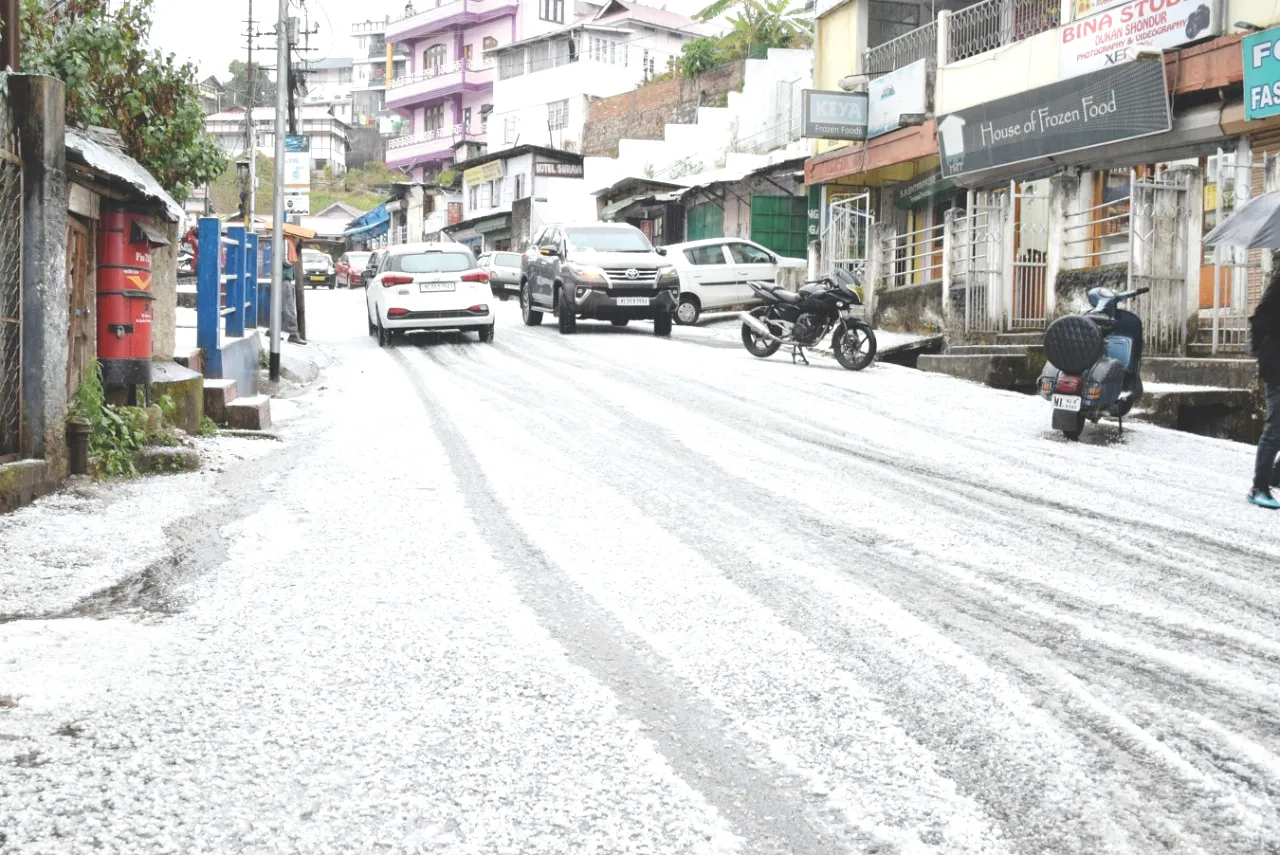
SHILLONG/GUWAHATI, NOV 11 (AGENCIES): A sudden hailstorm lashed parts of Meghalaya on Wednesday, blanketing Shillong’s streets in ice, disrupting drainage and bringing traffic to a halt, while rain and hail affected lower Assam.
The intense but brief storm covered roads, footpaths, open spaces and vehicle rooftops with hailstones. The unusual wintry scene delighted residents and tourists, even as the deluge exposed civic preparedness concerns.
The India Meteorological Department (IMD) attributed the storm to a localised convective weather system. It forecast continued thunderstorms and rainfall in parts of Meghalaya through Thursday, followed by dry weather after November 12.
Meghalaya IMD director Thangjalal Lhouvum said pre- and post-monsoon hailstorms were normal phenomena associated with western disturbances and tropical jet streams. However, he acknowledged a significant decline in overall precipitation, with the state recording a 60 per cent rainfall deficit against its climatological normal this year.
He cited Sohra (Cherrapunjee), traditionally among the world’s wettest places, which received only 4,380 mm of rain during last year’s monsoon against a normal of 11,000 mm, a record low.
The IMD has projected below-normal rainfall and above-normal minimum temperatures across Meghalaya during winter. Lhouvum clarified that seasonal outlooks indicated broad trends rather than precise temperature changes. In Assam, hail and rain were reported in districts including Kamrup, damaging paddy crops that were being harvested or nearing harvest.
A 19-year-old youth, Atabul Islam, was killed by lightning while fishing in the Brahmaputra river in Goalpara district on Wednesday.
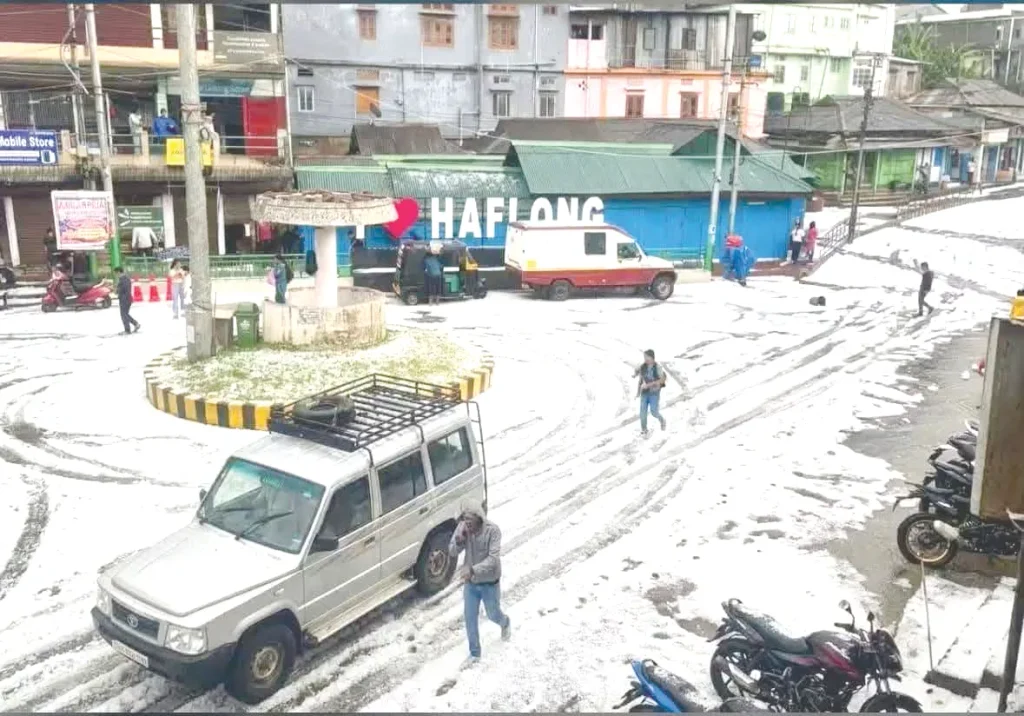
A severe hailstorm also hit Haflong, headquarters of Dima Hasao district, and adjoining areas in the afternoon. Several houses and vehicles were damaged, while accumulated hail disrupted traffic.
Large hailstones damaged tin roofs and shattered windscreens and windows of vehicles parked outdoors. Local sources said Haflong town and suburban areas were particularly affected, with roads, rooftops and open spaces quickly covered in hail, creating hazardous conditions for motorists and pedestrians in the affected areas.