
Staff Reporter
DIMAPUR, NOV 11 (NPN): Naga ancestral human remains taken during British colonial rule are now on their way home, with representatives of the Forum for Naga Reconciliation (FNR), Recover, Restore and Decolonise (RRaD) and Naga Tribal Hohos urging the state government and the Centre to expedite necessary formalities to ensure their arrival in time for the burial ceremony.
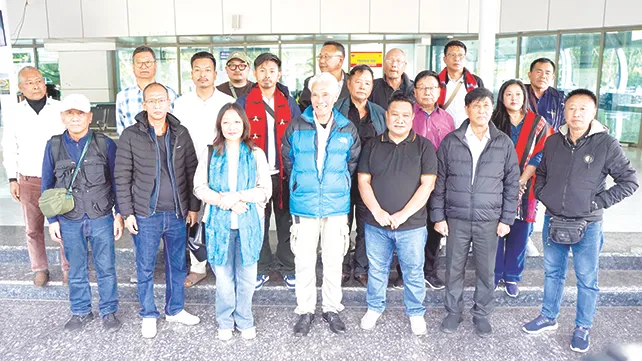
Addressing the media at Dimapur airport on Wednesday, the representatives said a public event would be organised at the designated memorial site at Naga Solidarity Park in Kohima.
Rev. Dr. Ellen Konyak, coordinator of RRaD, said details of the event would be announced shortly.
Describing the occasion as one of mourning and celebration, burial and remembrance, as well as reparation and healing, Konyak said repatriation was an assertion of the Naga people’s right to care for their ancestral human remains, which had been taken under duress in the past.
She said the process had provided both the Pitt Rivers Museum and the Naga people an opportunity to confront their histories, re-examine themselves and reimagine a future based on shared humanity.
Dr. Visier Sanyu, member of FNR, said the process involved six years of negotiations with the museum and various Naga tribes, with support from the Naga Students’ Federation (NSF) and churches. He said the journey involved difficult legal, ethical, moral and spiritual considerations, but collective efforts had made the repatriation possible.
Speaking on behalf of the Naga Tribal Hohos, Phom People’s Council (PPC) vice-president NK Thamlom Phom said the delegation comprised representatives of tribal hohos from the Naga homeland, along with the goodwill of those who could not join the journey.
He said the Tribal Hohos had been working closely with FNR and RRaD since 2024, helping expedite the process and facilitate the formal handover by the Pitt Rivers Museum on November 9, 2026, in Oxford, United Kingdom.
Thamlom said the Tribal Hohos believed the repatriation would contribute to individual healing, reconciliation among Naga tribes and lasting peace, while reaffirming the oneness of the Naga people. He appealed to all Nagas to participate in the homecoming and burial ceremony, saying the remains would be accorded a dignified and honourable burial.
Clarifying the nature of the burial, Thamlom said it would incorporate both Naga traditional customs and Christian practices. Sanyu stressed that being Christians did not mean abandoning Naga culture and traditions. He said the ancestors would be buried as Christians while following Naga customs and culture. On concerns raised by the FGN/NNC over FNR’s authority to pursue the repatriation, Sanyu said the organisations were part of a democratic society and their concerns were acknowledged.
Sanyu said he had personally met their representatives and explained the process. While some concerns had been communicated through newspapers, direct discussions had helped clarify the matter, he added.
The community-led repatriation initiative began in 2020 through FNR and its research team, RRaD. The University of Oxford Council formally approved the return in July 2026. The remains were taken during British colonial rule between 1910 and 1940, largely acquired by colonial administrators and anthropologists John Henry Hutton and James Philip Mills.
The return has been described as the first repatriation of Indigenous human remains to take place in India and one of the largest community-led, single-time repatriations in Asia.