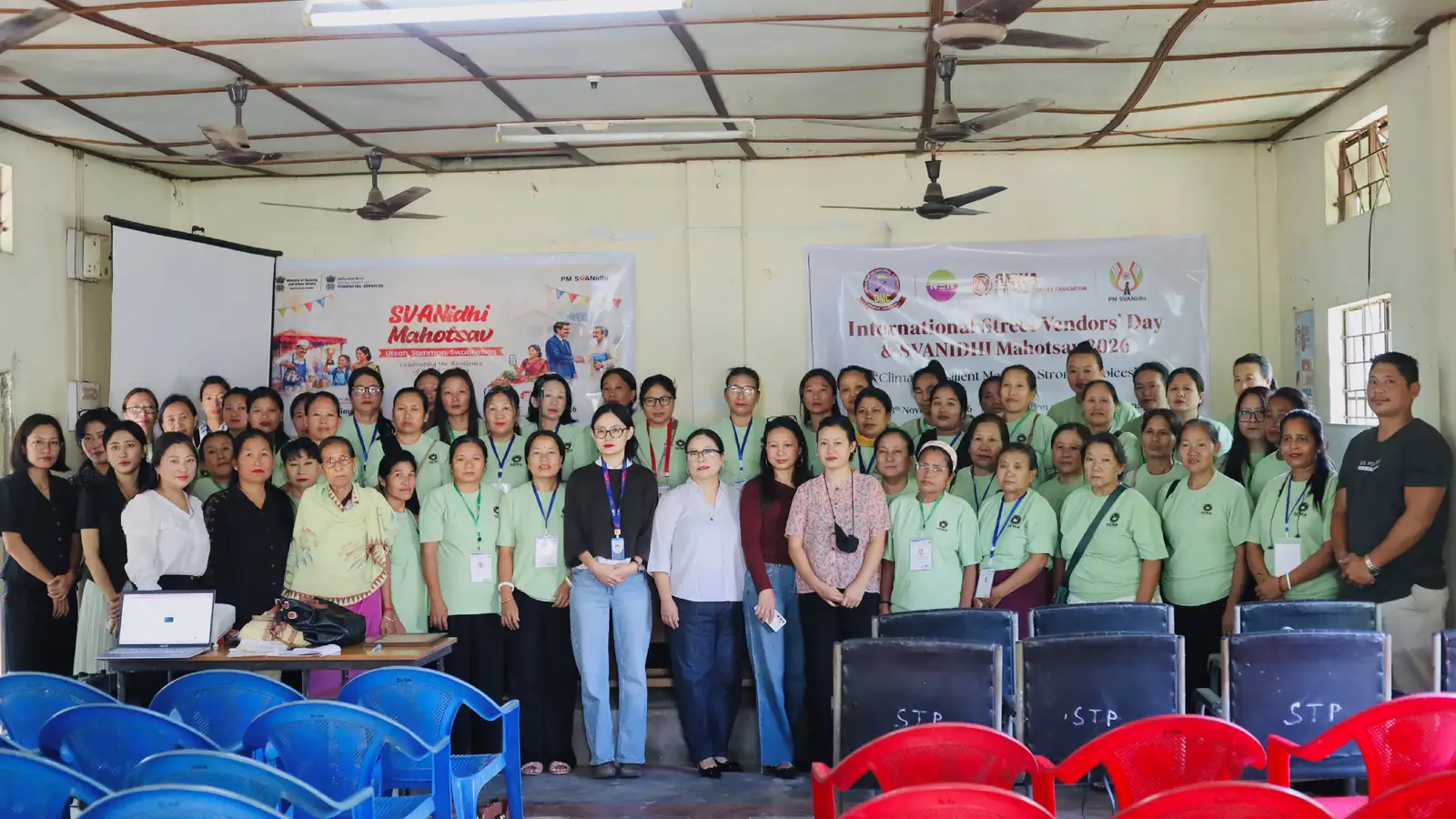
DIMAPUR: The Self Employed Women’s Association (SEWA), Dimapur, in collaboration with North East Network (NEN) and Dimapur Municipal Council (DMC), observed International Street Vendors’ Day and SVANidhi Mahotsav 2026 at DUDA Hall, Dimapur on November 13, under the theme “Climate-Resilient Markets, Stronger Voices.”
The programme brought together women street vendors, government officials and other stakeholders to discuss climate resilience, livelihood security and improved market facilities.
Addressing the gathering, state project coordinator, SEWA Nagaland, Temjenlemla, emphasised that climate-resilient markets require not only better infrastructure but also greater participation of women in decisions affecting their livelihoods. Referring to the Nagaland Street Vendors Rules, 2019, she highlighted the need to revive the inactive Town Vending Committee (TVC) in Dimapur to strengthen dialogue between vendors and authorities.
A video screening during the programme showcased the everyday challenges faced by women street vendors.
Women vendors shared concerns over their working conditions and inadequate access to basic amenities. Rita Ben said she spends around Rs 4,500 every month on drinking water and between Rs 3,800 and Rs 3,900 on sanitation, highlighting the financial and health burden resulting from inadequate facilities. She also proposed community composting as a solution to waste management challenges.
Alila, a vendor from New Market, recalled past eviction drives and called for a dedicated market space for local Naga vendors, while Bendang raised concerns over the safety of women who begin vending as early as 1 a.m.
Representing DMC, Naro highlighted the benefits of the PM SVANidhi scheme and informed vendors about a credit facility of up to Rs 30,000. She encouraged vendors to maintain cleanliness, stressing that keeping markets clean is a shared responsibility.
Three street vendors were recognised for their performance under the scheme, while SBI Evening Branch, Dimapur, was acknowledged for facilitating the highest number of loans. Tsipila shared how the scheme had helped expand her business and appealed for access to MUDRA loans.
Kevilenuo Solo outlined plans under the Swachhata Committee, including the development of a pedestrian plaza, installation of water vending machines at nominal rates and improvement of public toilet facilities, with proposed collaboration involving SEWA Dimapur.
Referring to the Solid Waste Management Rules, 2026, she stressed the importance of waste segregation and collective responsibility in maintaining cleaner markets.
Representatives from DMC and the Development Authority of Nagaland also discussed market infrastructure improvements, better coordination and concerns related to vending-space charges.
Concluding the programme, SEWA Dimapur urged the authorities to reactivate the Town Vending Committee at the earliest with meaningful representation of women street vendors. The organisation also sought time-bound measures to ensure access to safe drinking water, shaded vending spaces, clean toilets, proper drainage and effective waste management systems.
The programme concluded with a collective call for climate-resilient markets that protect women’s health, secure livelihoods and ensure their voices are included in shaping the future of Dimapur’s markets.