
Correspondents
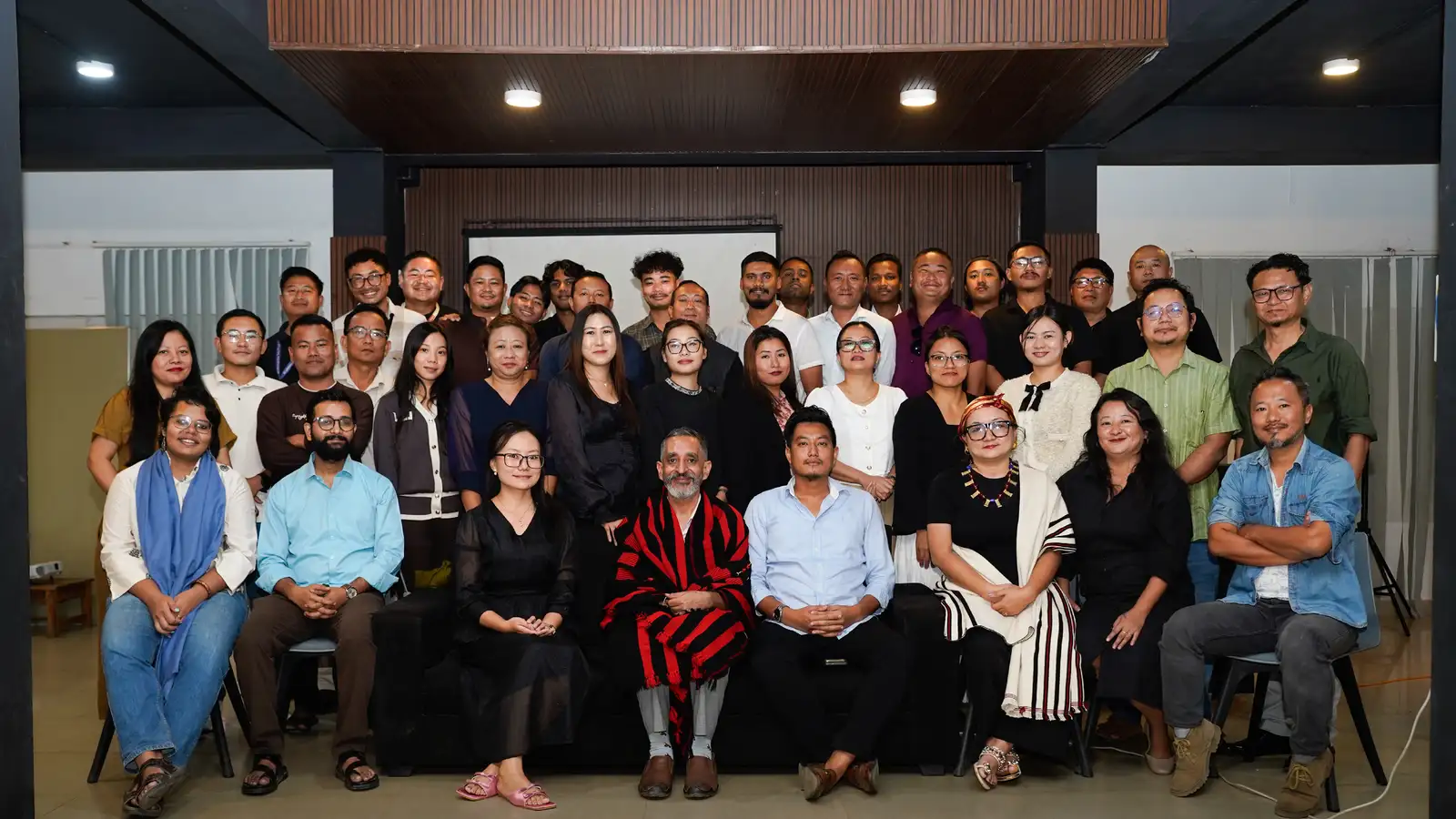
DIMAPUR/KOHIMA/MOKOKCHUNG, Nov 16 (NPN): Dimapur Press Club (DPC), Kohima Press Club (KPC) and Mokokchung Press Club (MPC) observed National Press Day 2026 on November 16 under the theme, “Journalism: Populist or Responsible”.
At Dimapur, founding editor of The Reporters’ Collective, Nitin Sethi, delivered the theme address and emphasised the need for responsible journalism, technological adaptation and professional solidarity. He described journalists as intermediaries between the powerful and the powerless, stating that journalism was not merely about reporting events but also about serving as a bridge between communities, individuals and the state.
Sethi said journalists must continue to hold those in authority accountable, especially on behalf of vulnerable sections of society. According to him, journalism remained a challenging profession as practitioners were often required to navigate competing interests while contributing towards creating a more equitable society.
Referring to the media landscape in the Northeast, he observed that journalists worked in a complex environment shaped by changing relationships between communities, institutions and governments. He noted that media practitioners frequently encountered pressure from organisations, community groups and influential individuals regarding the coverage of certain issues and personalities.
Despite these challenges, Sethi maintained that journalism being practised in Nagaland, Arunachal Pradesh and Manipur was, in many ways, more progressive than journalism in several metropolitan centres. He also highlighted the impact of digital transformation on the profession, noting that digital platforms had democratised journalism by enabling individuals to establish independent media platforms with relatively limited resources.
Urging traditional media practitioners to embrace emerging platforms, he called for greater cooperation between conventional and digital media. He further encouraged journalists to view emerging technologies, including Artificial Intelligence (AI), as tools that could strengthen the profession rather than threats to its future.
On professional ethics, Sethi acknowledged the existence of corruption and compromises within sections of the media industry but stressed the importance of strengthening professional standards and sustaining a commitment to accountability and public service.
Delivering the presidential address on behalf of DPC president Bendangchuba, the DPC vice-president said National Press Day was a reminder of the responsibility entrusted to the media to uphold a free, fair and fearless press. He observed that journalists today faced increasing pressure to balance speed and virality with accuracy and ethics and urged media professionals to prioritise credibility over clicks and truth over trends.
The DPC vice-president also appealed to the government to ensure the protection of journalists and called on the public to support local journalism and refrain from sharing misinformation. Earlier, DPC advisor Imkong Walling described the occasion as an opportunity for journalists to reaffirm their commitment to the profession and reflect on its purpose and responsibilities.
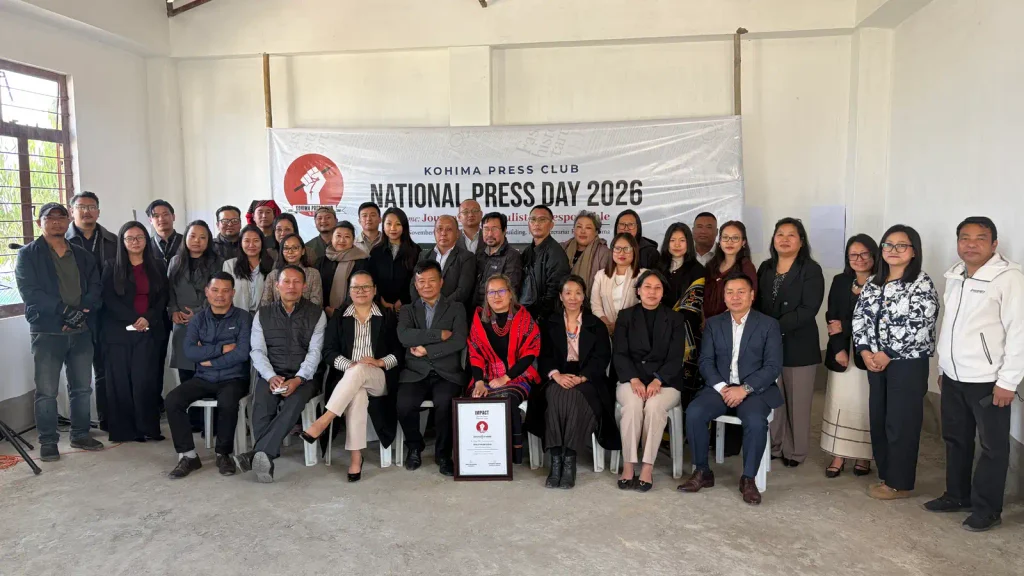
Meanwhile, at Kohima, Tir Yimyim editor K. Temjen Jamir called on the government to institute awards recognising the contributions of journalists, noting that media professionals also deserved formal acknowledgement for their service.
Jamir emphasised that journalism carried immense trust and responsibility and urged journalists to serve as the voice of the voiceless while protecting citizens from fake news, misinformation and disinformation. Speaking on the theme, he said journalism must strike a balance between populism and responsible reporting through independent fact-checking and verification rather than blindly endorsing popular narratives, political leaders or institutions.
He cautioned that populism could sometimes encourage divisions such as classism, groupism and tribalism and urged journalists to uphold social harmony through responsible reporting. He also stressed the importance of verifying information from multiple sources and focusing on issues affecting ordinary citizens rather than relying solely on official statements.
Calling for quality journalism, Jamir urged media professionals to preserve public trust while continuing to hold those in power accountable. The programme was chaired by Vincent Belho, while the invocation was pronounced by William Belho.
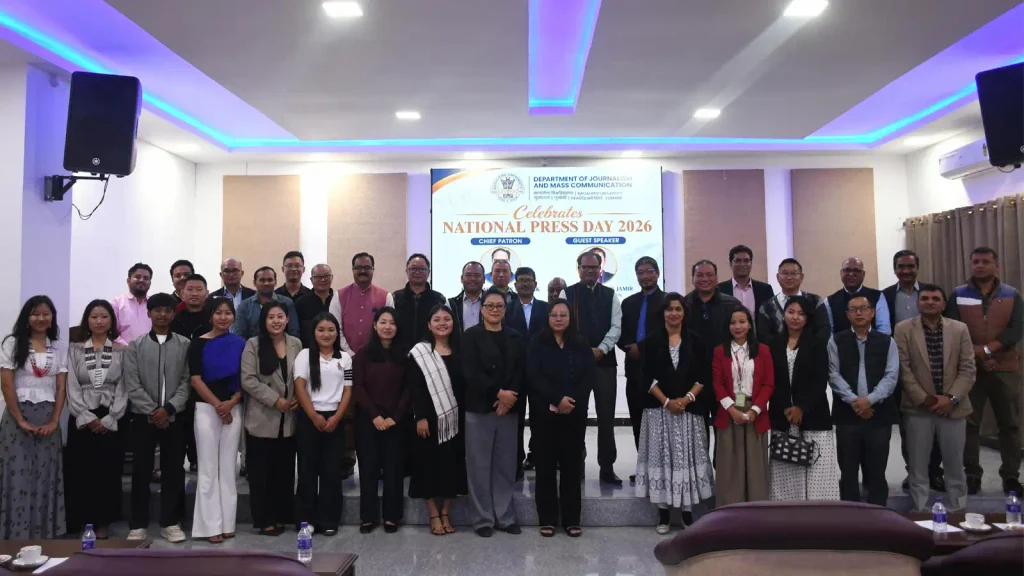
At Mokokchung, the Department of Journalism and Mass Communication, Nagaland University, also observed National Press Day. Speaking on the occasion, Ao Milen editor and Mokokchung Press Club executive member Akangnungsang Jamir stressed the importance of responsible journalism amid the growing spread of misinformation on social media.
He observed that while information was now more accessible than ever through digital platforms, greater access to information did not necessarily mean that people were better informed. Highlighting the significance of National Press Day, he noted that the Press Council of India was established to safeguard press freedom while promoting accountability in journalism.
Akangnungsang also underscored the importance of local and vernacular journalism in highlighting grassroots concerns, documenting community realities and preserving indigenous languages and cultural heritage. On the growing influence of AI, he cautioned that fabricated images, cloned voices and manipulated videos posed new challenges to journalism and made human verification more important than ever.
Earlier, Nagaland University vice-chancellor Prof. Jagadish Kumar Patnaik acknowledged the important role played by vernacular newspapers in a diverse country like India.
Henlly conferred KPC Impact Journalism Award
Senior journalist Henlly Phom Odyuo was conferred the Kohima Press Club (KPC) Impact Journalism Award 2026 during the National Press Day celebration held at the KPC office.
Accepting the award, Henlly thanked KPC for the recognition, describing it as an honour not only for individual journalists but for the profession as a whole. She credited the support of her editors and colleagues for enabling her to continue journalism while balancing family responsibilities.
Highlighting challenges faced by journalists in Nagaland, including limited resources, lack of job security and various threats, she stressed the need to uphold journalism’s role in giving voice to the unheard. She also encouraged women journalists, especially young mothers, to remain in the profession and urged media houses to provide a supportive work environment.
Henlly, who has over 13 years of experience and is currently associated with Eastern Mirror, called on the government to treat the press as a partner, the public to support local journalism and journalists to uphold ethical, fearless and accurate reporting.
Presenting the award, KPC president Rita Krocha said the award, instituted in 2020 by former president Alice Yhoshü, was the only journalism award in the state recognising outstanding professional work. She said Henlly was being honoured for her decade-long contribution to journalism and her impactful reporting on infrastructure challenges and conditions in government schools in Eastern Nagaland, particularly in Longleng and Mon districts.
Krocha noted that Henlly’s reports had highlighted the struggles of students and educators in remote areas and reflected the role of journalism in promoting accountability and social change.