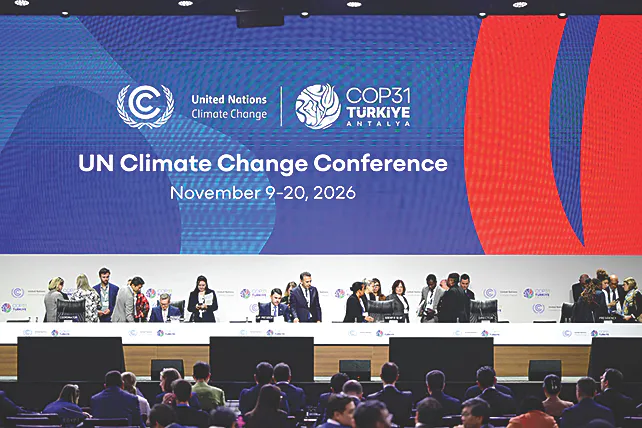
ANTALYA (TURKIYE), NOV 22 (AP): The latest United Nations climate summit, COP31 in Antalya, Türkiye, ended in controversy after a draft of the final agreement failed to mention fossil fuels, the primary cause of global warming. The omission drew strong criticism from several countries and blocs, including the European Union, the Marshall Islands and Panama, which argued that the proposal did not adequately address the climate crisis or build on previous commitments to reduce reliance on coal, oil and gas.
Speaking on behalf of the European Union, Ireland’s Climate Minister Darragh O’Brien described the omission as “unconscionable,” stressing that any meaningful climate agreement should directly address fossil fuels. In contrast, Russia supported the decision to leave explicit references to fossil fuels out of the final text.
The talks, which ran more than 44 hours beyond their scheduled conclusion, became the longest climate negotiations to exceed their deadline. Turkish Environment Minister Murat Kurum, who co-chaired the conference, released the latest draft and provided negotiators only a few hours to propose changes before a final meeting. Several countries objected to both the process and the content of the draft, saying their concerns had not been properly considered. Representatives from the African Group of Negotiators complained that the views of African nations had been overlooked.
Tensions also surfaced during a meeting when confusion broke out over procedural matters. Activists and delegates voiced frustration over the pace of negotiations and the lack of ambition in the proposed agreement.
A major source of criticism was the draft’s support for carbon capture and storage technology. The text included a target of capturing, reusing and storing one billion metric tons of carbon dioxide. While supporters view the technology as a way to reduce emissions from industries that are difficult to decarbonise, critics argue that it could be used by oil and gas producers to justify continued fossil fuel extraction and investment. Environmental groups warned that carbon capture should not replace efforts to phase out fossil fuels.
Climate experts pointed out that although fossil fuels were absent from climate summit agreements for many years, nations had agreed at the 2023 Dubai climate summit to pursue a “transition away from fossil fuels.” They warned that removing such references from the current agreement would represent a step backward in global climate action. Despite referring to previous agreements, the draft does not contain terms such as “fossil fuels,” “oil,” “coal” or “phase out.”
The proposal does, however, include a major electrification goal. It calls for increasing the share of electricity in final energy consumption from about 21 per cent today to 35 per cent by 2035. Achieving this would require greater use of electric vehicles, cleaner industrial processes and wider electrification of economic activities. Climate advocates welcomed the target but argued that the agreement should clearly specify that the electricity must come from renewable sources such as solar and wind power rather than fossil fuel-generated electricity.
Another unresolved issue concerns climate finance. Developing and climate-vulnerable countries are seeking stronger commitments from wealthier nations to provide funding for adaptation and resilience measures. They argue that while climate-related disasters such as heat waves, floods and storms are becoming more severe, financial support has not kept pace with growing needs.
As negotiations continued into overtime, uncertainty remained over whether sufficient countries would support the draft agreement. The outcome highlighted deep divisions among nations over how aggressively the world should tackle fossil fuel use, climate finance and long-term emissions reductions, all of which remain central challenges in global climate diplomacy.