
Correspondent
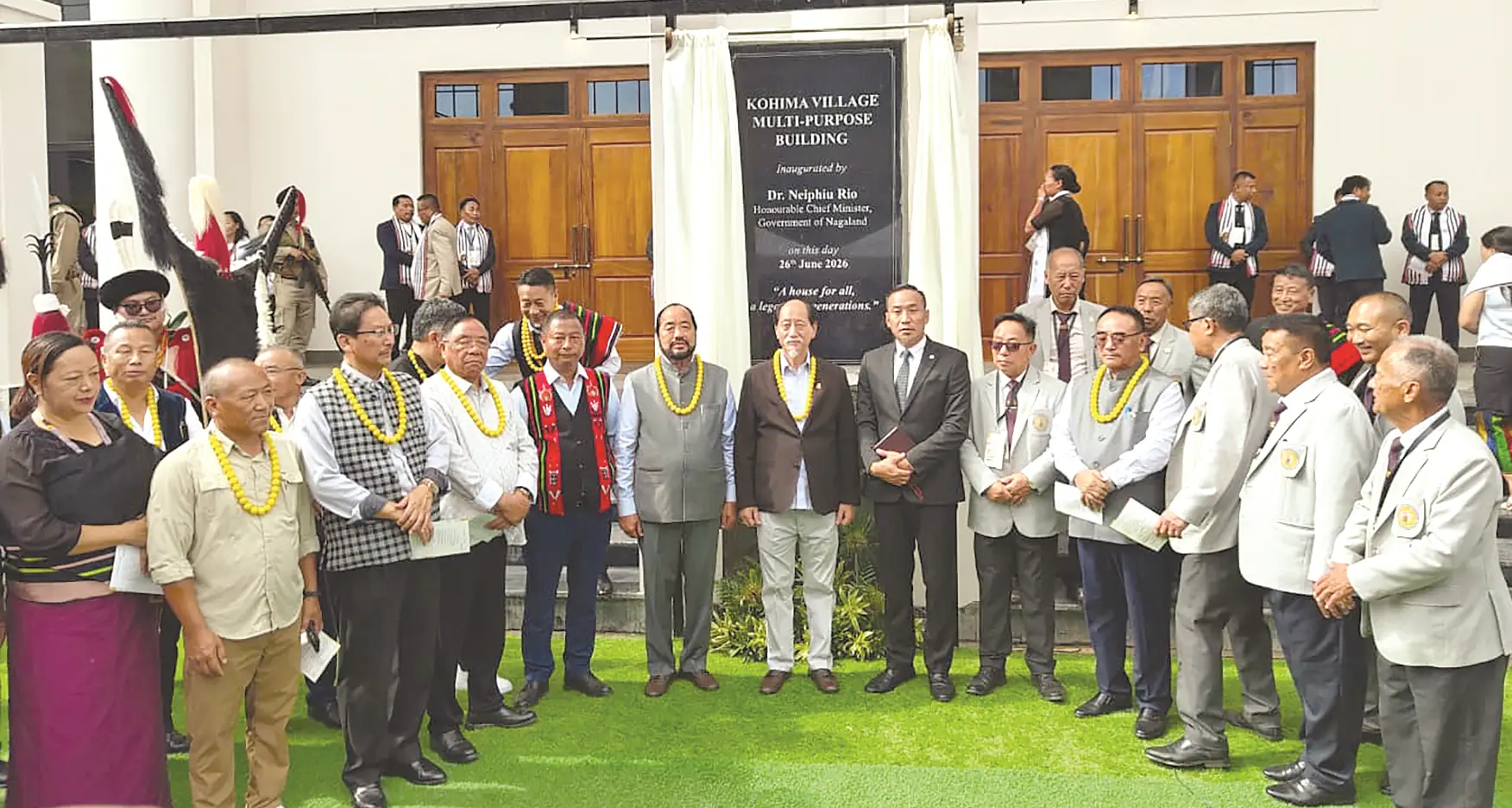
KOHIMA, JUN 26 (NPN): Nagaland chief minister Dr. Neiphiu Rio on Friday appealed to the people of Nagaland to actively participate in Census 2027, stressing that accurate population data was crucial for effective planning, equitable distribution of resources and the state’s future development.
Addressing the gathering after inaugurating the Kohima Village Council (KVC) Multipurpose Building at Ziekezou, Rio urged individuals, tribal hohos, churches, village councils, urban local bodies and civil society organisations to cooperate fully with the census process, saying the data collected would determine the future of generations to come.
Recalling the 2001 Census, Rio said several districts had recorded unrealistic decadal growth rates of 70 to 100 per cent against the national average of around 20 per cent. He said the state government had refused to accept the census after concluding that the enumeration had been seriously flawed. He said the 2011 Census, conducted with the participation of civil society organisations, churches and public representatives, swung to the opposite extreme by recording a decline in Nagaland’s population, creating another anomaly that complicated development planning.
According to Rio, inaccurate census figures had distorted government planning, including the establishment of schools and appointment of teachers based on non-existent population figures. He also said faulty data had affected identification of Below Poverty Line (BPL) beneficiaries, projecting an inaccurate picture of the state’s economic condition.
Appealing for truthful enumeration, Rio urged every citizen to participate responsibly so that future government policies and development programmes would be based on authentic demographic data.
On the recent High Court judgment dismissing petitions challenging the extension of the Inner Line Permit (ILP) regime to Dimapur, Chümoukedima and Niuland, Rio said the verdict reaffirmed the state’s authority to enforce the ILP under the Bengal Eastern Frontier Regulation (BEFR), 1873 and Article 371(A) of the Constitution.
He urged house owners, village councils and other stakeholders to cooperate in strengthening the ILP regime by ensuring proper verification of tenants, labourers and other non-local residents, while stressing the need to equip local youth with skills to gradually replace migrant workers.
On the Register of Indigenous Inhabitants of Nagaland (RIIN), Rio said the exercise was intended to protect the rights of indigenous Nagas and clarified that indigenous status could only be certified by one’s native village council.
Rio also reaffirmed Nagaland’s traditional village council system, saying the state’s exemption from the 73rd Constitutional Amendment had enabled it to preserve consensus-based village governance instead of adopting the Panchayati Raj system. He maintained that the traditional system promoted unity and prevented political divisions within villages.
Highlighting welfare initiatives, he said over 1.17 lakh people had enrolled under the Chief Minister’s Health Insurance Scheme (CMHIS), with the government spending more than Rs. 228 crore under its cashless treatment component. He also encouraged youths to take advantage of skill development and entrepreneurship programmes.
Earlier, Rio congratulated the Kohima Village Council on the completion of the multipurpose building, describing it as a landmark facility for all Nagas. . He said the hall symbolised unity, goodwill and inclusiveness and should serve as a venue for meetings, cultural activities and programmes that strengthened brotherhood among the people.
He informed that the Centre had sanctioned Rs. 5 crore for the project through the Ministry of Tribal Affairs and assured additional government support for the remaining works, including sound systems and other amenities.
Reflecting on his long association with Kohima, Rio said he had grown up in the town after his family shifted there during the insurgency period. He credited the people of Kohima for their hospitality and described Kohima Village as one of the most welcoming communities in Nagaland, whose openness had enabled it to become what was widely regarded as the largest indigenous village in Asia.
He urged tribal organisations and communities across the state to make full use of the newly inaugurated facility, expressing hope that it would serve as a centre for dialogue, cooperation and unity among the Nagas.
Advisor for School Education and SCERT, Dr. Kekhrielhoulie Yhome, who was the chief host, said the multipurpose building had been conceived as a common facility for all Nagas. He expressed hope that it would serve as a centre for dialogue, cooperation and programmes of common interest while fostering unity among the people.
Reflecting on Kohima’s significance as the state capital, Yhome said the town had evolved into the political and administrative centre of the Nagas through the course of history rather than by choice. He said Kohima Village today shared boundaries with 13 Angami villages and encompassed much of the urban area of the capital, where people from across Nagaland and other parts of the country had settled.
While the village was often associated with prosperity and development, he said the indigenous inhabitants also bore considerable social and economic pressures as custodians of the state capital.
Dr. Yhome said many indigenous families had made significant sacrifices by contributing land for public infrastructure and institutions, with some no longer owning sufficient land even for family burial purposes. Despite these challenges, he said Kohima Village had continued to welcome people from different communities and remained committed to serving the wider public.
The programme was chaired by Kikruneinuo Liezietsu and Vilakuolie Mere. An invocation was offered by Rev. Dr. Ruokuovilie Sachü, senior pastor Khedi Baptist Kehou, while Kohima Village Council chairman Helievi-o Solo delivered the welcome address.
The programme also featured an audio-visual presentation on the construction of the building, cultural performances by Medophrenuo Yiese and Lidi Kro-u, and concluded with a vote of thanks proposed by organising committee convenor K. Neibou Sekhose.