
DIMAPUR: The Sümi community celebrated its traditional post-harvest festival, Ahuna, across Suruhuto, Ikishe Village Block C and Phek on November 14, with celebrations highlighting cultural preservation, thanksgiving, unity and inter-community brotherhood.
According to press releases, the celebrations featured traditional performances, cultural exchanges and addresses by community leaders and public representatives, emphasising the importance of preserving ancestral traditions and passing them on to younger generations.
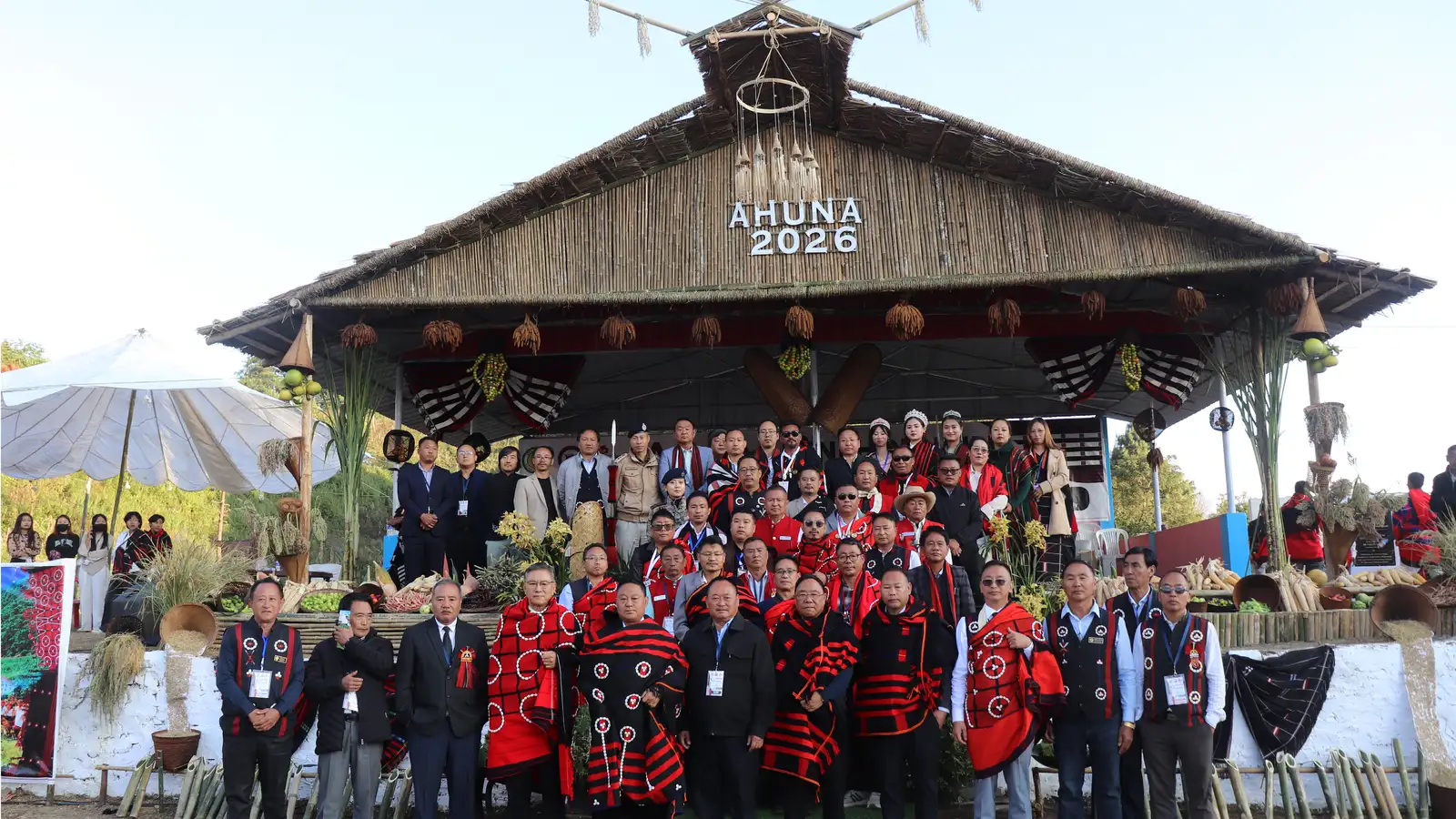
At Suruhuto, the Ahuna cum Mini Hornbill Festival 2026, organised by the Sümi Hoho and hosted by the Suruhuto Area Public Organisation, featured the second edition of the Sümi–Yimkhiung Cultural Exchange. The three-day festival was held on November 8, 13 and 14.
The programme was attended by Minister for Roads and Bridges, G. Kaito Aye, as Ahuna Father, and Deputy Speaker of the Nagaland Legislative Assembly, S. Toiho Yeptho, as Chief Host. Also present were Advisor for Youth Resources and Sports, S. Keoshu Yimchunger; Advisor for Food and Civil Supplies, K. Tokugha Sukhalu; and Advisor for Fire & Emergency Services, Home Guards & Civil Defence, and Relief & Rehabilitation, S. Kiusumew Yimchunger. The Yimkhiung Tribal Council attended as the Special Tribal Guest.
Addressing the gathering, Kaito Aye described Ahuna as a celebration of agricultural heritage and shared traditions, urging the Naga people to look beyond past differences and focus on unity and future development. He encouraged communities to embrace dignity of labour, honesty and hard work, pursue productive livelihoods and reduce excessive dependence on government welfare schemes.
He also called for preserving cultural heritage, addressing social challenges and promoting clean electoral practices, while stressing that unity should remain the foundation of collective progress.
Advisor for Youth Resources and Sports, S. Keoshu Yimchunger, highlighted the historical relationship between the Sümi and Yimkhiung communities, particularly their mutual assistance and sacrifices during the Indo-Naga political movement of the 1950s and 1960s. He urged both communities to preserve their bond and pass the spirit of brotherhood to younger generations.
He also called for economic self-reliance, development of local industries and protection of the special constitutional provisions under Article 371A. Stressing that cultural festivals should go beyond entertainment, he said they should promote heritage, tourism and economic opportunities. He further urged the Sümi community to take the lead in electoral reforms ahead of the 2028 elections.
Advisor for Fire & Emergency Services, Home Guards & Civil Defence, and Relief & Rehabilitation, S. Kiusumew Yimchunger, also highlighted the historical ties between the communities and said the exchange of gifts symbolised oneness and belonging.
In his presidential address, Sümi Hoho president Dr. Vihuto Asumi described Ahuna as one of the most cherished festivals of the Sümi people, celebrated annually on November 14 to mark the completion of the agricultural season and gathering of the harvest. He explained that newly harvested rice is traditionally cooked in freshly cut bamboo and shared among family and community members as an expression of gratitude and togetherness.
He recalled that the first Sümi–Yimkhiung Cultural Exchange was held at Chessore on January 16, 2017, and urged both communities to strengthen their relationship through regular interaction and mutual understanding while preserving their distinct tribal identities.
Deputy Speaker S. Toiho Yeptho expressed appreciation for bringing the two communities together and called for continued unity and cooperation. President of Western Sümi Kukami Hoho, Akükatou Khehovi Chophi, urged the Sümi community to overcome internal divisions, while President of Western Yimkhiung Hoho, H. Akiumong Yim, called for mutual acceptance, respect and understanding.
The programme featured the unveiling of a plaque by Yimkhiung Tribal Council president Throngso Yimkhiung, prayers and cultural performances by the Yimkhiung Cultural Troupe and other artistes. The vote of thanks was delivered by Sümi Kukami Hoho president Akükau Hetoho Zhimomi.
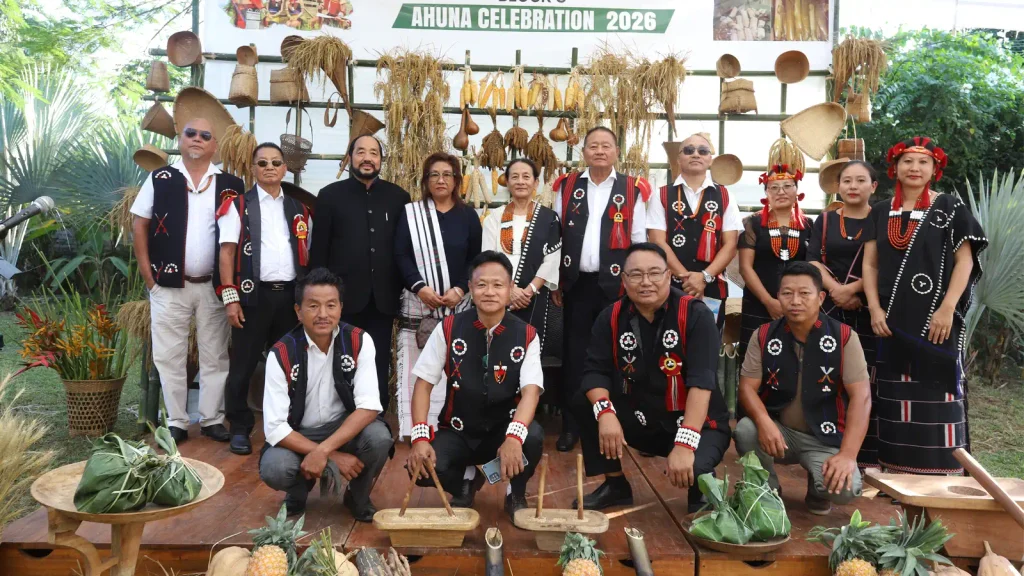
Meanwhile, Ikishe Village Block C celebrated Ahuna at the residence of MLA and Advisor to the Government of Nagaland, Kazheto Kinimi, who hosted the event.
Addressing the gathering, Kazheto Kinimi encouraged the Block C Welfare Committee to continue organising traditional festivals, saying such occasions strengthened unity, mutual understanding and togetherness among residents.
Deputy Chief Minister Y. Patton, a resident of Ikishe Village Block C, expressed happiness at being part of the celebration and drew parallels between the Sümi Ahuna and Lotha Tokhü Emong festivals, observing that both marked the rice harvest and expressed gratitude to the Almighty.
He prayed for continued blessings upon the people and expressed hope that the festivals would be celebrated in unity and harmony in the years ahead. As a gesture of support, Patton donated Rs. 1 lakh to the Block C Welfare Committee and extended Rs. 5,000 each to programme participants and cultural performers.
Retired Joint Director, Border Affairs, Shetovi Awomi, highlighted the cultural and social significance of Ahuna, describing it as an occasion to thank God for a bountiful harvest and strengthen unity, sharing and respect for ancestral traditions.
The celebration featured Thishole by womenfolk, Lejole by fathers, a traditional couple show, top spinning, spear kicking, an Ahuna cooking competition and Puxa Kuxu performances by children. The programme was chaired by Kakhevi Kinimi, while the vote of thanks was delivered by Deputy Commandant Israel G. Xuivi.
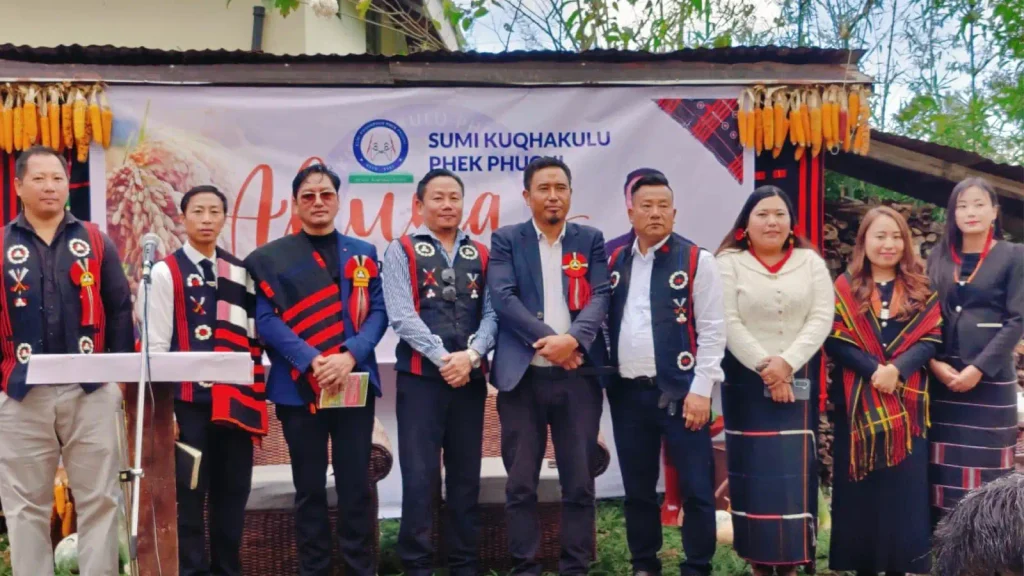
In Phek district, the Sümi community celebrated Ahuna under the aegis of Sümi Kuqhakulu Phek Phughi (SKPP), with Divisional Forest Officer, Phek, Ino Tokaho Kinimi, attending as Ahuna Father.
Addressing the gathering, Kinimi highlighted Ahuna as a festival symbolising thanksgiving, sharing and peaceful coexistence. He urged the community to preserve its traditional values while adapting to changing times and emphasised the importance of living in harmony.
SKPP Advisor Kahoto Zhimomi also highlighted the cultural significance of the festival and called upon the younger generation to preserve and practise traditional customs and heritage.
The celebration featured traditional songs and Lejole performances by men and women. The programme was chaired by SKPP General Secretary Melonie Chophi, while SKPP Chairman Tohovi Shohe delivered the vote of thanks.