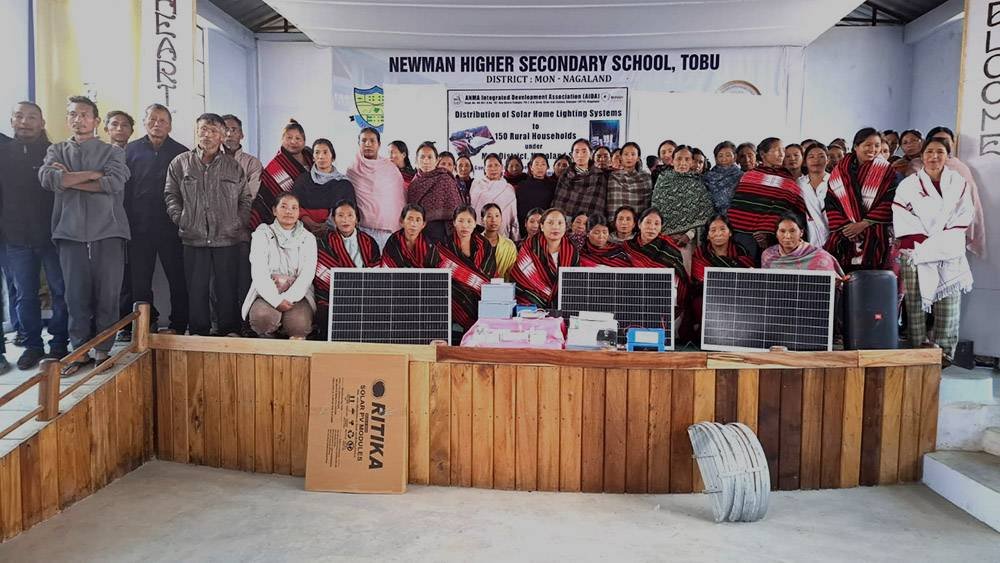
The ANMA Integrated Development Association (AIDA) organized solar home lighting system distribution programmes across Peren and Mon districts in Nagaland, benefiting a total of 250 rural households as part of its ongoing renewable energy initiative.
The first programme was held on March 23 at St. Xavier College, Jalukie, in Peren district, where solar lighting systems were distributed to 100 rural households from three villages: Nzuana, Laluang Lodi and Bamsiakilwa. The event brought together community leaders, beneficiaries, and project stakeholders.
Addressing the gathering, HR manager and coordinator of Solar Programmes AIDA, Dr. Anna Lungbila Bibiana, highlighted AIDA’s commitment to expanding access to clean energy while promoting women’s empowerment. The programme also featured experience-sharing sessions by trained solar engineers, alongside active participation from village leaders, reflecting strong community engagement. Earlier in phases, 550 households were solar electrified in the last year.
The second distribution programme was conducted on March 30 at Newman Higher Secondary School, Tobu, in Mon district, where solar home lighting systems were distributed to 150 households across Tobu Block A, Tobu Block B, and Tobu Block C.
Gracing the occasion as special guest, Extra Assistant Commissioner (EAC), Tobu, Er. R. Mhao Humtsoe, lauded the initiative and emphasized the importance of such interventions in remote areas. He encouraged the community to acquire diverse skills and urged AIDA to expand its outreach to more villages in the future. Speaking as guest of honour, AIDA, executive director and chief functionary, Rev. Fr. Dr. Roy George SDB, reiterated that the solar initiative is part of a broader mission of AIDA to promote sustainable development and enhance energy access across underserved regions of Nagaland. In the last two years’ time AIDA has solar electrified a total of 800 rural households in Nagaland alone. Speaking on the occasion, AIDA, HR manager, Dr. Bibiana Lungbila, stressed the importance of women becoming agents of change and economic empowerment.
Both programmes witnessed enthusiastic participation from local communities, solar engineers, and institutional partners. Experience-sharing sessions by trained solar engineers and beneficiaries highlighted the transformative impact of clean energy solutions in improving quality of life, reducing dependence on conventional fuels, and promoting environmental sustainability.