
Amid the ongoing indefinite hunger strike by the All Nagaland Ad-hoc Teachers’ Group (ANATG) 2015 batch over delays in service regularisation, the state chief minister Dr. Neiphiu Rio on Thursday appealed to the protesters not to rush, assuring that the state government was closely monitoring the situation and scrutinising all relevant documents.
Speaking to the media on the sidelines of an event at Niathu Resort, the chief minister emphasised that the government has not abandoned the agitating teachers and that the regularisation process must follow due procedure. “Everything has to go through a proper process,” he said, adding that the government remained committed to resolving the matter. Advisor for school education and SCERT, Dr. Kekhrielhoulie Yhome, echoed the chief minister’s stance and reaffirmed the government’s support for the teachers while noting that protests and hunger strikes create “unnecessary pressure.”
He assured that the department was actively working on the regularisation issue and has already prepared and submitted a detailed proposal after thorough examination.
Dr. Yhome explained that the complexity arose because teachers were recruited through multiple systems over the years. He clarified that, from the school education department’s side, all necessary steps have been completed, and the file now awaited financial concurrence from the finance department and clearance on service matters from the department of personnel and administrative reforms (P&AR).
“These are all government departments,” he stated, stressing that procedural requirements must be fulfilled.
Expressing empathy for the teachers’ plight, Dr. Yhome appealed for patience, acknowledging that many students continued to receive education from these non-regularised teachers.
He highlighted the existing disparities in government schools, where four categories of teachers—regular, scheme-based (such as Samagra), contract, and fixed-pay—often work together in the same institutions.
He observed that teachers whose jobs remained insecure were frequently the most dedicated, whereas some regularised staff occasionally fail to attend school. “I can understand their emotions and agitation,” he said.
The advisor urged the protesting teachers to return to their classrooms as the academic session has begun. He reiterated that the government has not abandoned them and remained optimistic about a resolution through ongoing talks. “These matters require procedural steps,” Dr. Yhome added.
On a separate issue, when queried about allegations that some private schools were charging fees to issue admit cards for HSLC and HSSLC examinations, Dr. Yhome described the practice as illegal and outside the official system.
The advisor warned of strict action if the claims were proven true.
Regarding the government’s decision to close non-functional government schools, he explained that institutions with zero enrolment had no alternative but to shut down. He said such decisions were taken purely on a need basis as part of school rationalisation efforts. “As a welfare state, we need to maintain schools in remote areas where the private sector cannot reach. But where there are no students, we are left with no choice,” he said, noting that standalone schools were being merged where feasible to optimise resources.
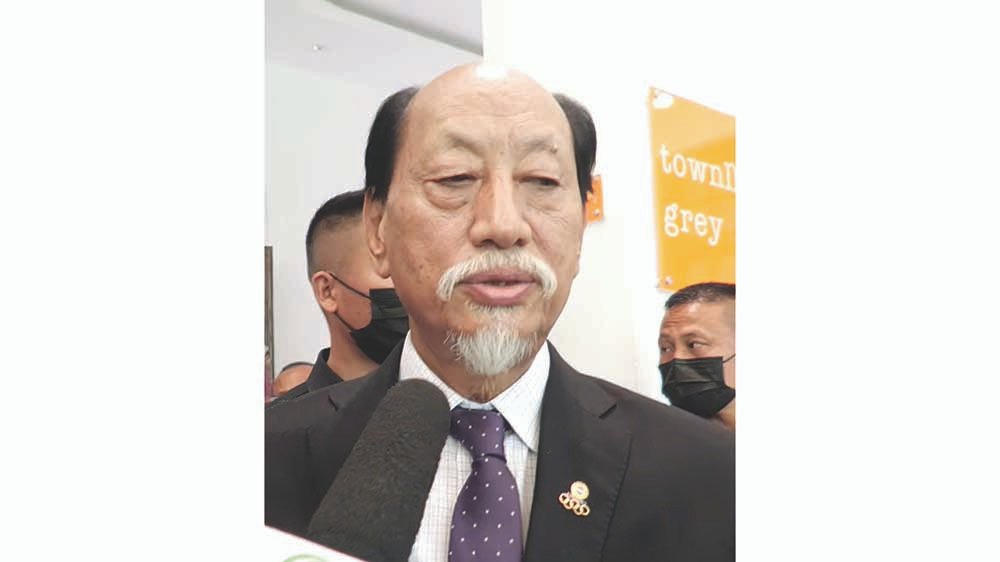
ANATG-2015 hunger strike: CM urges agitating teachers to exercise patience
Staff ReporterDIMAPUR, FEB 12 (NPN)