
The hidden cost of argan oil’s beauty boom is drought, deforestation and disappearing traditions.
Argan oil runs through your fingers like liquid gold, hydrating, luscious, and restorative. Prized worldwide as a miracle cosmetic, it’s more than that in Morocco. It’s a lifeline for rural women and a byproduct of a forest slowly buckling under the weight of growing demand.
To make it, women crouch over stone mills and grind down kernels. One kilogram, roughly two days of work, earns them around €2.60, enough for a modest foothold in an economy where opportunities are scarce. It also links them to generations past.
Long a staple in local markets, today, argan oil is in luxury hair and skin care products lining drugstore aisles worldwide. But its runaway popularity is threatening argan forests, with overharvesting piled on top of drought straining trees once seen as resilient in the harshest of conditions.
For centuries, argan trees have supported life in the arid hills between the Atlantic Ocean and the Atlas Mountains, feeding people and animals, holding soil in place and helping keep the desert from spreading.
The spiny trees can survive in areas with less than an inch of annual rain and heat up to 50°C. They endure drought with roots that stretch as far as 35 metres underground. Goats climb trees, chomp their fruit, and eventually disperse seeds as part of the forest’s regeneration cycle.
A forest that covered about 14,000 square kilometres at the turn of the century has shrunk by 40 per cent. Scientists warn that argan trees are not invincible.
Shifting climate is a part of the problem. Fruit and flowers sprout earlier each year as rising temperatures push the seasons out of sync. Goats that help spread seeds can be destructive, too, especially if they feed on seedlings before they mature. Overgrazing has become worse as herders and fruit collectors fleeing drier regions encroach on plots long allocated to specific families. The forests also face threats from camels bred and raised by the region’s wealthy. They stretch their necks into trees and chomp entire branches, leaving lasting damage, said Zoubida Charrouf, a chemist who researches argan at Université Mohammed V in Rabat
Today, women peel, crack and press argan for oil at hundreds of cooperatives. Much makes its way through middlemen to be sold in products by companies and subsidiaries of L’Oréal, Unilever, and Estée Lauder.
A 1-litre bottle sells for 600 Moroccan dirhams (€57), up from 25 dirhams (€2.38) three decades ago. Products infused with argan sell for even more abroad, and cosmetics companies call argan the most expensive vegetal oil on the market.
The coronavirus pandemic upended global demand and prices and many cooperatives closed. Cooperative leaders say new competitors have flooded the market just as drought has diminished how much oil can be squeezed from each fruit.
Cooperatives were set up to provide women a base pay and share profits each month. But Union of Women’s Argan Cooperatives President Jamila Id Bourrous said few make more than Morocco’s minimum monthly wage.“The people who sell the final product are the ones making the money,” she said.
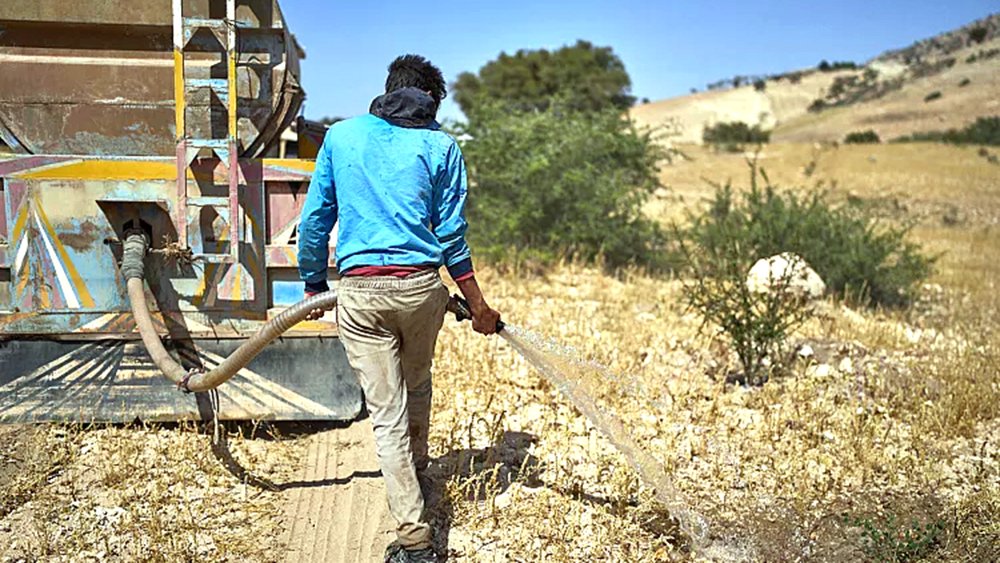
On a hill overlooking the Atlantic, government water truck weaves between rows of trees, pausing to hose saplings that have just started to sprout.
The trees are a project that Morocco began in 2018, planting 100 square kilometres on private lands abutting the forests. To conserve water and improve soil fertility, argan trees alternate rows with capers, a technique known as intercropping.
The idea is to expand forest cover and show that argan, if properly managed, can be a viable source of income. Officials hope it will ease pressure on the overharvested commons and convince others to reinvest in the land. The trees were expected to begin producing this year, but haven’t during a drought.
The government has attempted to build storage centres to help producers hold onto their goods longer and negotiate better deals. So far, cooperatives say it hasn’t worked, but a new version is expected in 2026 with fewer barriers to access. (euronews.)
Despite problems, there’s money to be made.
During harvest season, women walk into the forest with sacks, scanning the ground for fallen fruit. To El Hantati, the forest, once thick and humming with life, feels quieter now. Only the winds and creaking trees are audible as goats climb branches in search of remaining fruits and leaves.
“When I was young, we’d head into the forest at dawn with our food and spend the whole day gathering. The trees were green all year long,” she said.
She paused, worried about the future as younger generations pursue education and opportunities in larger cities.
“I’m the last generation that lived our traditions. Weddings, births, even the way we made oil. It’s all fading.”