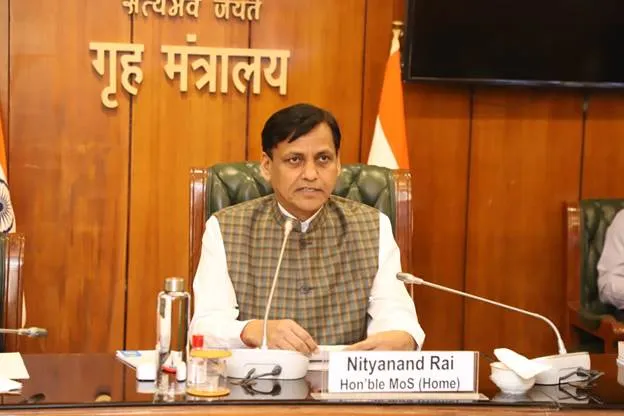
NEW DELHI, AUG 5 (PTI): The Centre detailed its 2026-29 anti-narcotics roadmap based on a “whole-of-government” and “whole-of-society” approach to tackle drug trafficking and substance abuse, the Rajya Sabha was informed on Wednesday.
In a written reply to the Rajya Sabha, Minister of State for Home Nityanand Rai said the government has taken a series of measures to prevent illicit trafficking of narcotic substances.
According to data provided in the reply, the authorities have seized 390.803 kg of narcotic drugs and psychotropic substances smuggled through maritime routes in 2025, including 305.894 kg of amphetamine, 53.62 kg of ganja, 29.954 kg of hashish oil and 1.335 kg of charas.
Rai said the Vision Document on Narcotics Control (2026-2029), released on June 26, lays down a three-year roadmap with clear priorities and time-bound targets to be achieved by various stakeholders through a “whole-of-government” and “whole-of-society” approach.
The minister said the Narcotics Control Bureau (NCB), other drug law enforcement agencies and state police are actively engaged in enforcement under the Narcotic Drugs and Psychotropic Substances (NDPS) Act, 1985.
These efforts have resulted in significant achievements in drug seizures, registration of cases, arrests, disposal of seized drugs, destruction of illicit cultivation, financial investigations and preventive detention under the Prevention of Illicit Traffic in Narcotic Drugs and Psychotropic Substances (PITNDPS) Act, 1988.
The government has also established a four-tier Narco-Coordination Centre (NCORD) mechanism to improve coordination among central and state drug law enforcement agencies and other stakeholders.
To monitor major drug cases, including those involving narco-terrorism, a Joint Coordination Committee chaired by the Director General of the NCB has been constituted.
According to the reply, 11 meetings have been held at the central level and 75 at the state level so far.
States and Union Territories have also been asked to sensitise beat constables, field officers and station house officers on red flag indicators and emerging threats relating to clandestine manufacturing of synthetic drugs, particularly mephedrone and amphetamine-type stimulants.
The minister said financial investigations and effective implementation of the PITNDPS Act are being emphasised to dismantle organised synthetic drug trafficking networks. Comprehensive guidelines have been issued for identifying, tracing and attaching proceeds of crime, while the NCB continues to organise specialised training programmes, including in collaboration with the United States Drug Enforcement Administration.
India also holds regular director general-level and bilateral talks on drug-related matters with countries such as Myanmar, Nepal, Thailand, Sri Lanka, Indonesia, Singapore and the United States, while the NCB has bilateral agreements with 27 countries and memoranda of understanding with 19 countries to strengthen international cooperation in drug control.