
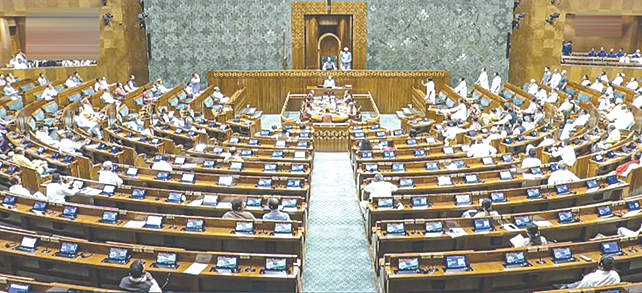
GOVT backs tougher law; OppN terms amendments an ‘eyewash’
NEW DELHI, JUL 28 (AGENCIES): Lok Sabha on Tuesday debated the Public Examinations (Prevention of Unfair Means) Amendment Bill, 2026, with the Centre defending it as a stronger safeguard against examination malpractice, while the Opposition termed the amendments an “eyewash” and said the 2024 law had failed to prevent paper leaks.
The Bill, introduced on Monday after student protests over the alleged NEET paper leak led to the resignation of former education minister Dharmendra Pradhan, proposes punishment of up to 10 years’ imprisonment and a fine of up to Rs. 50 lakh for paper leak offences.
Opening the debate, Minister of State in the Prime Minister’s Office Jitendra Singh said the amendments reaffirmed the government’s commitment to protecting students and strengthening the existing law. He said paper leaks had occurred in states ruled by different parties and that the Modi government had completed the long-pending task of enacting an anti-paper leak law in 2024. RSP MP N.K. Premachandran sought to refer the Bill to a stakeholder consultation committee until December 1.
Leading the Opposition’s attack, Congress deputy leader Gaurav Gogoi said the amendments themselves proved the failure of the 2024 law, arguing that the 2026 NEET paper leak exposed its shortcomings. He accused the government of ignoring students’ concerns, criticised police action against protesters, questioned the celebration of Pradhan’s return to Parliament after his resignation, and sought details of the inquiry committee and officials removed from the National Testing Agency.
The debate began after a week-long parliamentary deadlock, with the Opposition earlier demanding a statement from Home Minister Amit Shah on the police action against students during the Cockroach Janta Party-led march to Parliament on July 20.