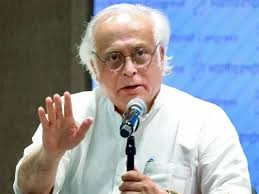
NEW DELHI, OCT 28 (PTI): With the Supreme Court castigating the Centre over medicine overpricing, the Congress on Wednesday termed it a “major failure” of the government and accused it of having remained “indifferent” to the issue of expensive medicines and hefty bills in its “arrogance of power”.
Congress general secretary in charge of communications Jairam Ramesh’s attack on the government came after the Supreme Court flagged the “massive difference” between the MRP of medicines and the price to retailers.
The apex court Tuesday slammed the Centre asking if it can provide “any justification for this loot” and also if manufacturers be allowed to “run amok”. In his post in Hindi on X, Ramesh said “expensive medicines” and the “hefty bills” of hospitals have made life difficult for ordinary families.
Over the past 12 years, the blow of inflation has severely impacted health services too, yet the Modi government remains “indifferent in the arrogance of power”, the Congress leader said.
Ordinary people are bearing the punishment for the government’s incompetence, he claimed.
“Families are being crushed under the burden of massive medical bills, and people are even being forced to take loans just to afford treatment for their loved ones,” Ramesh said.
“Mr. Modi, healthcare is not merely a business – it’s a matter of people’s lives. The government’s responsibility is not to protect the profits of pharmaceutical companies, but to ensure affordable medicines and cost-effective treatment for the public. What kind of ‘achche din’ are these, where the common man is compelled to drown in debt for medical care,” the Congress general secretary said. The Supreme Court is having to ask the government some tough questions, he said.
“It is the government’s duty to care about people’s concerns and safeguard their interests. But when the government turns its back on its responsibilities, the Supreme Court is compelled to intervene. This is a major failure of the Modi government,” he said.
His remarks came a day after a bench of justices Vikram Nath and Sandeep Mehta observed that the National Pharmaceutical Pricing Authority (NPPA) seems to be a “totally defunct” body and asked the government why the entire system was working to help pharmaceutical manufacturers.
After the Centre told the bench about the decision to cap the trade margin on anti-cancer drugs at 30 per cent of the maximum retail price (MRP), the bench asked why there can’t be a uniform 16 per cent margin on all medicines.