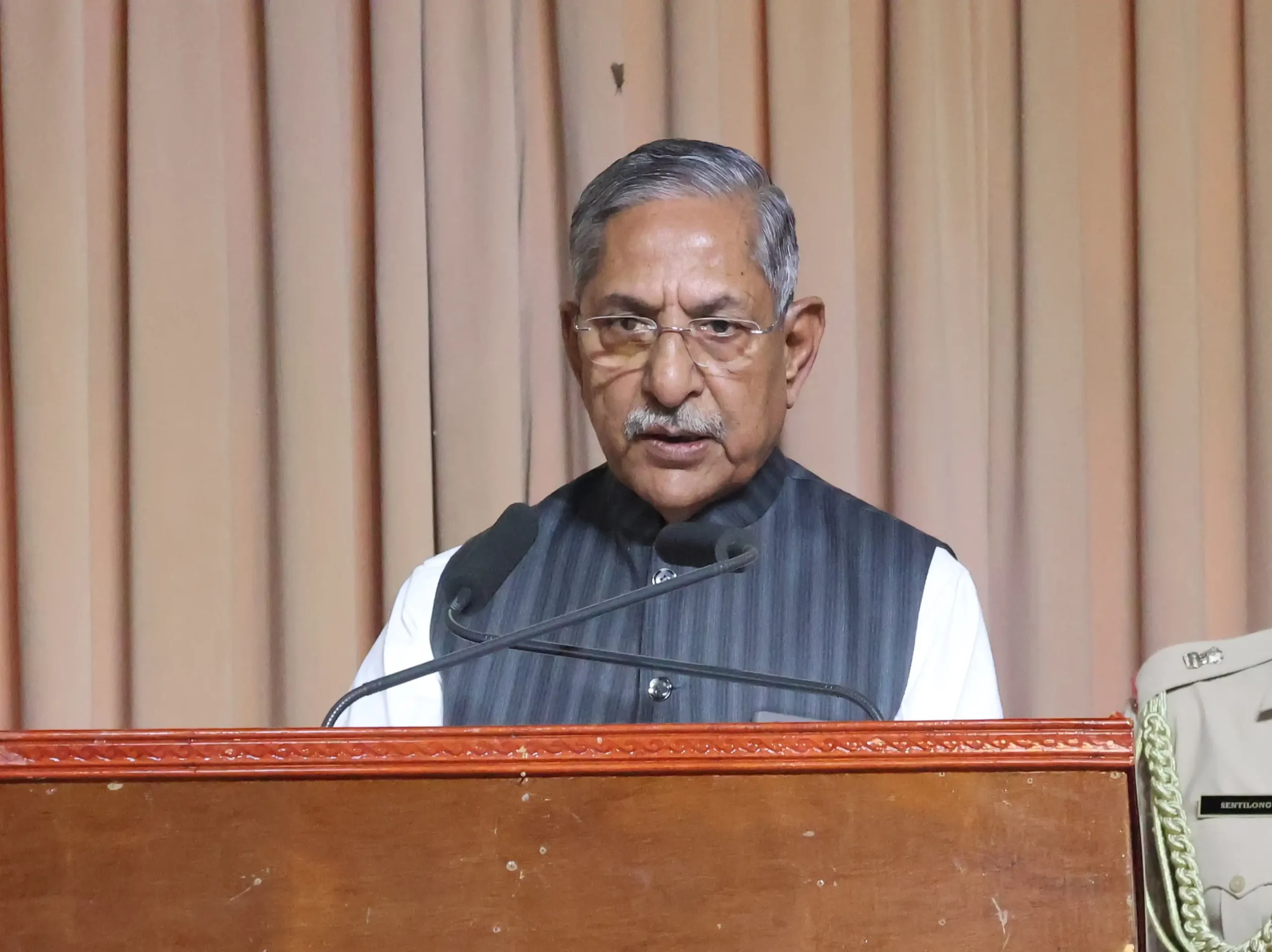
DIMAPUR: Nagaland governor Nand Kishore Yadav on Friday said the cooperative movement must become a key driver of inclusive growth and self-reliance by embracing technology, encouraging youth participation and empowering women-led enterprises.
Addressing the COOPS Day (International Day of Cooperatives) and Cooperative Week celebration commemorating five years of the Ministry of Cooperation at Lok Bhavan, Kohima, the governor said the cooperative movement embodied the spirit of self-help, mutual support and collective action, and had played a transformative role in empowering communities across the country. He said the occasion was significant as it marked the International Day of Cooperatives 2026 while commemorating five years of the Ministry of Cooperation.
Referring to the Centre’s vision of “Sahakar Se Samriddhi” (Prosperity through Cooperation), Yadav said the ministry had undertaken major initiatives, including White Revolution 2.0, strengthening cooperative banking, promotion of the blue economy, and investments in cooperative education and leadership development, positioning cooperatives as key drivers of an Atmanirbhar Bharat.
Highlighting Nagaland’s potential, he said the state had immense opportunities in dairy, fisheries, piggery, handloom and handicrafts, and organic agriculture. He also acknowledged the role of institutions such as the Nagaland State Cooperative Bank, the State Dairy Cooperative Federation and other cooperative federations in strengthening value chains and expanding market access for farmers and producers.
Calling for a future-ready cooperative sector, Yadav stressed the need to adopt technology, encourage greater youth participation, empower women-led enterprises and invest in skill development to build professionally managed and market-oriented cooperatives.
The governor urged all stakeholders to work collectively towards building a prosperous, vibrant and self-reliant Nagaland through the spirit of cooperation.
Addressing the programme, PHED and cooperation minister Jacob Zhimomi said the cooperative sector had long contributed to grassroots economic development and community empowerment and had received renewed impetus in 2021 under the leadership of Prime Minister Narendra Modi as an important pillar of the vision of Aatmanirbhar Bharat. He said the cooperative sector would play a pivotal role in Nagaland’s economic development and highlighted the state’s efforts to promote digital transactions to improve transparency and accountability. He asserted that direct market access from farmers to consumers would eliminate unnecessary intermediaries and ensure better returns for stakeholders.
Jacob said the Centre had encouraged all states to strengthen cooperative institutions and values, adding that Nagaland remained committed to taking the cooperative movement forward with support from both the Centre and the state government.
The minister informed that a week-long celebration was being organised across the country to mark the occasion, while Nagaland would conduct awareness programmes, cleanliness drives, plantation campaigns and activities in schools and colleges to promote cooperative values among the younger generation. He also said efforts were underway to engage experts and professionals in developing market-oriented cooperative models.
Delivering the keynote address, cooperation secretary Orenthung Lotha said 231 Primary Agricultural Credit Societies (PACS) across Nagaland had been computerised, enabling them to streamline operations, improve transparency and provide better services to members.
He described the initiative as a major milestone in strengthening the cooperative credit structure, promoting financial inclusion and supporting sustainable economic growth. Lotha said Nagaland had vast potential for cooperative development in agriculture and allied sectors, including fisheries, livestock, poultry, handloom and multipurpose cooperatives.
He called for renewed efforts to revive dormant cooperatives by strengthening institutional capacity, identifying reasons for inactivity and reorienting societies towards activities aligned with local resources, community needs and market demand.
Earlier, the governor virtually inaugurated four model cooperative society offices: Thenumia Kehou Multipurpose PACS Ltd. at Vidima village in Chümoukedima district, Shurho Multipurpose PACS Ltd. at Kigwema village and Chedema Multipurpose PACS Ltd. at Chedema village in Kohima district, and Punglwa B Village Women Livelihood & Credit Cooperative Society Ltd. at Punglwa B village in Peren district.
Experience-sharing sessions were also held, with Ladongwati, managing committee member of Sungben Tsuyonger PACS, Tuli, and Mongshai, chairperson of Khiamnnyaan PACS, Noklak village, sharing how cooperative societies had contributed to improving rural livelihoods and empowering local communities.