
The Exclusive Handloom Expo, “Heritage on the Loom,” was inaugurated on March 17 at Hotel Saramati, Dimapur. The seven-day expo, scheduled to run till March 23, is being organized by the Weavers’ Service Centre, Dimapur and sponsored by the Department Commissioner for handlooms, ministry of textiles, Govt. of India.
A total of 60 stalls representing Nagaland, Assam, West Bengal, Jharkhand, and Manipur are participating at the expo.
The inaugural ceremony was graced by department of industries & commerce, government of Nagaland, Director, P. Tokugha Sema, as the special guest, including NHHDC Ltd., Dimapur, general manager, Narola Alemba Jamir, Padmashri awardee (2023), Kohima, Neihuno Sorhie, and Weaver’s Service Centre, Guwahati, zonal director, S. Bandyopadhyay as guests of honour.
In his speech, P. Tokugha Sema stated that Nagaland has around 35,000 weavers as per earlier census data, with the number likely to have increased and highlighted that the handloom industry is the second-largest source of employment after agriculture, giving employment to 4.3 million contributing significantly to livelihoods and clothing production, accounting for nearly 15% of the country’s clothing needs.
He stated that the Weavers’ Service Centre (WSC), Dimapur, provides design support, technical training, and access to government welfare schemes. He added that several weavers had already benefited from government initiatives, including the free distribution of looms and solar lighting under the Ministry of Textiles, and stressed the need for better collaboration with concerned agencies to access more opportunities.
He encouraged weavers to make use of the expo as a platform for networking, exchanging ideas, and expanding their market reach beyond the state. He also highlighted the uniqueness of Naga handloom designs and urged participants to promote and support each other’s products. He emphasized the importance of maintaining quality, avoiding shortcuts, and ensuring proper finishing and standardization of products
Further, he called for enhanced pension benefits for award-winning artisans, noting that current recipients receive Rs 8,000 per month as pension.
He urged weavers to utilize their skills commercially, and continuously improve their products and support family livelihoods, while expressing confidence that the expo would provide valuable exposure and benefit all participants and encouraged weavers to aim for state and national-level recognition, participate in exhibitions, and continuously improve their products.
In his speech, guest of honour, Weaver’s Service Centre, Guwahati, zonal director S. Bandyopadhyay highlighted that and handloom marketing events are very important for creating forward linkages in the sector.
He mentioned that India has around 3.5 million handloom workers, with approximately 43,000 in Nagaland according to census, and emphasized the sector’s cultural and economic importance, particularly in the Northeast where weaving remains a traditional practice.
He explained that most weavers in the region are either domestic or part-time artisans, with skills passed down through generations, especially among women, with traditional weaving widely practiced and traditionally rooted. He stated that some artisans engaged commercially and stated that such expos provide opportunities for weavers to showcase products, exchange knowledge, and understand market trends.
He also noted that the handloom sector receives central support through the Ministry of Textiles, specifically via the Development Commissioner for Handlooms, which operates 29 centres nationwide, including Dimapur.
He highlighted the role of the Weavers’ Service Centre and implementing agencies in providing technical support, training, access to subsidized raw materials through NHHDC, and common facilities for preparatory work. He added that cluster-based programs support weavers with infrastructure, skill upgradation, and guidance for market-oriented production.
He emphasized that the commercial handloom sector is largely buyer-driven, requiring weavers to adapt to customer demands regarding designs, color palettes, and product dimensions. While Nagaland’s weavers already possess rich traditional designs, aligning with market preferences is essential to expand sales beyond the state.
He underscored the importance of understanding the value chain—from raw materials to final production—and maintaining competitiveness despite challenges from cheaper mill-made products.
However, he noted that handloom products have a unique value that cannot be replicated by machines.
He stressed that quality should not be compromised at any stage, including weaving, dyeing, and finishing, as even minor defects could lead to rejection in high-value markets. He stated that handloom products are increasingly positioned in niche and premium segments, where quality and craftsmanship determine success.
He further highlighted the need to enhance weavers’ income, stating that the goal is to increase earnings to a sustainable level to attract younger generations to the sector. He noted that with proper support, training, and market access, weaving can become a viable and profitable profession.
He concluded by encouraging weavers to utilize their skills effectively, align with government schemes, and focus on quality and market demand, expressing optimism that the sector holds strong potential for growth.
Short speeches were also delivered by guest of honour, NHHDC LTD, Dimapur, general manager, Narola Alemba Jamir and Padmashri 2023 recipient, Neihuno Sorhie.
Other highlights of the program included welcome address and keynote address by WSC, Dimapur, assistant director (P) /HoO, Biswajit Das, vote of thanks by WSC, UDC, Mohit Yadav.
A cultural program cum knowledge session will be held on March 19 from 12 noon onwards
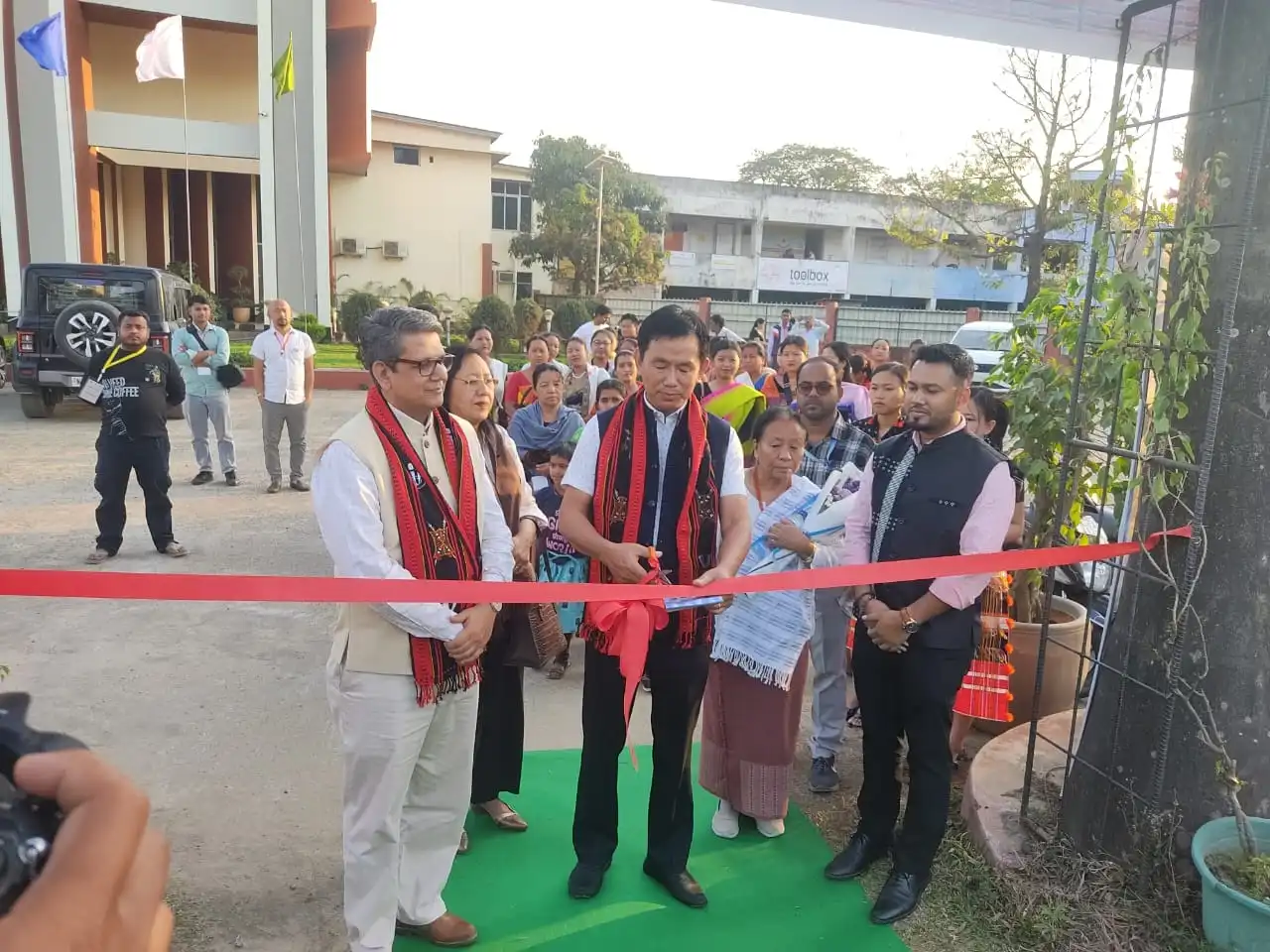
Dimapur: Tokugha urges weavers to use skills commercially
Staff ReporterDIMAPUR, MAR 17 (NPN):