
Like hillocks a few lakh square metres and more than 200ft (60 meters) high and emitting an unbearable stench that stretches thousands of yards, Burma Camp is home to approximately 10,000 tons of rotting food items, plastic, paper, rags and a host of other discarded items transported from across Dimapur.
However, the menace of the garbage its poisonous aroma are not as deadly as the invisible- deadly viruses and harmful gas emitted due to chemical reactions between various discarded l liquid , paints etc. within the dump.
According to several residents living nearby, the landfill also emits an unseen gas – methane- regarded as a potent greenhouse gas that traps 82 times more heat than carbon dioxide over 20 years.
Some of the residents told this Reporter that there have been several cases of people getting sick due to inhalation of the noxious stench including insect and mosquito bites. There was also a recent case where one of the residents of the nearby colony, suffered from the deadly scrub typhus.
Fortunately urgent medical attention and hospitalization saved the person. The garbage dump area is also one of the major causes of various diseases and infections since the past few years. Dimapur has very poor waste segregation levels, especially for wet waste to prevent production of methane.
Due to the culture of cooking with fresh produce, a high proportion of waste generated at the dump site was ‘wet waste’- such as food scraps and vegetable peelings. Also more than 50% of the discarded dump is biodegradable. The environmental consequences of methane emitting from the dump site has potentially devastating consequences especially due to the scorching summer months, that turn the land fills into sources for emission of toxic gas that pollute the air spreading across the entire perimeter of the site.
With no strict rules for segregation of rubbish at the dump site –the wet waste is mostly unsegregated and left to rot. As the garbage decomposes, it generates huge amounts of noxious methane gas. There is also no system to trap the emitted methane , used in other developed countries.
For Dimapur’s rag pickers, who make a living climbing from the land fills from plastics, glass, wires, and metals – which they sell for a few rupees; the toxic air can prove deadly. Though it is illegal to enter the dumpsites, the dangerous practice continues.
Removing waste is not solving the problem what is needed is the ensure there is a wide civic responsibility on the culture of mixed waste dumping.
A petition was filed by Sunrise Colony residents in 2022, raising concerns about the unscientific dumping of waste and its impact on the environment and public health.
The NGT’s orders from February 2023 included a comprehensive plan to overhaul waste management, which involved bio-mining and bio-remediation of the dumpsite, relocating waste, and implementing measures to prevent pollution of the nearby Dhansiri River.
Following the lack of response, the NGT issued a fresh notice in April 2025 to the Dimapur Municipal Council and other government agencies, including the Chief Secretary of Nagaland.
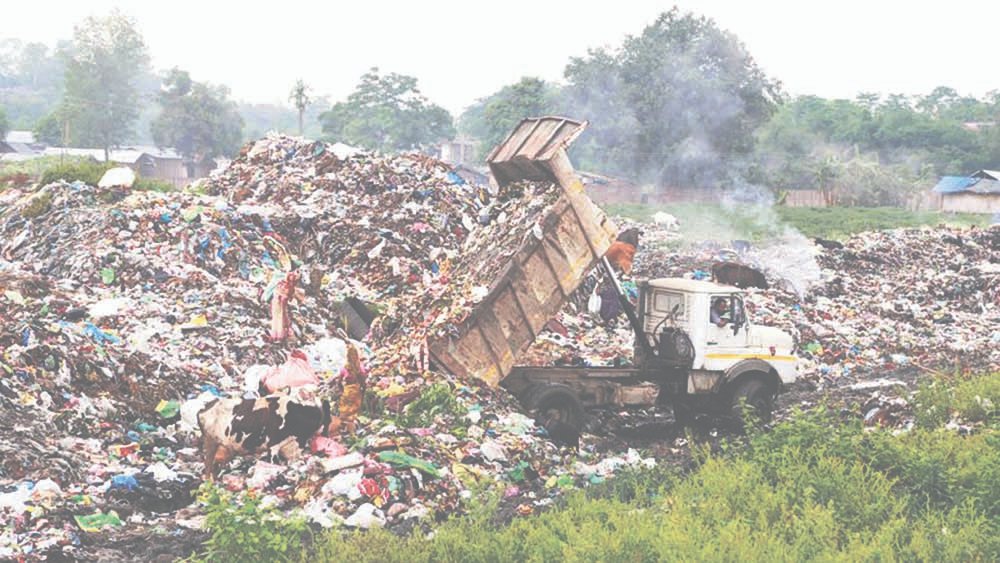
Dimapur’s hillocks of perennial garbage woe
Staff ReporterDimapur, Sep 28 (NPN)