
Correspondent
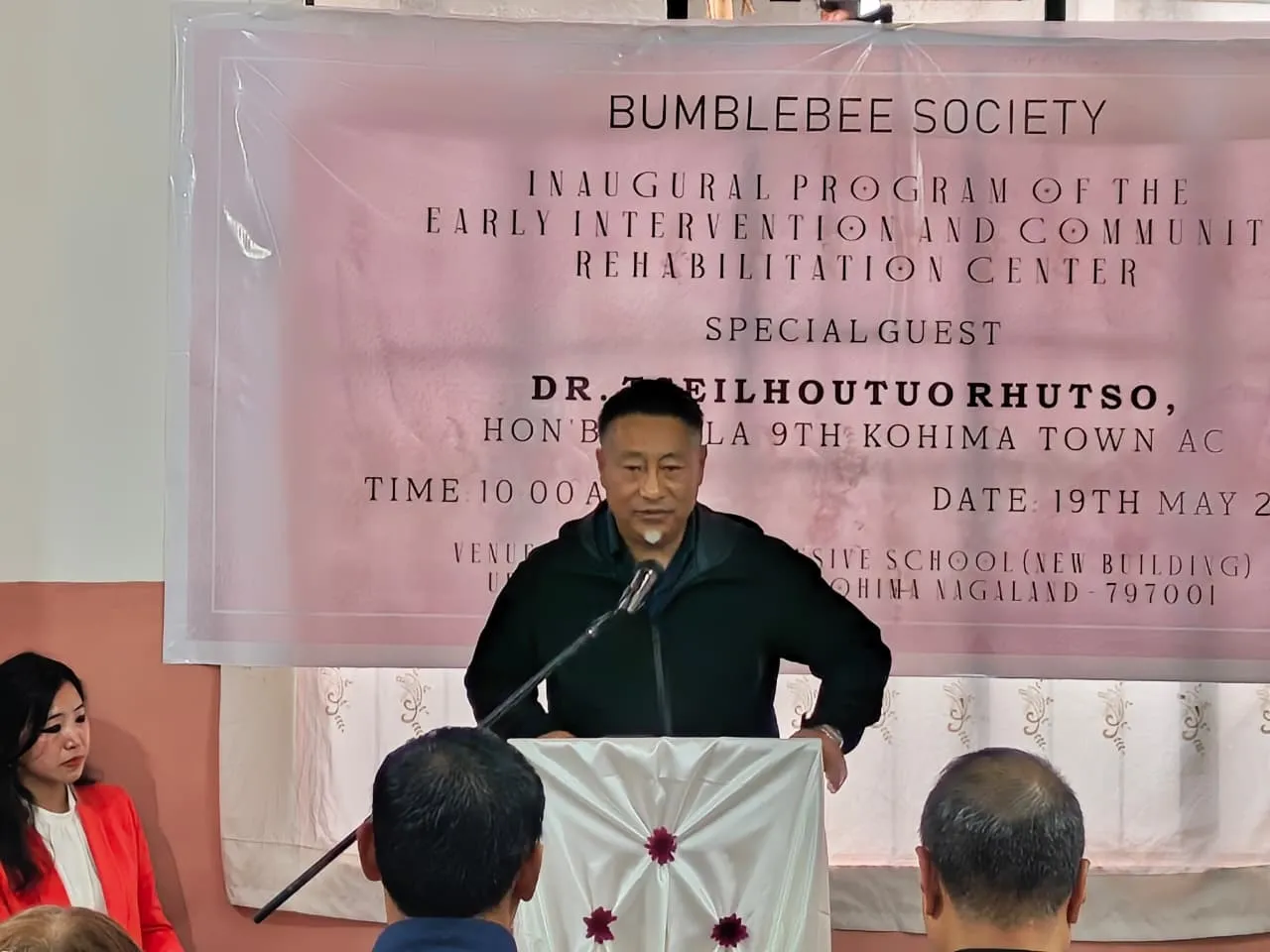
KOHIMA, MAY 19 (NPN): An Early Intervention Centre aimed at supporting children with disabilities through integrated therapeutic and educational services was inaugurated at Bumblebee Inclusive School on Monday. The centre was inaugurated by Dr. Tseilhoutuo Rhütso, MLA.
The newly launched centre will provide integrated access to physiotherapy, occupational therapy, speech therapy, special education, counselling and Community-Based Rehabilitation (CBR) home-based services. The services are intended to support children with conditions such as Autism Spectrum Disorder, Down Syndrome, Cerebral Palsy and other developmental disabilities.
Addressing the gathering, Dr. Rhütso likened the Bumblebee to a bee whose body appears too heavy for its wings, yet is still capable of flying. He said the children at the centre may appear burdened by challenges, but with proper care and support, they would one day “fly high” and achieve remarkable things.
Acknowledging the efforts of teachers and caregivers, Dr. Rhütso said working with children with special needs required extraordinary patience, empathy and dedication. He remarked that even teachers in regular schools sometimes struggled with patience, making the service rendered by the staff of Bumblebee Inclusive School especially commendable.
The MLA also observed that while society celebrated the inauguration of bridges, flyovers and institutions, the celebrations within a centre like Bumblebee were different and deeply meaningful. He said teachers and parents likely celebrated daily milestones such as when a child spoke a word, formed sentences or made developmental progress.
He assured the institution of his support and said he was willing to raise issues concerning children with special needs in the government and the Assembly. He encouraged the school and parents to share innovative ideas, suggestions and public demands with him.
Sharing a parent’s experience, Dr. Sao Tunyi said Autism Spectrum Disorder became a reality for his family when his son was diagnosed after developmental regression around the age of three. He said the diagnosis initially led to denial, especially because there was no family history of autism and his child had previously appeared to be developing normally.
Despite being a health professional, he admitted he soon realised there were no simple medical solutions for autism and that professional support and intervention were essential. However, he pointed out that help was difficult to access in Nagaland, where many parents were still advised to seek only prayer-based solutions.
Dr. Tunyi said the Early Intervention Centre had already benefited his child and described early intervention as a slow but vital process requiring patience, consistency and perseverance. He added that the centre also provided emotional relief to parents by offering a safe environment free from judgement.
He also called for better implementation of government welfare schemes, easier access to disability certificates and stronger financial support for intervention centres. He noted that disability care was expensive and intervention centres required trained professionals, specialised tools and long-term commitment despite limited financial sustainability.
In her address, Founder of Bumblebee Society, Kopele V. Tepa, described the launch of the Early Intervention Centre as a testament to resilience, conviction and hope.
She said the journey toward establishing the centre was filled with discouragement, including rejection from financial institutions that considered the vision “high risk” and criticism that disability-related issues were not as important as other societal concerns. However, she maintained that inclusion, dignity and equal opportunity were essential elements of a just society.
Referring to the 2011 Census, Tepa said Nagaland had 29,631 persons with disabilities, of whom only 12,904 were literate while 16,727 remained illiterate. She added that the actual figures were likely higher because many disabilities remained unreported due to stigma, fear and exclusion.
According to her, the centre was established with the vision that early diagnosis, awareness, family support and timely intervention would help families embrace disability while focusing on the child’s overall wellbeing.
Earlier, the programme was chaired by headmistress of Bumblebee Inclusive School Kezhalenuo Savi. Presentations on physiotherapy in neuro developmental disorders, special education support, community-based rehabilitation and inclusion awareness were delivered by physiotherapist Dr. Nzani, special educator Tsikhoü Medoze, CBR worker Thejangunuo Leno and counsellor AtsonuoThapo.