
From The Gambia to the US, sea salt is increasingly seeping into the freshwaters people need for drinking and producing food.
Someone turns on the tap for drinking water in New Orleans, but the water is salty. In Bangladesh, farmers are forced to turn previously fertile land into brackish ponds to raise shrimp. In The Gambia, a farmer watches her crops wither and fail, doused in salt.
Around the world, previously reliable coastal freshwater supplies are turning to salt, invaded by seawater. This is the strange, slow-moving crisis of saltwater intrusion, and it is increasingly affecting communities around the world.
Saltwater intrusion refers to the inland movement of saline water – from the ocean or sea – into freshwater aquifers. It is impacting low-lying countries like The Gambia, Vietnam and Bangladesh most so far, but is a global problem, including for the US. All continents except Antarctica are projected to have coastal areas with at least 1km (0.6 miles) of inland saltwater intrusion by 2050.
SThis encroaching saltwater tends to occur gradually over an extended period but presents a long-term devastating impact on drinking water sources, rice farming and coastal communities around the world, says Robert Young, a professor of coastal geology at Western Carolina University in the US.
“Saltwater intrusion is a perfect example of a slow-onset climate crisis,” he says. Too often, we focus on big events like storms, and don’t pay attention to other changes happening more slowly, he says. “We prepare for the wrong disasters, [but slow-onset climate effects] are the ones that can really impact the future of coastal communities, especially in the developing world.
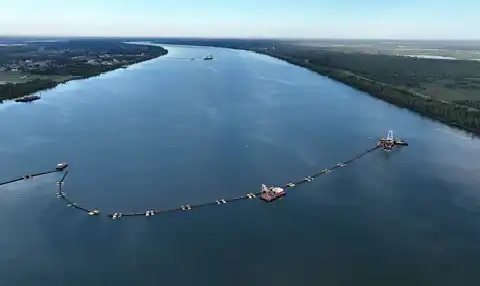
In the US, saltwater intrusion is already present in many coastal aquifers, and is threatening farms and drinking water supply, especially in low-lying south Florida, where the vulnerable Biscayne Aquifer is the primary source of freshwater. Scientists have found wells in Rhode Island to be contaminated by saltwater. Residents of Louisiana have even begun to notice a salty taste in their tap water, The Guardian reported, and in 2023 the Louisiana state governor requested a presidential emergency declaration due to its impacts.
Saltwater intrusion into drinking water is not just unpleasant. Studies have found that populations drinking saline water are at greater risk of adverse health outcomes including high blood pressure and health issues in pregnancy.
The intrusion often happens at the boundary or interface between saltwater and freshwater. The position of the salt depends on the balance between sea level and the water levels on land, says Holly Michael, a coastal hydrogeologist at the University of Delaware in the US. “Any process that tips that balance one way or the other is going to cause that salt front to move inland,” she says.
This process is being worsened by climate change leading to rising temperatures, decreases in rainfall and a global increase in sea levels, says Michael.
In some places, including the US, the excessive extraction of groundwater for demands such as domestic, agricultural and industrial has also contributed significantly to saltwater intrusion, letting underground saltwater intrude into soil and rivers. But it’s coastal farmers in some of the world’s poorest countries who are already the most impacted by saltwater intrusion. Nurse Senneh was a child when she started growing rice with her parents in Sankandi, a small mangrove-rich village of about 600 people in The Gambia. Her parents taught her that rice seedlings thrive in water, so the crops should only be cultivated during the wet season, when plenty of rain supports irrigation.
The practise had worked for the family for generations: “My father was not wealthy,” says Senneh, now 59. “He did hard labour to take care of the family, but during the rainy season we had a bumper harvest to take care of the family.”
Senneh began rice cultivation on her own in 1987, soon after she got married. Bumper harvests from her field, she says, helped feed her family, but started to dwindle when saltwater from the Atlantic Ocean began to creep into her one-hectare (2.5-acre) rice field some four years ago.
The situation was completely unfamiliar to Senneh. She began seeing stunted growth and lower yields in her rice crops and, despite efforts to limit the impacts, had to move her cultivation elsewhere.
The Gambia is among the world’s lowest-lying countries, and saltwater intrusion was first reported here in the 19th Century. But it is climate change that is now primarily responsible for saltwater intrusion, says Sidat Yaffa, a professor in climate change and agronomy at University of The Gambia. (BBC)
The Gambia River, which gives the country its name and is one of West Africa’s longest navigable waterways, is the main source of freshwater for The Gambia’s rice cultivation. Rice needs a lot of water to grow: some 2,500 litres (550 gallons) is required to produce just 1kg (2.2lb).