
The Department of English, Fazl Ali College (FAC), organised Lit Colloquium V, the fifth installment of its academic talk series, with a panel discussion titled “From Chromosomes to Choice: Understanding Gender Today.”
Held in the Conference Hall, the programme formed part of the Department’s observance of International Women’s Day, aimed at fostering dialogue on contemporary perspectives of gender.
The panel featured associate professor (Retd.) and former head of the department of English, FAC, Dr. Watimongla Pongener, assistant professor in the Department of Zoology, FAC, S. Imkongtiba Longkumer; and youth director of MTBA Youth Ministry, Akangtemsu Yaden.
Dr. Watimongla Pongener spoke from a literary perspective, highlighting the evolving ways in which gender has been represented and interpreted in literature. Drawing on feminist thinkers such as Virginia Woolf and Simone de Beauvoir, she discussed how contemporary literary discourse increasingly challenges traditional gender roles and explores gender as shaped by social, cultural and personal contexts. She also referred to concepts such as ‘Intersectionality’ and the growing representation of diverse identities, including LGBTQ+ voices in modern literary works.
Speaking from a scientific standpoint, S. Imkongtiba Longkumer addressed the biological foundations of sex. Introducing the role of chromosomes in determining biological sex, he explained the scientific framework through which sex is traditionally understood in biology. Highlighting the importance of scientific clarity, he outlined the genetic mechanisms associated with male and female biological characteristics and reflected on ongoing debates surrounding gender identity within wider society.
Akangtemsu Yaden offered a theological perspective, drawing on biblical teachings. He presented three core ideas: first, that humanity is created by God as male and female as part of divine design; second, that the Bible does not draw a strict separation between the mind and the physical body, emphasizing the unity of human identity; and third, that identity is received rather than invented. Reflecting on contemporary debates, he noted that Christians are called to respond to such issues with a balance of truth, humility and compassion.
The session was chaired by Imkongtula, a sixth-semester student of the Department of English and moderated by Assistant Professor, Department of English, Maonginla. The program concluded with an interactive session.
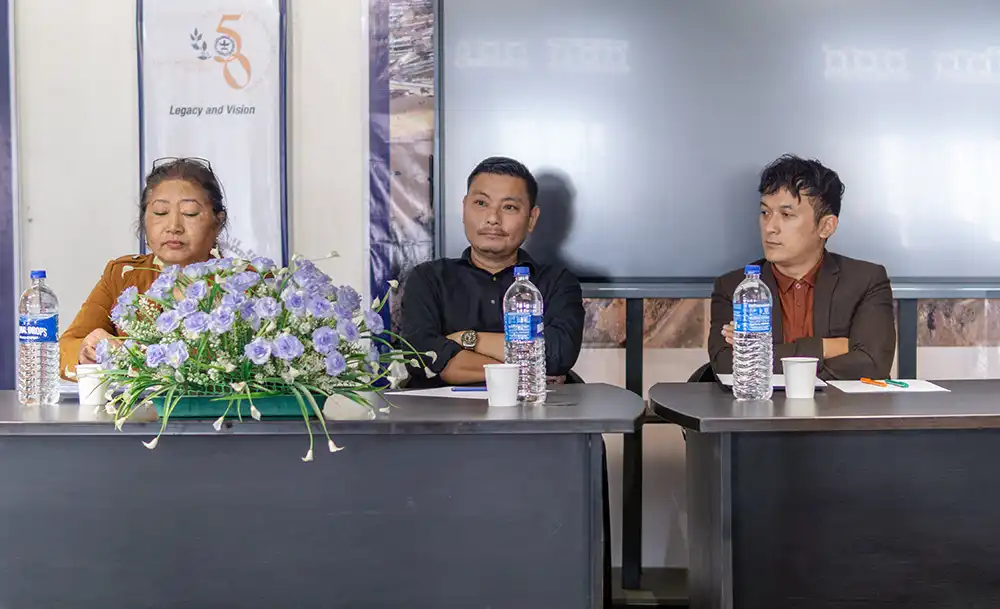
Fazl Ali College holds discussion on gender issues
DIMAPUR: