
Nagaland, blessed with rich biodiversity, unique agricultural products, indigenous knowledge, and vibrant tribal traditions, has emerged as a state with significant GI potential. A Geographical Indication (GI) tag is a legal sign used on products that have a specific geographical origin and possess qualities, reputation, or characteristics essentially linked to that place. In India, GI registration is governed by the Geographical Indications of Goods (Registration and Protection) Act, 1999, which came into force in 2003. Beyond providing legal protection and economic benefits, GI recognition plays a crucial role in preserving cultural identity and traditional knowledge. It encourages local communities to protect their unique heritage while creating opportunities for sustainable development and livelihood generation. For the younger generation, understanding the importance of GI products goes beyond commerce. It offers an opportunity to appreciate the wisdom inherited from their forefathers, safeguard indigenous resources, and strengthen the identity of Naga society.
Products such as Naga Mircha (King Chilli), Naga Cucumber, Naga Tree Tomato and traditional crafts such as Chakhesang Shawls have received GI recognition, highlighting the distinctiveness of the state’s natural and cultural heritage. These products are closely associated with the land, climate, and traditional practices of the Naga people. GI recognition not only protects products from unauthorized use and imitation but also helps preserve traditional knowledge, promote sustainable livelihoods, and strengthen cultural identity. For the people of Nagaland, GI products serve as symbols of pride, connecting modern economic opportunities with ancestral wisdom and heritage.
By combining innovation, rational thinking, and creativity with traditional values, young Nagas can contribute significantly to the preservation and promotion of their cultural and natural heritage. Protecting GI products is therefore not only about preserving the past but also about building a stronger, more prosperous, and culturally confident future for Nagaland.
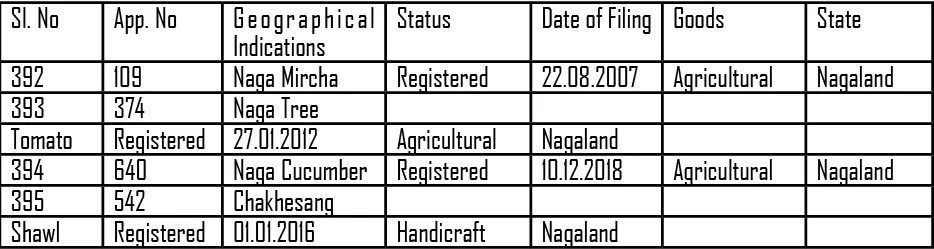
Details of GI Applications Registered as on December 31, 2025 Govt India Data.
The Department of Posts released special postal covers for Nagaland’s Geographical Indication (GI)-tagged products as part of a larger initiative to promote GI products. GI-Tagged Products & Special Cover Releases: Naga Mircha (King Chilli): Released on August 15, 2021. Chakhesang Shawl: Released on August 28, 2021, at the Office of the Postmaster General in Dimapur. Naga Tree Tomato: Released on September 6, 2021. The special cover was also designated for display at the National Philatelic Museum in New Delhi and distribution nationwide and internationally.
Naga Mircha (King Chilli) – The Fiery Pride of Nagaland
Naga Mircha, popularly known as King Chilli, Raja Mircha, or Bhut Jolokia (Ghost Pepper), is one of the most famous agricultural treasures of Northeast India. Native to Nagaland, it is celebrated worldwide for its exceptional pungency, unique aroma, and deep cultural significance. It became the first product from Nagaland to receive a Geographical Indication (GI) tag in 2008, establishing its identity as a distinctive and protected agricultural product.
Botanical Profile:Scientific Name: Capsicum chinense. Common Names: Naga Mircha, Raja Mircha, Bhut Jolokia, Ghost Pepper. Heat Level: Above 1,000,000 Scoville Heat Units (SHU) – once recognized as the world’s hottest chilli. Appearance: Wrinkled surface, pointed tip, vibrant red on maturity. Key Characters: Intense heat with a fruity aroma and distinctive smoky flavor
Naga Mircha thrives in the warm, humid climate of Nagaland. It is extensively cultivated in districts such as Kohima, Mokokchung, Peren, and Dimapur.What makes it special is that traditional cultivation methods, preserved and passed down through generations of Naga farmers, are still followed. This low-input, traditional farming is a major reason its aroma and pungency are maintained. Why the GI Tag Matters: The GI tag awarded in 2008 was a landmark for Nagaland. It legally protects Naga Mircha from imitation. It certifies authenticity and origin. It has boosted market confidence, demand, and price realization for farmers nationally and internationally
Cultural and Culinary Significance: For the Naga people, King Chilli is much more than a spice. It is central to everyday Naga cuisine – used in smoked pork and meat dishes, bamboo shoot preparations, chutneys, and pickles. Because of its high capsaicin content, it also acts as a natural preservative, which is vital in traditional food preservation practices. Every household has its own way of using it – fresh, dried, smoked, or as a paste. Economic Importance: Naga Mircha is a high-value cash crop. It provides livelihood to thousands of farming families.Today, thanks to GI recognition and growing global demand for super-hot chillies, it is marketed in many value-added forms: Dried whole chillies. Powder, flakes and smoked powder. Sauces, pickles and chutneys and Oils and extracts
Health and Medicinal Value:The heat comes from capsaicin, a bioactive compound studied for: Pain-relieving properties. Improved metabolism and thermogenesis. Antioxidant activity and Improved circulation
It is also rich in Vitamins A and C. In traditional Naga medicine, it has been used in small quantities to aid digestion and relieve digestive ailments. Naga Mircha is a perfect example of how a local crop can carry global fame while staying rooted in culture. It represents the biodiversity, traditional knowledge, and food heritage of Nagaland. The GI tag granted in 2008 safeguards the authenticity and identity of Naga Mircha. It protects traditional farming methods, promotes conservation of indigenous crop varieties, and ensures that the product retains its unique association with Nagaland.
India Post in 2022 issued a special cover depicting Naga Mircha and pictorial cancellation of Naga Mircha. Naga Mircha stands as a symbol of Nagaland’s rich biodiversity and agricultural heritage. Its exceptional heat, global recognition, cultural importance, and economic value make it one of the most celebrated GI products of India.
Naga Tree Tomato: The Nutritional Treasure of the Hills
The Naga Tree Tomato (Solanum betaceum) – also known as Tamarillo – is a distinctive fruit crop widely cultivated in the hill districts of Nagaland.itis locally known as “Sei Bangenuo”the name derived from the tenyidie which translates to “Tree Tomato”. Known for its attractive appearance, tangy-sweet flavour, and nutritional richness, it has become one of the state’s most important horticultural products.
Distinctive Features: The fruit is easily identified by its: Shape: Oval or egg-shaped. Colour: Bright red, orange, or deep purple when ripe. Taste: A unique sweet-tangy flavour.
Nutrition: Rich in vitamins, antioxidants, and minerals. Adaptability: Highly suited to hill environments and small-scale farming systems. The cool climatic conditions of Nagaland contribute significantly to its quality, productivity, and early fruiting habit.
Area of Cultivation: Tree Tomato is extensively cultivated across Nagaland’s hill districts, including: Kohima,Phek,Mokokchung, Wokha and Zunheboto
Uses and Value Addition: Naga Tree Tomato is consumed fresh and is increasingly processed into high-value products such as: Juices, Beverages, Jams, Jellies, Chutneys, Pickles, Sauces and Preserves.Its growing popularity in local and urban markets has created strong demand as a healthy, exotic fruit.
Nutritional Value: Tree Tomato is a powerhouse of nutrition, rich in: Vitamin A, Vitamin C, Vitamin E, Antioxidants, Dietary fibre and Essential minerals.These properties make it an important component of a healthy diet and a preferred choice for health-conscious consumers.
Economic Importance: The crop provides farmers with a valuable source of supplementary income and contributes to agricultural diversification. Well-suited to small holdings, it helps hill farmers improve livelihoods while promoting sustainable agriculture.
GI Recognition – A Mark of Authenticity: Recognizing its unique characteristics and geographical association, Naga Tree Tomato received Geographical Indication (GI) status. It was filed in 2013 and registered as a GI product of Nagaland, listed among India’s registered GIs. It is known locally as “Naga Tree Tomato” and is registered under the Geographical Indications of Nagaland. Recognizing its unique characteristics and geographical association, Naga Tree Tomato received GI status in 2021. This registration protects its authenticity, acknowledges the traditional cultivation knowledge of Naga farmers, and has enabled authorized farmers to use the GI tag for better market access. India Post in 2021 issued a special cover depicting Naga Tree Tomato and pictorial cancellation of Naga Tree Tomato. India Post released the Naga Tree tomato stamp in 2023. The Naga Tree Tomato is an excellent example of Nagaland’s rich agricultural biodiversity its nutritional value, market potential, and GI recognition highlight its importance for both rural livelihoods and sustainable agricultural development.
(To be concluded)
M.Lokeswara Rao IFS (Retd)
Principal Chief Conservator of Forests and Head of Forest Force (Retd)
Chakhesang Shawls: A Living Textile Heritage
Chakhesang Shawls are traditional handwoven textiles of the Chakhesang Naga tribe, primarily inhabiting the Phek district of Nagaland. They represent an enduring expression of tribal identity, artistic excellence, and cultural heritage.
Weaving Tradition: Weaving occupies a central place in Chakhesang society. Traditionally, women acquire weaving skills from elder family members and continue the practice using indigenous techniques and locally available materials. Each shawl reflects the creativity, patience, and craftsmanship of the weaver.
Distinctive Features: Chakhesang shawls are characterized by Geometric motifs and bold patterns. Vibrant natural colours – predominantly Red, Black, White and Yellow.Traditional symbolism – designs symbolize courage, prosperity, fertility, social status, and harmony with nature. The shawls are crafted using the specialized backstrap loom. They incorporate a mix of cotton alongside wild materials like nettle, Deccan jute, and Debrege tree bark fibre. The deep, fast tones are derived entirely from natural forest dyes.
Cultural Significance: The shawls are worn during: Sukhrunye Festival.Weddings and Community celebrations. Cultural performances and Ceremonial occasions. They serve as visual markers of tribal identity, clan affiliation, and cultural pride.
Economy and Livelihood: Handloom weaving provides livelihood opportunities for many rural artisans, especially women. Growing interest in indigenous textiles has expanded market opportunities through handloom exhibitions, cultural festivals, craft fairs and tourism initiatives.
The Chakhesang Shawl is one of Nagaland’s most celebrated GI products. The application was filed on January 1, 2016 by the
Chakhesang Women Welfare Society (CWWS) and was granted GI registration in 2017. It is listed as Application No. 542. According to Intellectual Property India records, the certificate
date was 24/10/2017. It became the third product from Nagaland to get a GI tag after Naga Mircha and Naga Tree Tomato. The registration covers shawls, mufflers, stoles, belts and related items under classes 24, 25 and 27, including variants like the Rira (men’s shawl) and Rura (women’s shawl).
India Post in 2021 released a special cover depicting Naga Chakhesang Shawl and pictorial cancellation of Woman weaving Chakhesang Shawl .
Naga Cucumber: A Symbol of Indigenous Agricultural Heritage
The Naga Cucumber is an indigenous cucumber variety cultivated throughout Nagaland. Known for its large size, crisp texture, attractive appearance and refreshing taste, it is one of the most important traditional horticultural crops of the state.
Distinctive features: Large, elongated fruits.Thick and tender flesh. High water content. Mildly sweet taste and Excellent storage quality. Despite attaining considerable size, the cucumber retains its tenderness and pleasant flavour. The crop is cultivated primarily in traditional agricultural fields and jhum cultivation areas. Farmers grow it with relatively low external inputs, making it environmentally sustainable.
Common uses: fresh consumption, salads, traditional side dishes and local market sale. Due to its refreshing qualities, it is especially popular during the summer season.
Naga Cucumber was awarded the GI tag under the Geographical Indications of Goods (Registration and Protection) Act, 1999, recognizing its distinctive qualities and strong association with the geographical and cultural landscape of Nagaland. The recognition protects traditional cultivation practices while enhancing marketing opportunities.The crop contributes significantly to household incomes across rural Nagaland. The GI status has improved consumer awareness and increased opportunities for branding, value addition, and wider market access.Preservation of indigenous seed varieties, traditional farming systems, and local knowledge is essential for maintaining the authenticity of Naga Cucumber. The GI tag helps ensure conservation while providing farmers with better economic prospects.
Naga Cucumber from Nagaland has officially been certified by India’s Registrar of Geographical Indications (GI) as an agricultural good unique to the state, on September 14, 2021. Naga Cucumber represents the agricultural wisdom and biodiversity of Nagaland. Its unique characteristics, cultural relevance, and GI recognition make it a valuable symbol of the state’s indigenous agricultural heritage.
Today, Nagaland has four GI-tagged products: Naga Mircha (King Chilli), Chakhesang Shawl, Naga Tree Tomato, and Naga Cucumber.
Nagaland’s GI products demonstrate the remarkable relationship between nature, culture, and traditional knowledge. From the fiery Naga Mircha and refreshing Naga Cucumber to the nutritious Naga Tree Tomato and culturally significant Chakhesang Shawls, these products embody the unique identity of the state and its people.
Nagaland’s GI products demonstrate the remarkable relationship between nature, culture, and traditional knowledge. From the fiery Naga Mircha and refreshing Naga Cucumber to the
nutritious Naga Tree Tomato and culturally significant Chakhesang Shawls, these products embody the unique identity of the state and its people.
Potential GI Products of Nagaland
Nagaland possesses a rich diversity of indigenous agricultural products, handloom traditions, and handicrafts that have strong potential for Geographical Indication (GI) recognition due to their uniqueness, traditional knowledge, and cultural significance.
- Naga Shawls of different tribes : Naga shawls of different tribes are renowned for their intricate designs and symbolic motifs representing valour, status, and tribal heritage. The handcrafted shawls feature distinctive geometric patterns and traditional colour schemes that reflect the tribe’s cultural heritage and weaving expertise. Their uniqueness makes them suitable candidates for GI protection.
- Konyak Wood Carvings: The Konyak tribe is famous for wood carvings depicting human figures, animals, and traditional motifs. These artistic creations embody indigenous craftsmanship and cultural traditions.
- Naga Bamboo Crafts: Nagaland’s bamboo baskets, mats, containers, and decorative items are produced using traditional techniques passed down through generations. The state’s rich bamboo resources contribute to the uniqueness of these products.
- Naga Smoked Pork: Prepared using traditional smoking methods and indigenous spices, Naga smoked pork is a distinctive culinary product closely associated with Naga cuisine and food culture.
- Axone (Fermented Soybean): Axone is a traditional fermented soybean product widely used in Naga cuisine. Its unique preparation process and characteristic flavour make it a strong candidate for GI recognition.
- Anishi: Anishi, prepared from fermented and dried colocasia leaves, is a traditional delicacy of the Ao Nagas. The product is unique to Nagaland and reflects indigenous food preservation techniques.
- Alder-Based Agroforestry Products: Nagaland’s traditional alder (Alnus nepalensis) farming system is internationally recognized for its sustainability. Agricultural products produced under this unique agroforestry system could receive GI recognition.
- Naga Honey: Honey collected from Nagaland’s forests and highland ecosystems possesses distinctive floral characteristics linked to the state’s biodiversity and traditional beekeeping practices.
- Indigenous Rice Varieties: Traditional rice varieties cultivated by Naga communities in terrace and jhum fields’ exhibit unique taste, aroma, and cultural significance, making them potential GI products.
- Naga Black Sesame: Locally cultivated black sesame is valued for its flavour and oil content and forms an important ingredient in traditional Naga cuisine.
- Naga Indigenous Chillies: Beyond Naga Mircha, several local chilli varieties cultivated by different tribes possess unique traits and regional identities suitable for future GI registration.
- Zunheboto Banana: Traditional banana varieties grown in the Zunheboto region are known locally for their taste and adaptability to hill agriculture.
- Naga Cane Furniture: Handcrafted furniture made from cane and bamboo reflects the state’s rich tradition of sustainable craftsmanship and could gain GI protection.
With the successful GI registration of products such as Naga Mircha, Naga Cucumber, and Naga Tree Tomato and culturally significant Chakhesang Shawls, Nagaland has demonstrated the value of protecting its indigenous resources. Traditional textiles, bamboo and cane crafts, fermented foods, honey, rice varieties, and tribal art forms offer excellent opportunities for future GI recognition, preserving cultural heritage while enhancing rural livelihoods and market value.
Geographical Indications offer more than legal protection. They support rural livelihoods, promote sustainable development, preserve indigenous knowledge, and strengthen cultural identity. As awareness and market opportunities continue to expand, GI products can play a transformative role in the economic and cultural development of Nagaland. By embracing both innovation and tradition, the people of Nagaland can ensure that these valuable resources remain a source of pride, prosperity, and heritage for generations to come.
M.Lokeswara Rao IFS (Retd)
Principal Chief Conservator of Forests and Head of Forest Force (Retd)