
Staff Reporter
DIMAPUR, SEP 25 (NPN): Nagaland Governor and North East Zone Cultural Centre (NEZCC) chairman, Nand Kishore Yadav, on Friday emphasised the importance of documentation, stating that it created an accessible record for researchers, students, artisans, museums and future generations.
He stressed that documentation of indigenous knowledge must be undertaken with sensitivity to the communities from which the knowledge originated, with due recognition of their identity, ownership, dignity and intellectual rights.
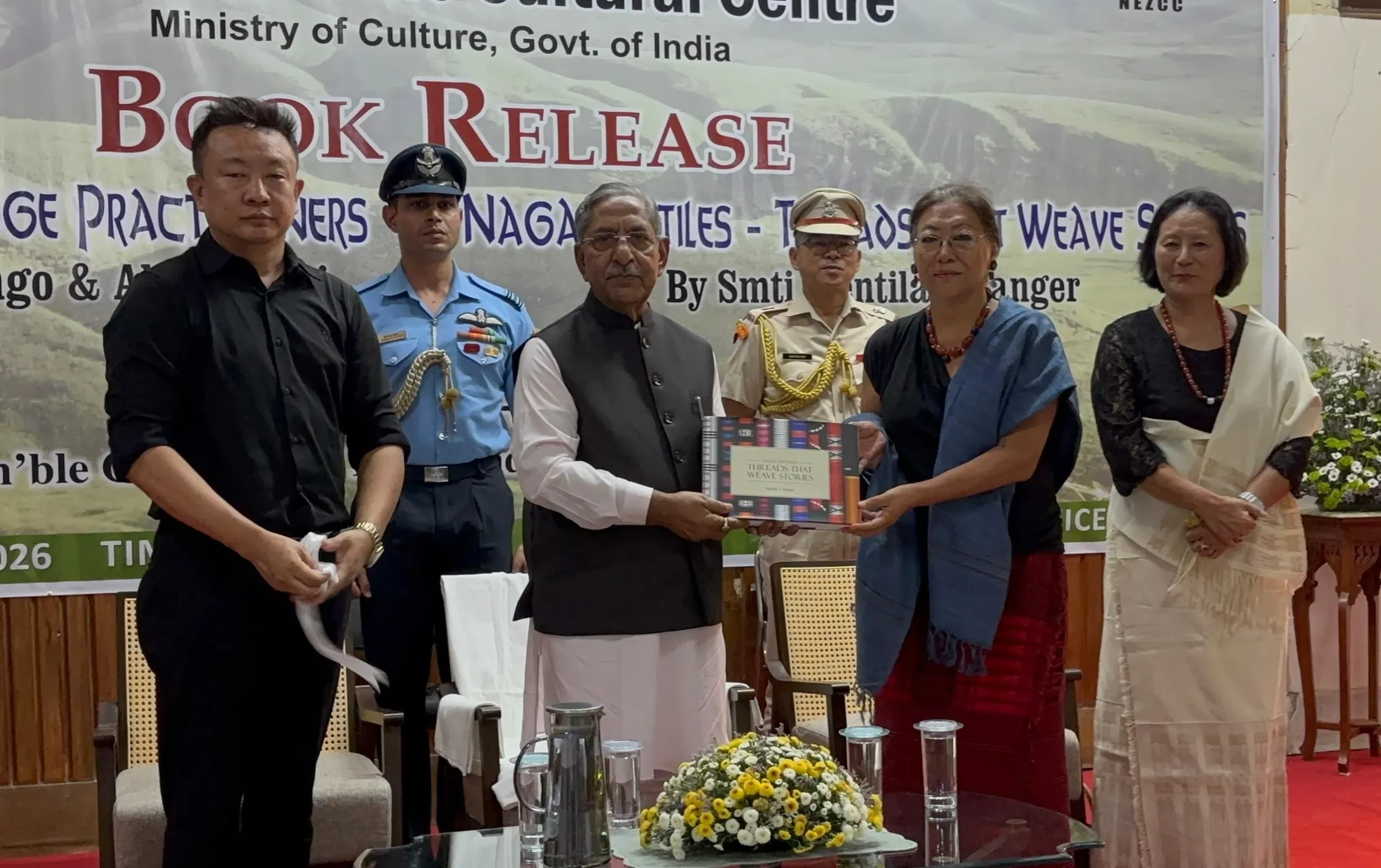
The Governor said this while releasing two books documenting Nagaland’s indigenous knowledge systems, history and cultural traditions at the NEZCC headquarters. The books released were “Nagas: The Knowledge Practitioners” authored by Alok Kumar Kanungo and Alino Sumi, and “Naga Textiles: Threads that Weave Stories” authored by Padma Shri awardee Sentila T. Yanger.
Addressing the gathering, Yadav said the two publications, though dealing with different subjects, shared a common message that culture was more than a legacy inherited from the past, describing it as a body of knowledge created, practised, refined and transmitted across generations.
Referring to Nagas: The Knowledge Practitioners, he said indigenous knowledge should not be viewed merely as folklore but as knowledge developed through observation, experience, experimentation and adaptation. The book documents nature based belief systems, subsistence practices, crafts, traditional technologies and other forms of knowledge preserved in particular villages and communities.
On Naga Textiles: Threads that Weave Stories, Yadav described Naga shawls as a “visual language” carrying identity, memory, social meaning and artistic expression. He said colours, patterns, motifs and weaving methods communicated stories of community, status, tradition and belonging, while accumulated knowledge could be seen through fibres, dyes, weaving techniques and design traditions.
He cautioned that technological advancement should not lead to “cultural amnesia” and urged young people to embrace modernity without abandoning cultural memory. He called for greater efforts to connect modern education with indigenous knowledge, noting that traditional practices could offer insights into challenges such as climate change, biodiversity conservation, sustainable agriculture and responsible use of natural resources.
The Governor encouraged universities and institutions to undertake more research on languages, oral traditions, architecture, agriculture, traditional medicine, music, textiles, craftsmanship, customary institutions, environmental practices and material culture. Stressing the need for village level documentation, he said: “Let us document before we lose. Let us research before we forget. Let us teach before the knowledge becomes inaccessible.”
Earlier, Alino Sumi, co author of Nagas: The Knowledge Practitioners, said the book sought to move beyond the long standing focus on headhunting in studies of the Nagas and instead document their knowledge systems, practices and technologies. She highlighted trapping methods of the Chakhesang Nagas, salt making traditions of the Pochury Nagas, community fishing methods of the Lotha and Sumi Nagas, as well as megaliths, burial customs and grave goods.
Sentila T. Yanger, author of Naga Textiles: Threads that Weave Stories, said the book documented textile narratives from 15 Naga communities, viewing textiles as “living archives of cultural knowledge.” She emphasised collective responsibility in documenting and sustaining textile traditions while recognising the voices of knowledge keepers and weavers.
NEZCC director Alobo Naga delivered the welcome address. The programme also featured a cultural performance by Nagaland Bhojpuri Samaj, Dimapur, followed by presentations by child artiste Woniro Von representing the Lotha tribe and students of Eklavya School representing the Ao tribe.