
With hospitals vulnerable to fire incidents due to high electrical loads and oxygen-rich environments, the government has come out with updated guidelines that focus on patient safety during emergencies and phased evacuation strategies tailored to the needs of critically ill and immobile patients.
The National Guidelines on Fire and Life Safety in Healthcare Facilities (2026) mark a significant upgrade in fire safety preparedness across hospitals, the Union Health Ministry said. The guidelines expand evacuation planning with specialised protocols for high-risk groups, including patients in ICUs, NICUs (Neonatal Intensive Care Units), PICUs (Pediatric Intensive care Units) and operation theatres.
The revised framework, which updates the 2020 guidelines, has been developed by the Union Health Ministry in consultation with experts from the Directorate General Fire Services, Civil Defence and Home Guards, Bureau of Indian Standards, School of Planning and Architecture and AIIMS institutions.
Officials said hospitals remain particularly vulnerable to fire incidents due to high electrical loads, oxygen-rich environments and the presence of complex medical equipment, necessitating a more robust and standardised safety approach.
The guidelines adopt a comprehensive risk-based strategy, identifying critical zones such as intensive care units, operation theatres, oxygen storage facilities and electrical installations for targeted interventions.
Detailed provisions have been outlined for fire detection and alarm systems, suppression mechanisms, electrical safety and medical gas pipeline systems. A key feature of the updated document is its emphasis on patient safety during emergencies. It recommends horizontal and phased evacuation strategies tailored to the needs of critically ill and immobile patients, ensuring minimal disruption to life-support systems.
The guidelines also introduced a strengthened governance and accountability framework, clearly defining roles for hospital administrations, fire safety committees and designated safety officers to ensure coordinated response during fire emergencies.
To build institutional preparedness, the document mandates regular training programmes, induction modules and mock drills for healthcare personnel. It also calls for periodic safety audits and continuous monitoring to reinforce a culture of fire safety across institutions.
Compared to the earlier version, the 2026 guidelines provide expanded technical coverage, including advanced measures for smoke management, electrical systems and medical gas safety, along with detailed annexures outlining unit-specific protocols for areas such as ICUs and neonatal care units.
Aligned with provisions of the National Building Code (2016), the guidelines will be implemented alongside the upcoming National Building Construction Standards (2026) and relevant state regulations.
The ministry said the updated framework is expected to reduce fire-related risks, improve safety for patients and healthcare workers, and ensure continuity of essential health services during emergencies, while promoting uniform safety practices across states and union territories.
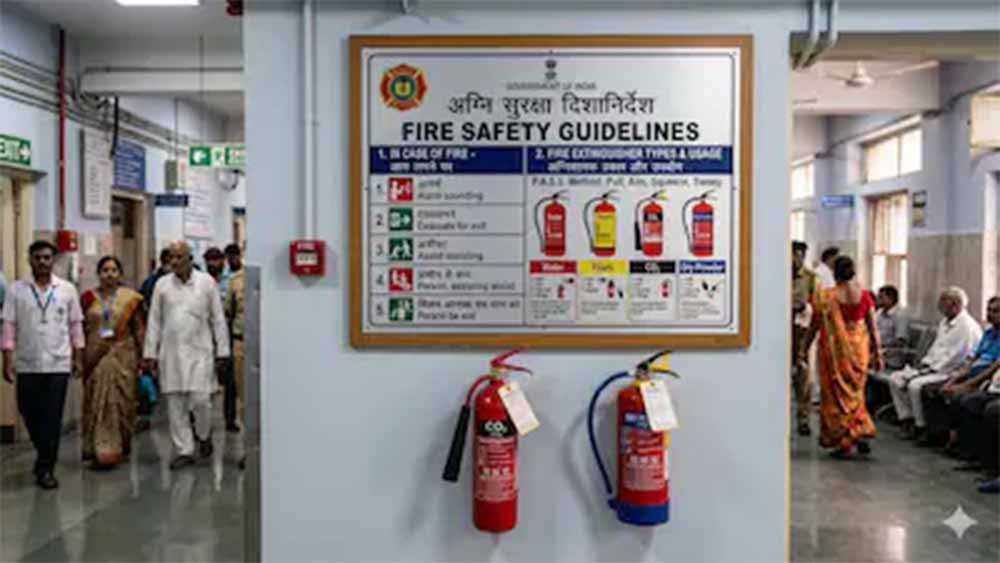
Govt updates guidelines on handling fire in healthcare facilities
NEW DELHI, MAY 4 (PTI)