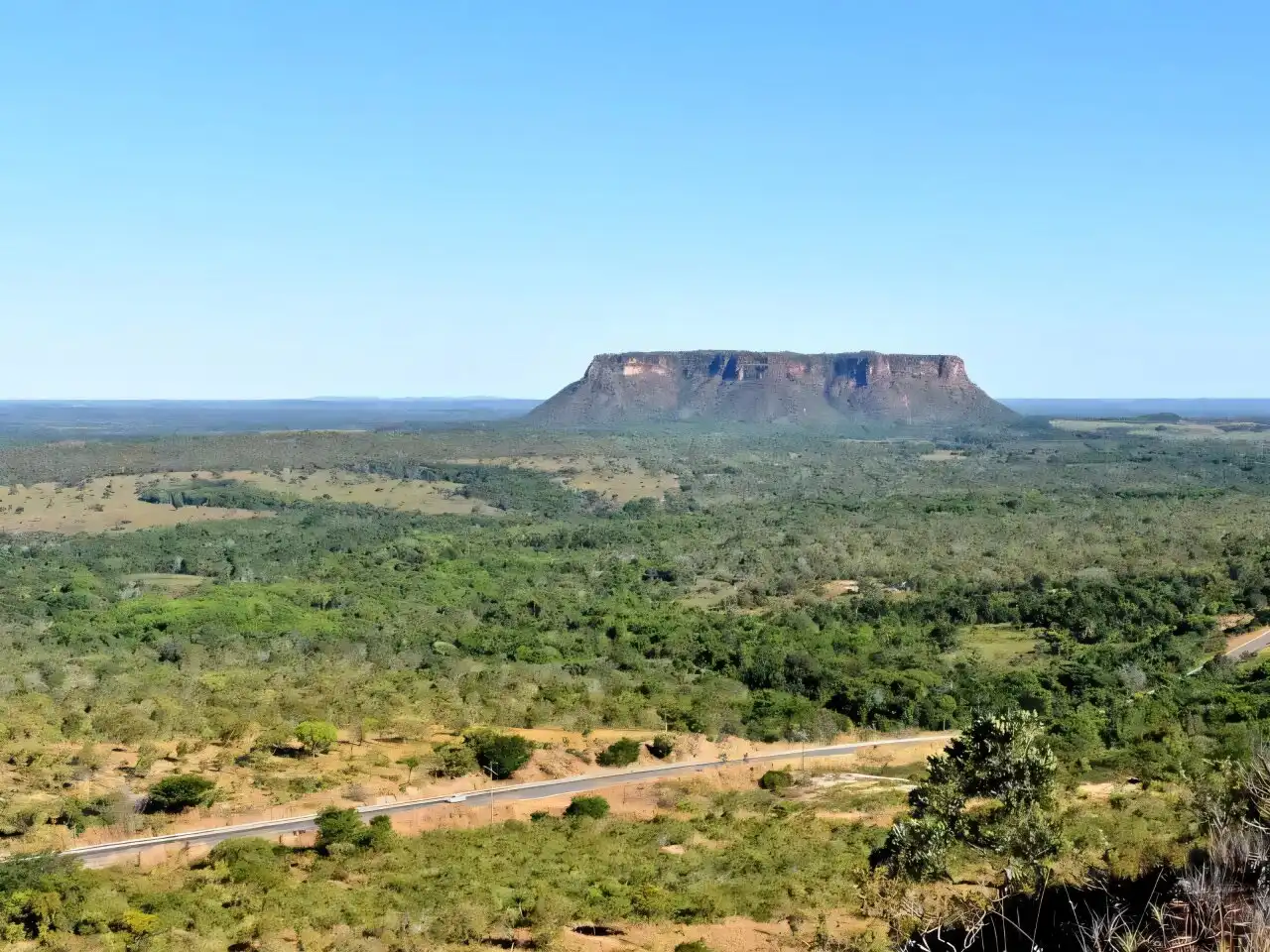
Along with forests, grasslands and wetlands are also being converted to cropland and pasture at an increasing rate around the world—often for livestock farming and the export of agricultural products. An international team of researchers, including Martin Persson from Chalmers, has now analyzed for the first time where, for what purpose, and how quickly natural non-forest ecosystems are being converted into agricultural land on a global scale. The results show that these ecologically highly valuable areas are converted at a rate almost four times faster than forests.
In a study published in Proceedings of the National Academy of Sciences, the researchers emphasize the need for more comprehensive conservation strategies that extend beyond forests and also take into account consumption and international demand structures.
Grasslands are far more than just “green spaces”—they are one of our planet’s often overlooked service providers. Around 20 to 35% of the carbon sequestered worldwide is stored in these ecosystems. Thus, they contribute to mitigating climate change. At the same time, around 33% of global biodiversity hotspots are located in grassland regions.
“Whether for water storage, protection against soil erosion, or as habitat for countless animal and plant species, grasslands provide important ecosystem services that directly benefit both local communities and the global climate,” explains first author Dr. Siyi Kan from the Senckenberg Biodiversity and Climate Research Center in Frankfurt.
“While a large number of studies on deforestation and its causes and impacts have already been carried out, the conversion of non-forest ecosystems—especially in connection with livestock farming and global agricultural demand—has hardly been studied to date.”
Persson, professor at Chalmers, elaborates, “This clearly demonstrates the need to focus not only on tropical forests, but also on other types of ecosystems that harbor great biodiversity and store large amounts of carbon. Unlike deforestation driven by the expansion of agricultural land, which mainly occurs in tropical countries, much of the expansion is taking place on grasslands and other ecosystems in countries such as Russia, China, the United States and within the EU.”
Together, the researchers investigated where and to what extent grasslands and farmlands encroached into formerly natural non-forest ecosystems between 2005 and 2020, what agricultural products were associated with these areas, and where and for what purpose they were ultimately used. And they found that these ecosystems are being converted to pasture and cropland at an alarming rate. The main drivers are the demand both on the domestic and international markets for various agricultural products, especially meat, cereals, nuts, and oilseeds.
The research team’s analysis shows that over the 15-year study period, grassland and wetlands were converted almost four times faster than wooded areas. Brazil leads the world with 13% of the area affected, followed by Russia, India, China, and the U.S. with around 6% each.
The results show the risks that agricultural land conversion poses to individual regions, identify the natural non-forest ecosystems that are in particular need of protection, and offer suggestions on where to start making changes along global supply chains. The researchers call for better coordinated political measures and greater responsibility on the part of producers and consumers in internationally networked supply chains. (Phys Org)