China hopes to increasingly control when and where it rains. Ally Hirschlag examines why its ambitious cloud seeding plan is so controversial – and whether it actually works.
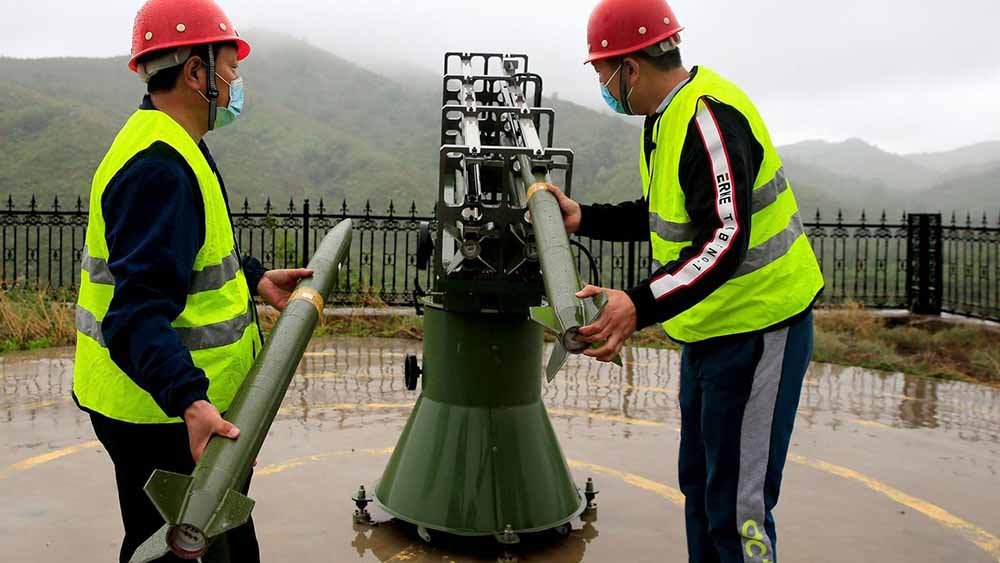
In March 2025, a fleet of 30 planes and drones fired silver iodide pellets into the sky in northern China. As the pellets hit the air, the pale-yellow powder inside them emerged and soon turned to wisps of grey, lacing the sky as the aircraft released them in criss-cross patterns. Far below them, more than 250 ground generators fired rockets holding the same pellets.
The aim was to bring relief to the drought-stricken north and northwest regions, also known as the country’s grain belt. The huge operation was the country’s “spring rain” project, undertaken by China’s Meteorological Administration, and was timed to support crops at the start of the sowing season.
The huge operation was an apparent success, purportedly producing an additional 31 million tonnes of precipitation over 10 drought-susceptible regions.
China has been attempting to artificially increase its rainfall since the 1950s using a well-known yet still controversial method: cloud seeding. This aims to coax clouds to produce more moisture using tiny particles, often silver iodide, which has a similar shape and weight to an ice particle.
Cloud seeding has long caused concerns, from the potential environmental risks and the impacts of the chemicals used to potentially harm to people in nearby areas due to changes in rainfall patterns, and the security tensions that could follow.
And even as the world’s most populous country ramps it up, scientists and experts continue to question how much it really works.
In recent years, China has significantly ramped up its cloud seeding efforts, largely thanks to improved drone and radar technologies. The country is now carrying out weather modification over more than 50% of its land area, mainly to increase rainfall although it is also attempting to prevent it in some areas. It has even turned to using it to manage weather on specific days, such as the Beijing 2008 Summer Olympics and the centenary celebration of the Chinese Communist Party in 2021.
Weather modification has become “a vital project for the scientific development of atmospheric cloud and water resources, serving the country and benefiting the people”, Li Jiming, director of China’s Weather Modification Center, said at the time of the 2025 spring rain operation. “[It] is a crucial component of building a strong meteorological nation,” he added, noting the need to propel China “from a major player in artificial weather modification to a global leader”.
China’s rising interest in controlling precipitation is obvious: since the 1950s it has been facing more frequent and severe droughts, taking a toll on the country’s agriculture and economy.
The country’s cloud seeding experimentation began in 1958, when an aircraft reportedly triggered precipitation over the drought-stricken Jilin Province. But cloud seeding had actually been discovered in the US a decade earlier, and, like so many brilliant ideas, it was by accident.
In the 1940s, Vincent Schaefer was a General Electric researcher working to prevent aircrafts from getting too icy in flight. He’d developed a special refrigerator to demonstrate how ice forms in clouds. One day, he came into the lab to find the fridge had turned off. When he put a piece of dry ice (extremely cold, solid carbon dioxide) into it to chill the inside, he witnessed a dazzling reaction: ice crystals suddenly appeared floating inside. He had artificially produced precipitation. A year later, in 1946, Schaefer dropped pounds of dry ice into supercooled clouds above the Adirondack Mountains in New York. It appeared to trigger snowfall. (Read more about the US’s early efforts to change the weather.)
In the wake of this experiment, cloud seeding endeavours sprang up around the world, albeit with mixed, inconclusive results involving data measurement challenges.
To show genuine cloud seeding results, scientists need a control meteorological setup nearly identical to the one they attempt cloud seeding with in nature. “We can’t make the same cloud happen twice. So we can’t do a controlled experiment,” says Rauber. (BBC)