Clouds of invisibly small microplastics concentrate in the air of our homes, and we could be breathing in hundreds of thousands to millions of them each year. A few small changes can help us reduce our exposure.
If you look at the labels of the clothes you threw on today, chances are at least some of them use synthetic fabrics. They’re cheap, colourful and come in an endless array of textures, weights and degrees of stretch. But these convenient garments are also among of the main culprits infusing the air in our homes with invisible pollution: microplastics.
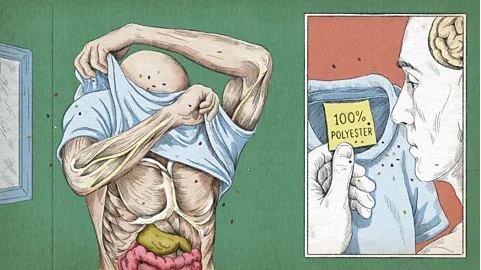
When you wash and dry your polyblend jumper, for instance, shake it out, pull it on over your head, or just go about your day wearing it, countless minuscule fibres are released into the air. Take a breath, and a cloud of these tiny particles can flow into your airways.
We’re just beginning to unravel the breadth of airborne microplastic exposure and its effect on our health, but what’s already known is raising concern. (Read more on what microplastics do to our health.)
Scientists believe the majority of our exposure to microplastics happens when we’re indoors. The good news is there are things we can do about it in our homes, from reconsidering the clothes and furnishings we buy, to changing the way we wash our clothes and clean our houses.
“Microplastics are everywhere, and there’s no way you can avoid them,” says Dana Barr, an exposure science professor at Emory University in Atlanta, the US. “But there are ways that you can significantly reduce your exposure over time, and it’s mostly from behavioural change.” The air in our homes
Invisibly small fragments of plastic are all around us. They’re expelled from virtually every product made of plastic (over 460 million tonnes of new plastic is produced every year). They make their way into our bodies via the food and water we consume, the products we use on our skin and the tiny particles we inhale when we breathe. (Read more on the microplastics in our food and how to eat less of them.)
Food and water was once thought to be the main way microplastics entered the body, but some scientists now believe that inhalation may in fact be the predominant route.
For instance, take a meal of filter-feeding shellfish like mussels, which can have high concentrations of microplastics. You’re likely to inhale more plastics during the meal preparation than you eat from the food itself, according to one study. In countries where shellfish makes up a large part of the diet, you might expect to eat 4,620 particles per year. But you could be inhaling around three to 15 times more particles a year during mealtimes.
In developed countries, people spend about 90% of life indoors, which is one reason that the potential for microplastic inhalation is significantly higher compared to outdoors. A 2021 study examining airborne microplastics indoors and outdoors in China found that the concentration was eight times higher in indoor air. Even where natural fibres predominated over synthetics, and laundry – a considerable source of microplastics – was typically hung outside, microplastics were still at higher concentrations indoors. “The fact that we’re spending so much time indoors, and we’re breathing the air indoors, means that we probably are vastly underestimating exposure,” says Barr, who also is a director at the Hercules Exposome Research Center.
Just how many microplastics are in your home depends on where you live, what kinds of synthetic materials you have on your soft furnishings and in your wardrobe, what your flooring is made from, and how you clean and ventilate your space. Another study found that an individual in the US could be inhaling up to 22 million micro- and nanoplastics per year.
Wherever you live, microplastics are very likely to be in every room of your home. But where exactly do these fragments gather, and where do they come from? (BBC)