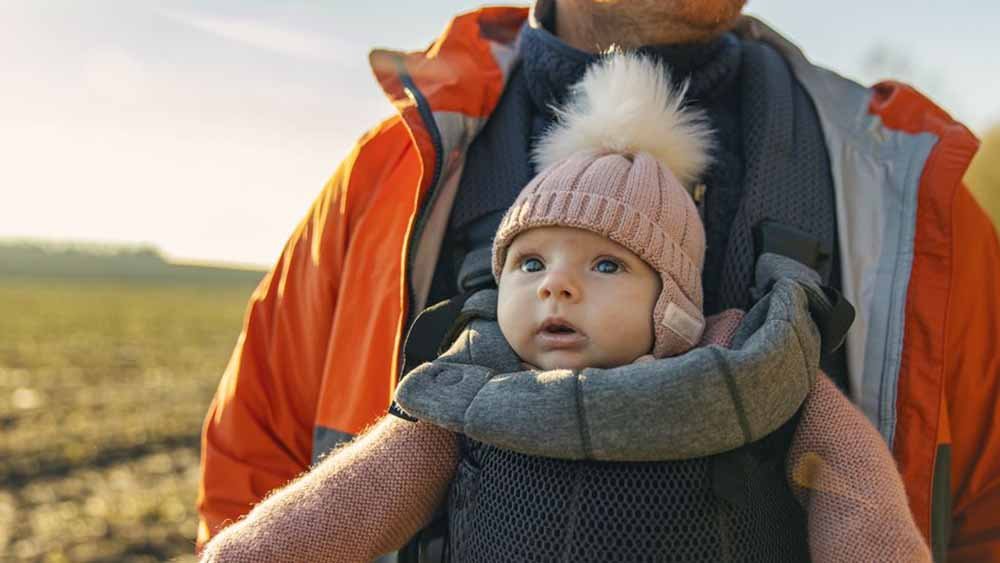
Babies and young children under five are more at risk in cold weather. While outside, the NHS advises that babies and children should wear several layers of clothes to keep warm, including a hat and mittens to stop heat loss.
In the car, for safety reasons, you should keep thick jumpers and coats to a minimum, so there is not too much padding between your child and the car seat straps.
If necessary, you can lay a blanket on top of your child once they are safely strapped in. Remove any hats, gloves and extra layers when you come back inside.
NHS guidance says babies do not need hot rooms at night – a room temperature of between 16-20C (61-68F) is ideal. Overheating is one of the potential causes of sudden infant death syndrome (SIDS).
A sleepsuit and either a sleeping bag or a sheet and/or blanket should be fine.
If you’re using a sleeping bag and feel like your baby is cold, you should add an extra layer of clothing – but not extra blankets.
Flu has come early this winter with a new mutated version of the virus circulating.
For example, coughs and sneezes in an enclosed space with little or no ventilation (windows closed, doors shut) can quickly spread illnesses from person to person.
Opening windows where possible and practising good hygiene – using and then binning a tissue for coughs and sneezes and washing your hands – can help prevent this.
Drying clothes on radiators is also a common practice in the winter. But it can mean turning on heating in parts of the home you are not using. It may also risk making your home damp, which can cause mould.
One option is to use a dehumidifier, which takes water out of the air. Some have laundry settings and can be run for several hours next to wet clothes on a drying rack. The financial journalist Martin Lewis has previously pointed out on his BBC podcast that running a dehumidifier is generally “far, far cheaper” than putting on the heating in a room.
Portable heaters can be an alternative to switching on your central heating, but they can pose a serious fire hazard if not used carefully.
Firefighters and safety managers from the Electrical Safety First charity say you should place your heater on a flat surface to ensure it will not fall over.
It should be at least 3ft (1m) away from anything flammable. You should not let curtains, clothes, blankets, duvets or armchairs lean against it.
You should not use your heater to dry your washing, or leave it unattended for long periods of time, or overnight.
Experts also warn against plugging heaters into extension leads, as this could cause a fire.
Leaving electric blankets or heated throws on for too long can also be dangerous, so use the timer function. You should not use any kind of electric blanket at all if any of the heating wires are visible, there is damage to the power cord or control unit, or it gives off a smell when switched on.
Using gas heaters also carries the risk of carbon monoxide poisoning, so you should ensure you have a working carbon monoxide alarm in the same room. (BBC)