
India has built guardrails to protect sensitive agriculture and dairy sector in the concessions it has agreed with the US in exchange for Washington lowering tariffs on Indian goods—a move that is seen pushing up exports from labour-intensive sectors like apparel, footwear and jewellery.
Hours after US President Donald Trump announced cut in US tariffs on Indian goods to 18 per cent from 50 per cent in exchange for India lowering trade barriers as well as stopping its purchases of Russian oil and instead buying oil from the US and potentially Venezuela, Union ministers Nirmala Sitharaman and Piyush Goyal said the move augurs well for the economy in general and exporters in particular. But with little details available about the actual agreement between the two sides, opposition parties attacked the government for selling out the interests of Indian farmers.
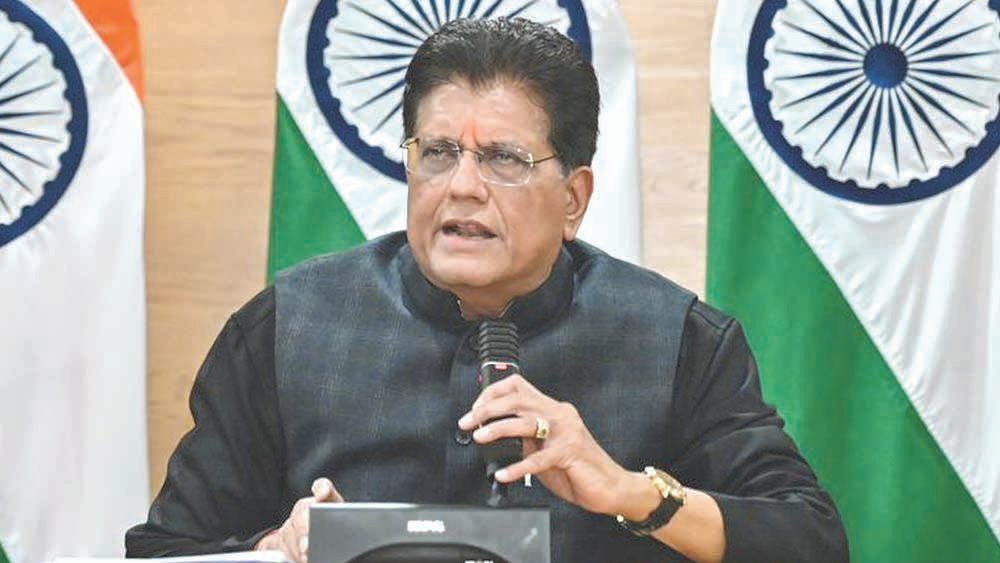
Goyal, in a news conference, said a joint statement will be issued by both countries “shortly”, which will have details of the pact, but rest assured, the government has built enough safeguards that will ensure protection for sensitive sectors.
There may be duty concessions on some imports from the US, but no duty-free imports will be allowed in crops and agri products that are important for the country.
Sitharaman in an interview to PTI Videos said, “So, actually our exports will pick up now, that is my expectation… along with having found new markets where they will continue to operate.” The new 18 per cent levy undercuts tariffs on key regional competitors such as Vietnam and Bangladesh, both facing duties of 20 per cent, restoring India’s price advantage in the US market.
The move offers significant relief to a broad range of labour-intensive exports, including apparel, footwear and jewellery makers, which had been hit by punitive 50 per cent tariffs imposed in August, sharply denting competitiveness and order flows.
The punitive US tariffs caused India’s bilateral trade surplus with the US to shrink by USD 2.5 billion each month on average during September-December 2025 (versus the monthly average in January-August 2025), according to HSBC Global Investment Research.
There was also USD 14 billion of equity outflows by foreign investors since July 2025 amid weak sentiment.
Goyal said that the agreement will open huge opportunities for Indian labour-intensive sectors, such as textiles, plastics, apparel, home decor, leather and footwear, gems and jewellery, organic chemicals, rubber goods, machineries and aircraft.
Import duty on most of these sectors will come down soon to 18 per cent from the present 50 per cent in the US markets.
The minister said that India is a fast-growing and large economy and demand is continuously increasing for goods such as ICT products, data centre equipment, high-quality technology and innovation items, and raw materials.
He added that India has got a “very good” trade deal with the US, better than the competitors.
Trump’s announcement via a social media post late Monday night is part of a general agreement under which India has apparently agreed to stop buying Russian oil, reduce “their tariffs and non-tariff barriers against the United States to zero”, and India buying an incremental USD 500 billion of “US energy, technology, agricultural, coal, and many other products” over the next five years.
PM buckled under pressure: Rahul
NEW DELHI, FEB 3 (PTI): Congress leader Rahul Gandhi on Tuesday alleged that Prime Minister Narendra Modi buckled under US pressure to finalise a trade deal and “sold out” the hard work of the Indian farmers through the agreement.
In a post on X, Gandhi said, “PM Modi is Compromised. PM is too afraid to let me speak in Parliament about Naravane, Epstein Files and how he has surrendered on Tariffs.”
Addressing reporters in the Parliament House complex, Gandhi said “We need to understand why a trade deal stuck for about four months was suddenly finalised last evening,” adding that “there was huge pressure on Prime Minister Modi”.
Asked what kind of pressure he was referring to, Gandhi alleged there is a case against industrialist Gautam Adani in the US and a lot more is to come in the Epstein files. He alleged that Prime Minister Modi “has been compromised” and that Indian farmers must understand their hard work “as well as their blood and sweat” has been “sold out” through the India-US trade deal. He also said the entire country had been “sold out”.