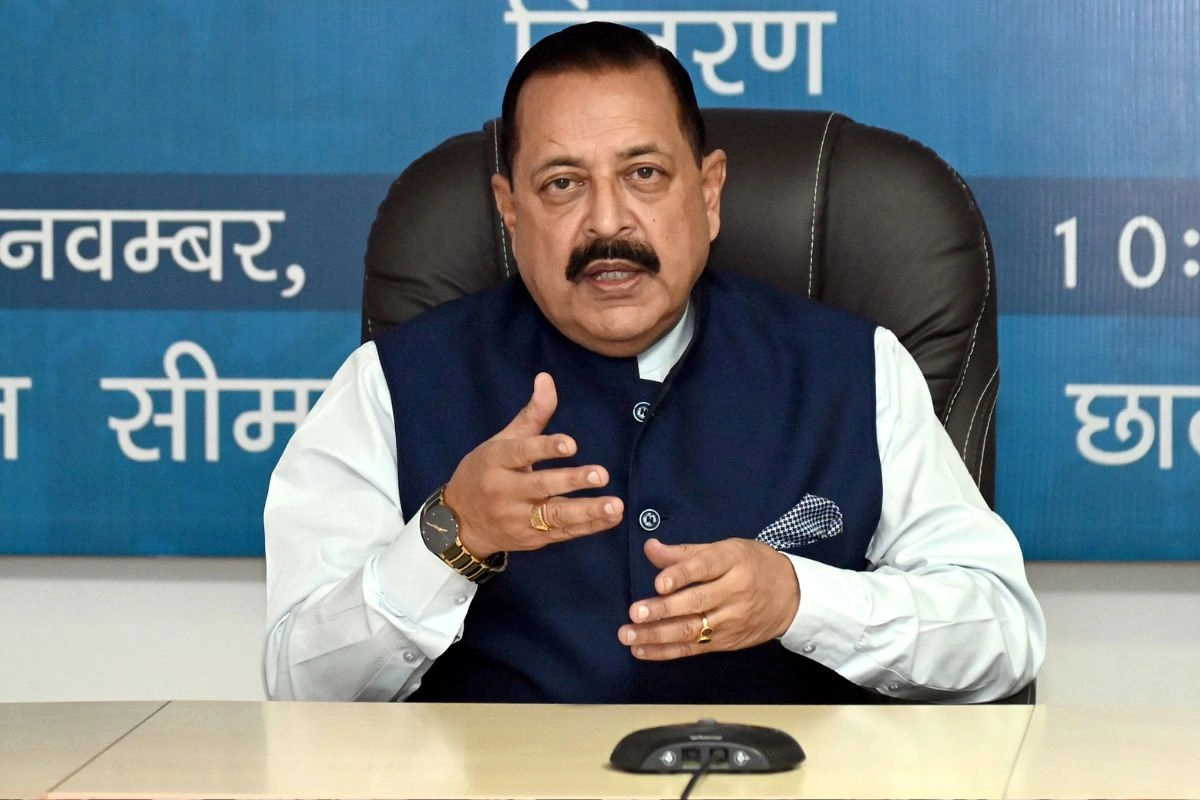
LUCKNOW, JUN 8 (PTI): Union minister Dr Jitendra Singh on Monday said that India’s meteorological infrastructure has witnessed unprecedented expansion over the last decade, enabling more accurate, location-specific and impact-based weather forecasting services across the country.
Singh, who is the Union minister of state (Independent charge) for science and technology and earth sciences, on Monday launched the new Regional Meteorological Centre (RMC) at Lucknow along with Uttar Pradesh Chief Minister Yogi Adityanath, an official statement said.
He said that India had only 17 Doppler weather radars in 2014, with several states, including Jammu and Kashmir, Punjab and Uttarakhand, not having even a single radar.
He informed that the network has now expanded to 50 Doppler weather radars and another 50 radars are proposed under Mission Mausam, taking the total to nearly 100 radars over the next two years. This expansion will significantly strengthen real-time weather monitoring and forecasting capabilities across the country, he added.
Addressing the function, Singh said that the progress achieved in weather forecasting and observation systems in the last decade has transformed the manner in which weather services are delivered to citizens, disaster management agencies, farmers, tourists and the aviation sector.
He said that weather forecasting has evolved from broad regional predictions to highly localised and time-specific forecasts.
The minister emphasised that increasing public confidence in weather forecasts is a reflection of the substantial improvements made in observational networks, forecasting models and dissemination systems.
Referring to UP, Singh said the state’s geographical diversity and climatic variability make it one of the most important regions for advanced meteorological services.
He noted that UP is highly vulnerable to floods, droughts, heatwaves, thunderstorms and other extreme weather events, making timely forecasting and warning systems critical for public safety and disaster preparedness.
Singh informed that the state had only one Doppler weather radar in 2014, while three are operational now and several more are being commissioned. The state’s automatic weather stations increased from 59 to 107, automatic rain gauge stations grew from 132 to 140 and lightning sensors grew from nil to seven, he added.
The minister said that aviation meteorological services are now being provided at 11 airports across UP, reflecting the growing scale of aviation infrastructure in the state.
He also highlighted the significant expansion of meteorological services in Uttarakhand.
Emphasising the importance of the newly declared Regional Meteorological Centre at Lucknow, Singh said that the centre will play a crucial role in decentralising meteorological services and strengthening regional forecasting capabilities. He informed that the centre will cater to UP, Uttarakhand and adjoining regions, enabling more focused monitoring, forecasting and dissemination of weather information.
He said that weather information is now reaching districts, local administrations and panchayats in real time and should be integrated into planning and decision-making processes.
The declaration of the Regional Meteorological Centre, Lucknow marks a significant milestone in the strengthening of India’s weather and climate services architecture, the statement said.