
Israel on Sunday struck southern Lebanon, Beirut and oil storage facilities in Tehran as the war in the Middle East keeps escalating, and Prime Minister Benjamin Netanyahu promised “many surprises” for the next phase of the conflict.
Iran also hit a desalination plant in Bahrain. Earlier Sunday, Iran’s Foreign Minister Abbas Araghchi said a US airstrike damaged an Iranian desalination plant on Qeshm Island, warning that in doing so “the US set this precedent, not Iran.” Such infrastructure is critical for drinking water supplies in the parched deserts of the Gulf.
An Israeli attack on oil storage sites in Tehran sent up pillars of fire that could be seen in Associated Press video as a glow against the Saturday night sky.
It appeared to be the first time a civil industrial facility has been targeted in the war.
The war, which erupted on Feb. 28 after joint US-Israeli strikes hit Iran, has so far killed at least 1,230 people in the Islamic Republic, more than 300 in Lebanon and around a dozen in Israel, according to officials.
Arab League chief calls out Iran’s reckless attacks on its Arab neighbours.
Arab League chief on Sunday lashed out at Iran for attacking Arab countries during its war against the US and Israel.
Secretary-General Ahmed Abouel Gheit told a virtual meeting of Arab foreign ministers that Iran’s strikes against its Arab neighbours “can’t be justified,” and reflect a “reckless policy.”
He said Arab countries haven’t been part of the US-Israel war against Iran, and declared that their ter-ritories wouldn’t be used as launching pads for US attacks.
“This unjustified Iranian aggression reflects a confused understanding and further isolates Iran during this difficult and delicate period,” he said.
UK will not outsource foreign policy, foreign secretary says
Britain’s top diplomat said the UK government will not outsource its foreign policy following further criticism over the country’s position on the Iran war from President Donald Trump.
Yvette Cooper told BBC News that it was important to “learn the lessons” from the Iraq war in 2003 and its aftermath, when British forces fought alongside their US counterparts.
She said, “It is our job as the UK government to decide what’s in the UK national interest, and that doesn’t mean simply agreeing with other countries or outsourcing our foreign policy to other countries.”
British Prime Minister Keir Starmer opted against granting the US military permission to use British ba-ses for the first wave of military action, but then said the UK would engage in defensive operations after Iran attacked countries throughout the Middle East.
On hearing that the UK was reducing the time it would take one of its two aircraft carriers, the HMS Prince of Wales, to set sail for any deployment, Trump said: “We don’t need them any longer.”
Iran’s Revolutionary Guard vows to step up missile and drone attacks
Pope appeals for peace as Vatican rejects preventive war’
Pope Leo XIV called for an end to the US-Israeli war in Iran and the opening of dialogue, warning that the conflict was spreading throughout the Middle East and sowing “a climate of hatred and fear.”
For the second Sunday in a row, Leo expressed his “profound consternation” about the war and how it was destabilising Lebanon, a bulwark for Christians in the predominantly Muslim region.
During his traditional noontime prayer, the American pope prayed for an end to the bombs and the opening of dialogue “to hear the voice of the people.”
The Holy See has a tradition of diplomatic neutrality, but has nevertheless rejected the Trump admin-istration’s justification for attacking Iran preventively.
“If states were to be recognised as having a right to preventive war,’ according to their own criteria and without a supranational legal framework, the whole world would risk being set ablaze,” the Vatican secretary of state, Cardinal Pietro Parolin, told Vatican Media this week.
Parolin demanded the respect of international law and multilateral diplomacy.
Iran says attacks have damaged about 10,000 civilian buildings
US and Israeli strikes in Iran have damaged about 10,000 civilian structures across the country, the Iranian Red Crescent Society said.
In a social media post, the Red Crescent said the structures include 7,943 residential units and 1,617 commercial units, along with several medical and educational facilities.
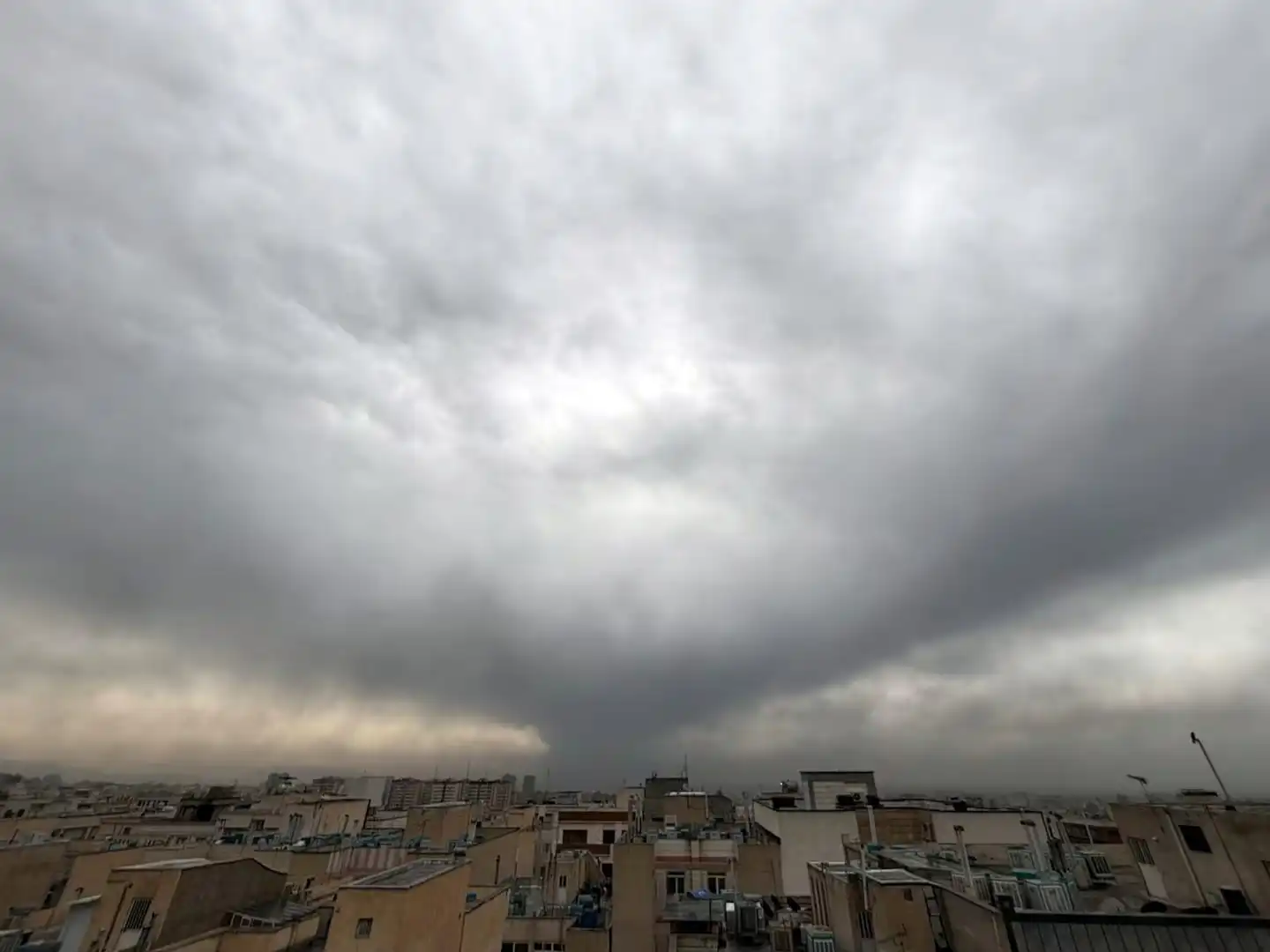
Iran accused of UAE, Bahrain attacks: Smoke covers Tehran
DUBAI, MAR 8 (AP):