
DEFENDS RELIGIOUS STICKERS ON VEHICLES AT SKH CONFERENCE
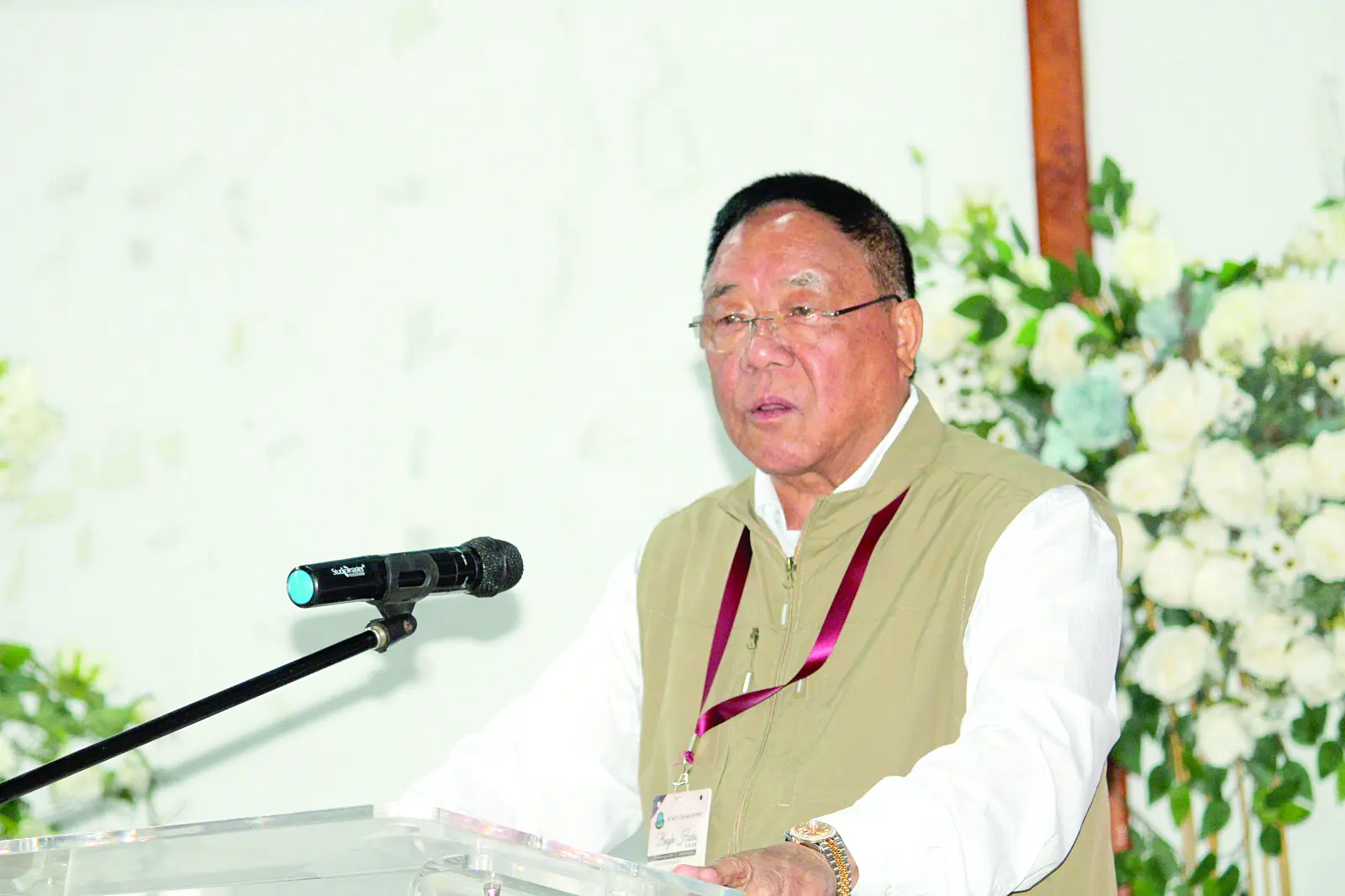
DIMAPUR, MAY 16 (NPN): Minister for Roads and Bridges G. Kaito Aye on Saturday cautioned village chieftains against joining underground factions and called for social reforms while addressing the general conference of Sümi Kükami Hoho (SKH) at Multi-Purpose Hall, Zunheboto.
According to a press release issued by NPF Press Bureau, Kaito acknowledged the sacrifices of forefathers in securing Nagaland’s democratic system and said tribal leaders, legislators, village chieftains and community members should adopt constructive practices while preserving the unique identity of the Sümi people.
He warned that enrolment of village chieftains in underground groups could complicate leadership and governance. Referring to the Inner Line Permit (ILP) system, he said the British first encountered the Sümi tribe before Indian administration.
Citing Article 371A and the Nagaland Village and Tribal Councils Act, 1978, amended in 2022, Kaito urged village leaders to maintain uniformity and strengthen customary governance structures. He also appealed for collective efforts to end electoral corruption and called upon Sümi Hoho and youth organisations to actively pursue social reforms. Expressing concern over proliferation of organisations under the Sümi banner, he called for restructuring and “reasonable approaches” towards community development.
On the proposed ban on religious symbols and stickers on vehicles, Kaito defended the role of churches and NGOs, saying they often acted as first responders to social issues. “Such symbols represent identity and service to society. If they are banned, then government and departmental insignias should be treated similarly,” he said.
Addressing the programme, NLA deputy speaker S. Toiho Yeptho said the Sümi community had gradually moved away from its hereditary kingship system. He distinguished between hereditary kingship and the government-appointed Gaon Bura (GB) system, stating that GBs were selected periodically in towns while kingship remained hereditary.
Yeptho said under customary practice, a wife may temporarily assume leadership responsibilities after the death of her husband until the rightful male heir matures. “There is no provision in Sümi customary law for women to permanently assume kingship roles. Leadership is a responsibility, not an opportunity,” he said.
Picto Shohe, MLA also addressed the gathering and urged the Sümi community to revive and preserve its traditions and identity. He noted that the traditional attire worn by GBs evolved from historical recognition associated with the Sümi tribe.
The conference adopted four resolutions, including replacing the title “G.B.” with the traditional honorific titles “Akükau” and “Akükatou” across Sümi villages, restricting women from holding village kingship titles, mandating consent from kingship authorities before filing RTI applications in village matters, and resolving disputes through customary courts instead of legal courts.
Earlier, welcome address was delivered by Akükau Kashito Yeptho, while short speech was delivered by Sumi Hoho president Dr. Vihuto Asumi. Vote of thanks was proposed by Western Sümi Kükami Hoho president Akükau Khehovi Chophy. Invocation was pronounced by Rev. Dr. Kiyeto Sema, pastor Aphuyemi Baptist Church, Kohima.