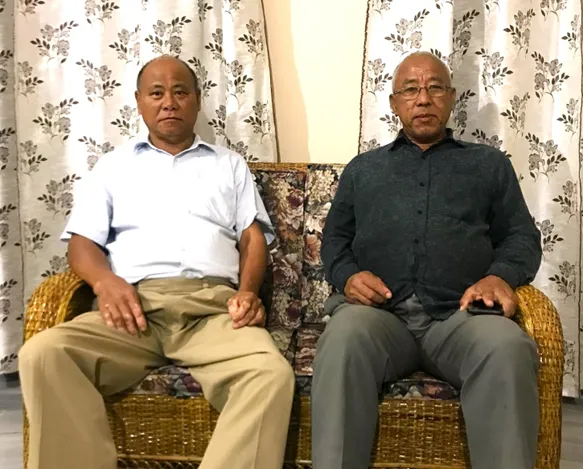
DIMAPUR: At a time when solid waste management has emerged as a major environmental challenge in Nagaland, Kuda Village in Dimapur is demonstrating how community participation, indigenous innovation and long-term planning can create a sustainable waste management system, a DIPR feature report stated.
The Kuda Waste Management Committee, under the Kuda Village Council, has unveiled an ambitious village-wide sanitation project for 2026 aimed at establishing a self-reliant waste management system, building on more than two decades of experience in waste collection, recycling and resource recovery.
Formerly known as Nagarjan Village, Kuda Village comprises Kuda A, B and C khels with around 3,000 house tax-paying households.
The initiative gained urgency after the Dimapur Municipal Council’s dumping site stopped accepting waste from several neighbouring colonies and village councils earlier this year. Following surveys, Kuda Village purchased about 50 puras of land at Seithekima for Rs. 82 lakh through community contributions to establish its own scientifically managed waste processing facility. Located about 25 km from Kuda via the Patkai four-lane highway, the site is considered suitable for long-term waste processing and disposal.
The village’s waste management efforts date back to 1998 when Alhoulie Belho initiated organised waste collection using a handcart. In 2003, the Kuda Village Council constituted the Waste Management Committee, which introduced door-to-door waste collection in Kuda C Khel through user fees collected from households.
Realising that collection alone was not sustainable, the committee began experimenting with vermicomposting, kitchen waste utilisation for pig farming and small-scale plastic-to-fuel conversion.
In 2020, local innovators Er. Kelhousesi Angami and Mhiesilhouto Savino designed and fabricated indigenous waste-processing equipment with support from the Village Council. The facility now processes nearly 2,950 kg of waste daily using locally developed machines, including a waste segregator, manual baler, mini pyrolysis unit, glass crusher, thermocol shredder and plastic bottle cutter.
Speaking on the project, Er. Kelhousesi said the committee’s earlier experience with an overloaded dumping site in Dimapur highlighted the need for recycling and scientific disposal rather than indiscriminate dumping.
He said the Seithekima facility has been conceptualised as an Integrated Resource Recovery, Agro Forestry and Eco Learning Park where students and educational institutions can undertake practical learning on waste management.
Stressing that public participation remains key, Angami said recycling should receive greater emphasis, adding that manufacturers should be made accountable for managing post-consumer waste under the principle of Extended Producer Responsibility (EPR).
He also called for better coordination among government departments and highlighted the potential of Black Soldier Fly technology to convert kitchen waste into protein-rich feed for poultry and fish.
The proposed facility will include scientific waste segregation units, internal roads, bamboo and fruit plantations, agro-horti-forestry demonstration plots and youth farming initiatives. Plans are also underway to procure additional tipper trucks and smaller collection vehicles to strengthen door-to-door waste collection.
To ensure sustainability, the Village Council has proposed a financing model comprising a one-time contribution for developing the facility, followed by monthly sanitation fees. Digital payment facilities and monitoring mechanisms have also been planned to ensure transparency.
Kuda Village Council (Waste Management Committee) chairman Ajabu Meru said basic facilities at the Seithekima site were expected to become operational within the next couple of months, while recycling infrastructure would be expanded in phases.
He said the committee was currently focusing on completing the approach road and securing electricity connectivity to enable early commencement of operations.
The initiative is expected to serve as a replicable model for community-led waste management across Nagaland.