
Chief Justice of India (CJI) BR Gavai on Sunday said legal aid is not merely an act of charity but a moral duty, and those engaged in the legal aid movement must approach their role with administrative imagination to ensure that the rule of law reaches every corner of the country.
Speaking at the valedictory function of the national conference on ‘Strengthening Legal Aid Delivery Mechanisms’ and the celebration of ‘Legal Services Day’, CJI Gavai suggested creating an advisory committee at NALSA and at State Legal Services Authorities (SLSAs), comprising current and two or three future executive chairpersons, to ensure continuity in long-term policy planning.
The CJI said officers, administrators and volunteers involved in legal aid must think like administrators of justice—planning, coordinating and innovating—so that every rupee spent, every visit made and every intervention carried out uplifts someone in need. He stressed that legal services authorities must work with a sustained institutional vision, noting that priorities often shift with the tenures of individual executive chairpersons, making continuity difficult. “To address this, I suggest an advisory committee that meets quarterly or every six months to oversee long-term projects,” he said. The programme was attended by CJI-designate Surya Kant, Justice Vikram Nath and other judges. Gavai, who demits office on November 23, recalled his tenure as NALSA executive chairman, during which he worked with Justices Surya Kant and Vikram Nath across the country. He said such a structure would institutionalise planning, ensure consistent implementation of key programmes—including access to justice, awareness and digital transformation—and promote collaboration and accountability across legal services authorities.
He emphasised that while leadership changes, the constitutional mandate to secure justice for every citizen remains constant. A coordinated and forward-looking approach is essential to strengthen the legal aid movement.
Addressing judicial officers on deputation to legal services authorities, the CJI said the work of legal aid requires empathy and collaboration, not adjudication. “Our role is to connect, coordinate with government departments, build partnerships with civil society and reach out to citizens with compassion,” he said. Gavai noted that government officials across the country have been cooperative in promoting legal aid and ensuring that welfare schemes reach beneficiaries. He stressed the need to treat volunteers and legal aid counsel with dignity, as the sustainability of the movement depends on their dedication.
He said the past three decades have shown that when compassion meets commitment, real transformation becomes possible, but the journey remains incomplete as long as citizens feel unheard. The task, he added, is not only to sustain what has been built but to envision more—deepening collaboration with the judiciary, executive and civil society, harnessing technology without losing the human touch, and measuring progress through dignity restored.
“The legal aid movement stands as one of the finest expressions of our Constitution’s soul,” the CJI said.
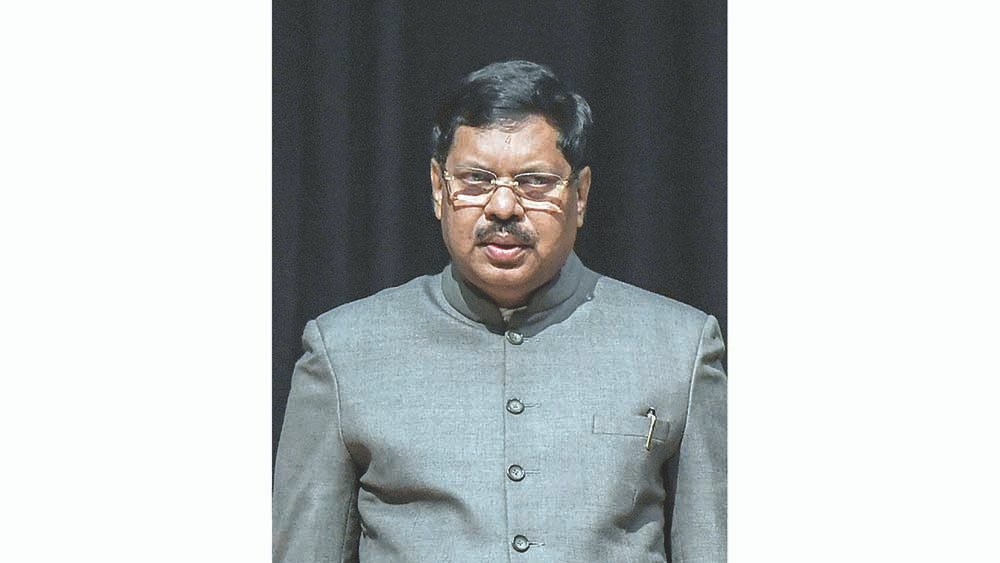
Legal aid not merely act of charity but moral duty: CJI Gavai
NEW DELHI, NOV 9 (PTI)