
In a major collective drive for cleaner air, the Nagaland Pollution Control Board (NPCB), in collaboration with Dimapur Municipal Council (DMC), Police Commissionerate Dimapur, and several civil society organisations (CSOs), conducted a road dust cleaning drive along a busy stretch of Dimapur city as part of the National Clean Air Programme (NCAP).
The initiative, which began at Plaza Point (Holy Cross junction) and extended to Nagarjan Police Point, saw participation from over 230 volunteers from Team Better Dimapur, Pro Rural, Earth Alliance Nagaland, Skilled Educational Society, and CanYouth.
The drive was aimed to remove accumulated road dust, which is one of the primary contributors to poor air quality. Dimapur is listed among India’s 131 non-attainment cities where ambient air pollution exceeds permissible limits.
DMC chief executive officer Thungchanbemo Tungoe told Nagaland Post that the programme was specifically designed to tackle dust particles and raise public awareness.
He confirmed that the drive was not a one-off event and would be repeated at least twice a year, with plans to gradually expand to other areas of the city.
Regarding mechanised cleaning, Tungoe explained that Dimapur already possessed a vacuum road sweeping machine, but its effectiveness was limited by exceptionally high dust accumulation, which frequently causes blockages. He said manual cleaning was necessary as a preparatory step before the machine can function properly.
CEO informed that machine was currently non-operational due to breakdowns, adding that mechanics from Punjab have been contacted for repairs but were yet to arrive.
He acknowledged challenges during the drive, including handling fine dust, waste disposal, and rising traffic after 7am, as well as lower-than-expected turnout despite mobilising 300–400 people.
Tungoe stressed the critical role of roadside residents and shopkeepers in sustaining cleanliness by sweeping their surroundings daily—before opening and after closing shops.
He observed that careless waste disposal by many shopkeepers continued to undermine civic efforts and called for consistent personal responsibility to achieve lasting improvements in air quality and overall environment.
NPCB Scientist ‘B’ Yanathung Kithan explained that the busy Plaza Point to Nagarjan Police Point stretch was deliberately chosen for its high visibility and heavy daily traffic.
As a statutory body, Kithan said NPCB typically focuses on awareness, but this action-oriented drive aimed to create a tangible, visible impact and inspire broader community participation.
He noted that cleaning a less-trafficked road would have had limited awareness value, while this prominent location posed greater challenges due to heavy waste accumulation.
Kithan also confirmed that follow-up drives have been planned, particularly during the dry season when monsoon conditions make such activities difficult.
He cautioned that if air pollution in Dimapur was not controlled within the next decade, it could lead to severe public health consequences. Despite the common perception of clean air, Kithan said monitoring data over the past ten years showed a clear declining trend in air quality.
He highlighted open waste burning as a major source of toxic emissions and urged collective action to prevent long-term environmental and health damage in the city.
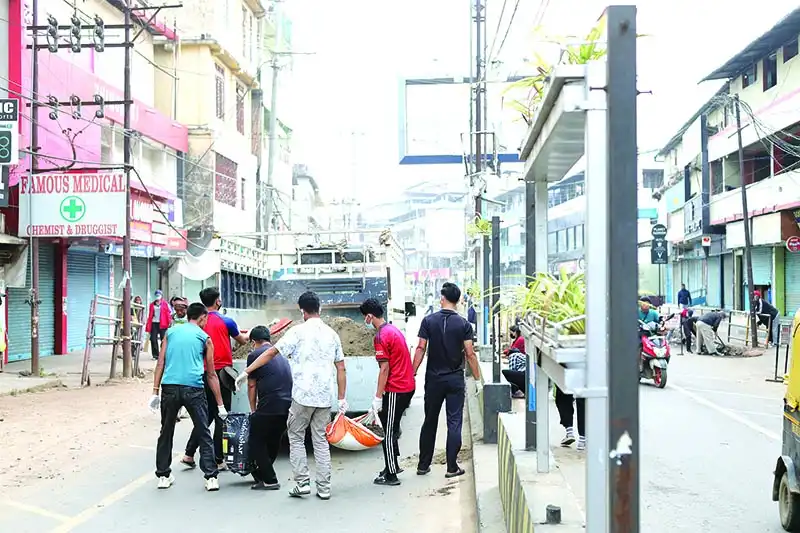
Massive road dust cleaning drive conducted across Dimapur
Staff ReporterDIMAPUR, MAR 21 (NPN):