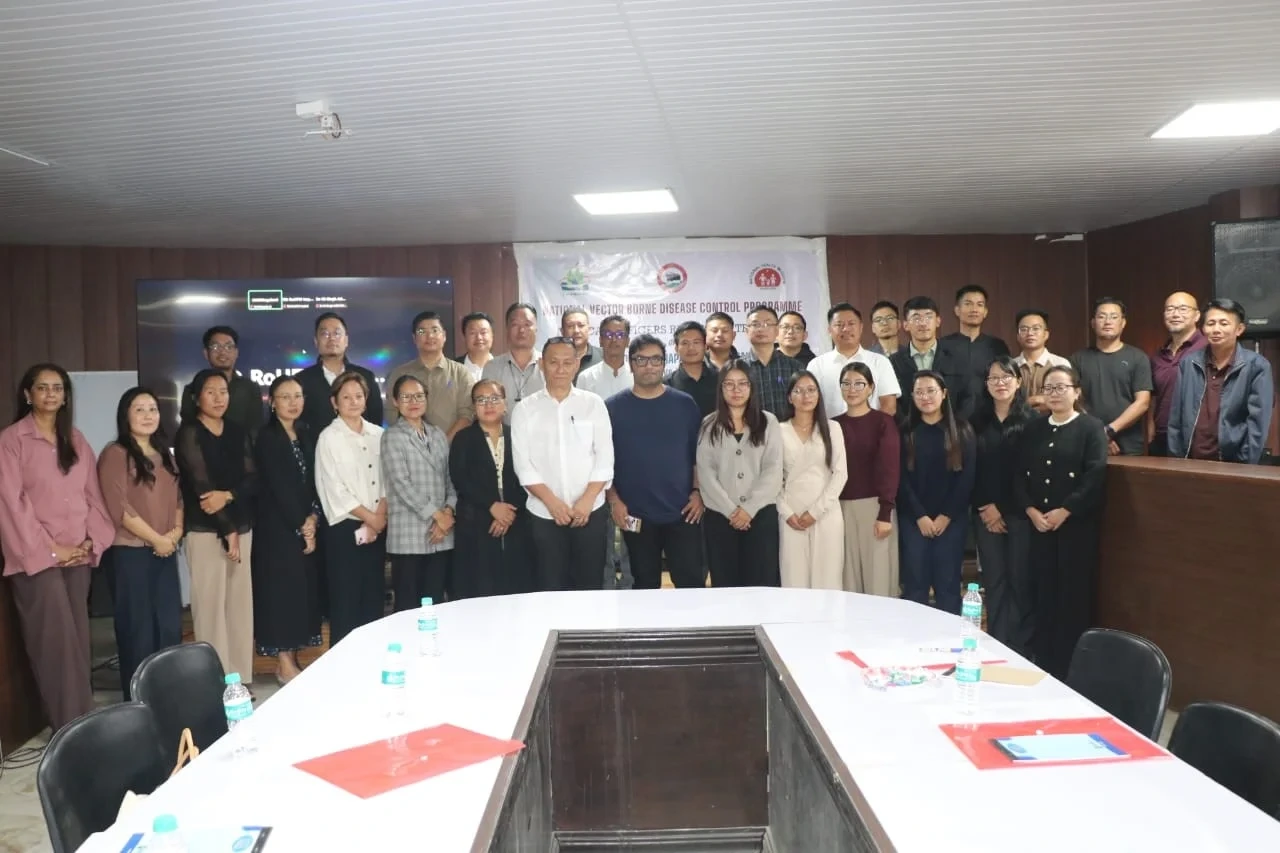
DIMAPUR: Nagaland State National Vector Borne Disease Control Programme (NVBDCP), Directorate of Health & Family Welfare (DHFW), conducted a refresher training programme for medical officers on malaria, dengue, kala-azar, Japanese Encephalitis (JE) and chikungunya at the DHFW Conference Hall, Kohima, on October 27.
The training aimed to strengthen the clinical and technical capacities of medical officers in disease diagnosis, case management, surveillance, reporting, laboratory confirmation, and integrated prevention and control of vector-borne diseases (VBDs).
The programme commenced with a welcome address by Joint Director and State Programme Officer (SPO), NVBDCP, Dr. Imnapokim, who emphasised the importance of enhancing professional knowledge and practices for effective prevention and control of vector-borne diseases. According to a press release, the training featured technical sessions conducted by experts from the National Centre for Vector Borne Disease Control (NCVBDC), New Delhi; Regional Office of Health and Family Welfare (RoHFW), Government of India, Imphal; state programme officers; and other specialised medical and technical institutions.
Senior CMO (HAG), RoHFW, Government of India, Imphal, Dr. N.I. Singh, delivered a session on malaria epidemiology, clinical features, diagnosis, case management, treatment and case investigation procedures. National Consultant (M&E), NCVBDC, New Delhi, Dr. Shikhar, spoke on surveillance, case notification, outbreak investigations and prevention and control strategies.
Regional Director, RoHFW, Government of India, Imphal, Dr. Jenny Ningombam, joined virtually to discuss dengue clinical classification, warning signs, diagnosis, case management, surveillance, referral systems and prevention measures.
A session on kala-azar covering clinical diagnosis, treatment, prevention and control was conducted by Dr. Imnapokim. Consultant Physician, Naga Hospital Authority Kohima, Dr. Albert Pochury, spoke on clinical diagnosis, case management, immunisation, case investigation and preventive measures for Japanese Encephalitis.
Senior Microbiologist, District Hospital Dimapur, Dr. Pewezo Khalo, joined virtually and elaborated on specimen collection protocols and laboratory confirmation procedures for dengue and Japanese Encephalitis.
Former Additional Director and Scientist ‘V’, Senior Consultant, NCVBDC, New Delhi, Dr. Kalpana Baruah, delivered a virtual session on the national strategy and epidemiology of dengue and chikungunya. Professor of Internal Medicine, Lady Hardinge Medical College and Associated Hospitals, Dr. Sameer Gulati, also joined virtually and discussed clinical diagnosis, case management, treatment and preventive measures for chikungunya.
Assistant Director, Urban Vector Borne Disease Scheme (UVBDS), Kikolul Khieya, highlighted integrated vector management and control measures targeting Anopheles, Aedes and Culex mosquitoes, as well as sandflies.
Public Health and Training Consultant, NVBDCP, Imsubenla, conducted a session on reporting malaria, dengue and Japanese Encephalitis cases through the Integrated Health Information Platform (IHIP)-VBD portal, followed by a post-training assessment.
The organisers said the refresher training served as an important platform for updating medical officers on disease-specific clinical protocols, strengthening surveillance and case notification systems, improving laboratory practices and reinforcing integrated vector management strategies.
The programme concluded with a vote of thanks by Deputy Director, NVBDCP, Dr. Kavito Zhimomi. Altogether, 40 participants attended the training.