
Correspondent
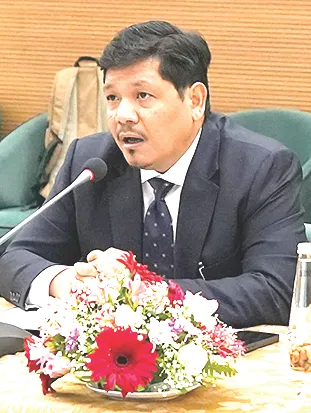
Shillong, Jun 23: Meghalaya Chief Minister Conrad Sangma on Tuesday chaired a meeting of the Meghalaya Climate Council at the State Guest House, Taraghar, to review the State’s preparedness measures and response strategies in view of the potential impacts of a predicted El Niño event.
The meeting brought together representatives from various government departments, technical experts, the India Meteorological Department (IMD), Meghalaya Basin Management Agency (MBMA), Public Health Engineering (PHE), Agriculture and Farmers’ Welfare Department, Food Civil Supplies and Consumer Affairs Department, and other stakeholders to assess possible risks and formulate immediate, medium-term and long-term interventions.
The meeting was convened in view of forecasts indicating the possible development of El Niño conditions.
The Chief Minister emphasised the need for proactive planning and preparedness to minimize the impact of any extreme weather conditions that may arise from El Niño-related climatic variations.
He stressed that while the exact impact on Meghalaya remains uncertain, the State must prepare in advance rather than respond after adverse conditions emerge.
The Meghalaya Climate Council presented assessments on rainfall trends, groundwater recharge, soil moisture levels, vulnerable agricultural blocks and water resource availability across the State.
Officials informed the meeting that extensive mapping and vulnerability assessments have already been undertaken to identify areas requiring priority interventions, particularly with regard to water security.
The Chief Minister directed all departments to convert preparedness plans into actionable measures with clearly defined responsibilities and timelines.
Sangma stated that the Meghalaya Climate Council would serve as the State-level platform for coordinating preparedness efforts and monitoring potential El Niño impacts across sectors.
El Niño is a climate phenomenon characterized by unusually warm sea surface temperatures in the equatorial Pacific Ocean, which can alter global weather patterns.
In India, El Niño events are often associated with changes in monsoon behaviour, including reduced rainfall, prolonged dry spells, extreme weather events and impacts on agriculture and water resources.
The Chief Minister emphasised the importance of accelerating implementation of ongoing soil and water conservation projects and directed departments to identify practical measures that can be implemented over the next six to twelve months.
To strengthen community preparedness, the Chief Minister called for district-level awareness programmes and consultations involving local institutions, village bodies, self-help groups and community organisations.
Sangma stressed that preparedness efforts should be transformed into a people’s movement, with communities actively participating in water conservation, protection of catchment areas and other resilience-building measures.
A presentation made before the Council highlighted that rising sea surface temperatures associated with El Niño could potentially affect rainfall patterns, agriculture, water resources, public health, disaster management and livelihoods.
The Council was informed that while El Niño has historically produced varying impacts across regions, changing climatic conditions warrant heightened preparedness and coordinated action.
Noting that strong El Niño events have not always resulted in adverse outcomes for Meghalaya, IMD officials emphasised the importance of preparedness and continuous monitoring.
The Chief Minister directed concerned departments to strengthen dissemination of weather advisories and early warning information through social media platforms, local communication channels and community networks to ensure timely outreach to citizens.
The Chief Minister reiterated that preparedness remains the State’s best defence against climate-related uncertainties.
He called upon all departments, institutions and communities to work collectively to safeguard water resources, agriculture, livelihoods and public welfare, while ensuring that Meghalaya remains resilient in the face of emerging climate challenges.