
The two-day National IP Yatra – Nagaland 2026 commenced on March 12 at the Integrated Business Hub & Innovation Centre, Forest Colony, Dimapur, under the theme “Embracing Modern Technology.” Organized by the Intellectual Property Facilitation Centre under IDAN in collaboration with the Ministry of Micro, Small & Medium Enterprises (MSME), the initiative aims to spread awareness about Intellectual Property Rights (IPR) among MSMEs, start-ups, and entrepreneurs.
It also seeks to sensitize participants on the importance of IPR while encouraging technology adoption in production and processing, paving the way for a Technology Transfer Facilitation Centre (TTFC) in the state.
Advisor to the Chief Minister and chairman of IDAN, Abu Metha, highlighted the growing significance of intellectual property in strengthening enterprises and enhancing the business ecosystem.
He emphasized the crucial role of MSMEs in India’s economy, contributing to employment generation and GDP growth, and forming the foundation for India’s global economic aspirations. Metha urged youth and entrepreneurs to embrace modern tools and digital platforms to remain competitive, stressing that information is now widely accessible and digital literacy is essential.
He noted that the internet and social media have transformed the global marketplace, enabling innovators to reach audiences worldwide.
Reaffirming the government’s commitment to youth empowerment under Chief Minister Neiphiu Rio, Metha expressed hope that the programme would equip participants with valuable knowledge to contribute to Nagaland’s development.
Director of MSME DFO Dimapur, Mohd Ali Rahman, underscored the sector’s importance, noting its contribution of around 30 percent to India’s GDP, 36 percent to manufacturing output, and nearly 45 percent of exports.
He explained that the ministry is adopting a whole-of-government approach to address challenges faced by MSMEs, working closely with stakeholders through field offices nationwide.
Rahman highlighted digital initiatives such as the Udyam Registration platform, which has registered over seven crore MSMEs, providing employment to more than 13 crore people.
He outlined flagship schemes including the MSME Innovative Scheme, MSE Cluster Development Programme, Procurement and Marketing Support, International Cooperation, and Entrepreneurship Skill Development Programme. Technology centres across the country, he added, cater to tooling requirements while training youth and re-skilling workers. For artisans, the PM Vishwakarma Scheme supports traditional craftsmen.
Stressing innovation and IPR, Rahman said commercialization of intellectual property remains a challenge, and youth, start-ups, and MSMEs must be supported in bringing innovations to market. He also noted initiatives to promote women’s participation in the MSME sector.
In his welcome address, Under Secretary of IDAN, I. Changsang, emphasized that intellectual property in Nagaland extends beyond legal protection, encompassing indigenous knowledge, craftsmanship, agricultural biodiversity, and cultural expressions preserved for generations.
He highlighted the importance of geographical indications (GI) in linking products to cultural identity, citing examples such as Naga Mircha and the Chakhesang Shawl. Changsang stressed that sectors like handloom, handicrafts, agro-based products, food processing, and traditional art forms hold immense potential within the creative or “orange economy.”
However, he cautioned that lack of documentation and protection of traditional innovations remains a challenge, preventing artisans and entrepreneurs from fully capturing economic value.
He called for integrating modern technology with traditional systems to enhance productivity and competitiveness, expressing hope that the platform would inspire innovators to view intellectual property as a strategic tool for growth and cultural preservation.
The first day featured technical sessions on innovation, entrepreneurship, and intellectual property. Dr. Kalyani Medhi, Scientist-F at CSIR–NEIST, presented on the role of Technology Transfer Facilitation Centres in fostering innovation.
This was followed by a session on MSME schemes with a focus on IPR and the MSME Innovative Scheme, delivered by Kapil Rai, Assistant Director, MSME DFO Dimapur. Food technologist Mhasiphizo Khezhie spoke on innovation opportunities in Nagaland’s agro, handloom, and food processing sectors, emphasizing technology transfer to bridge production gaps.
A networking session concluded with a panel discussion on “Technology Transfer: Converting Ideas into Industrial Applications.”
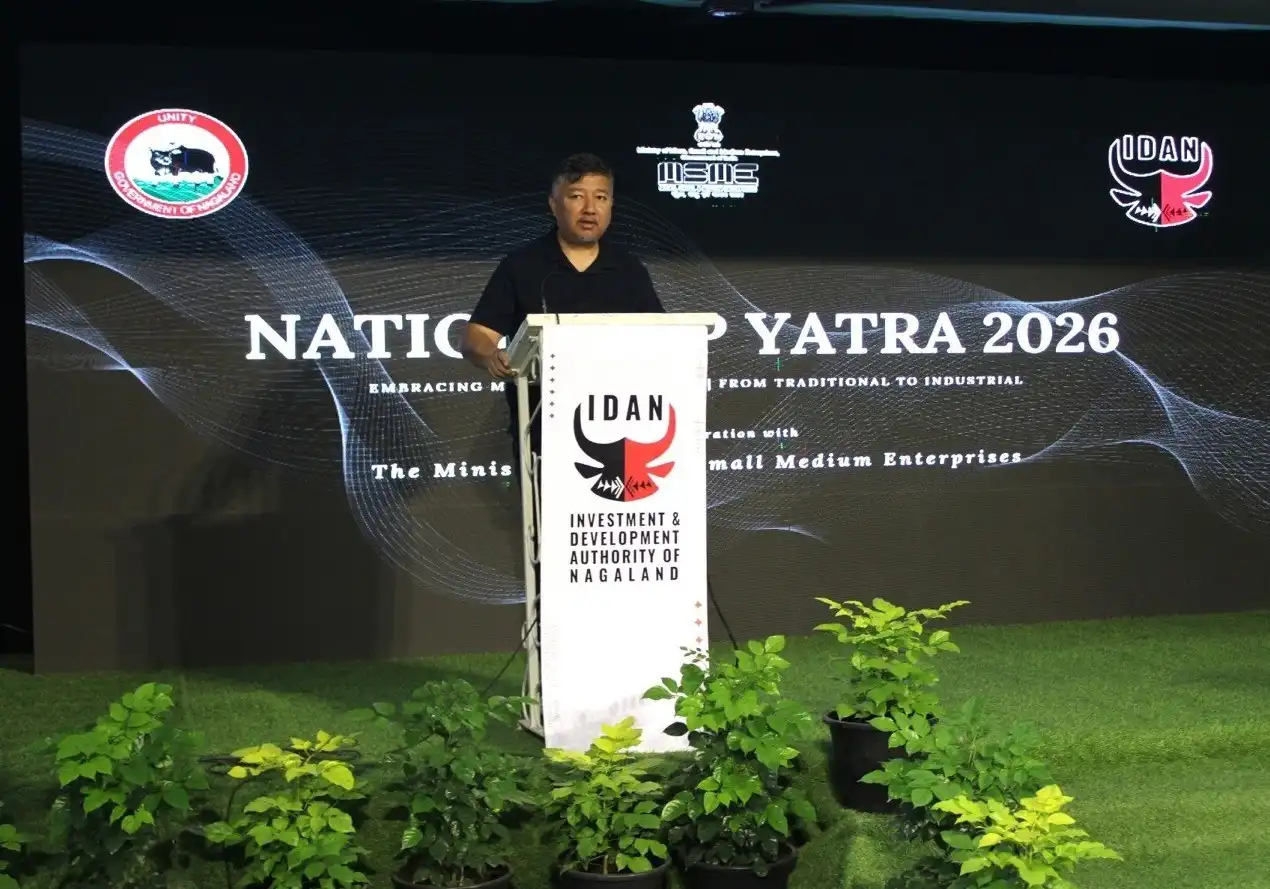
Metha urges youths to effectively use internet, digital resources
DIMAPUR: