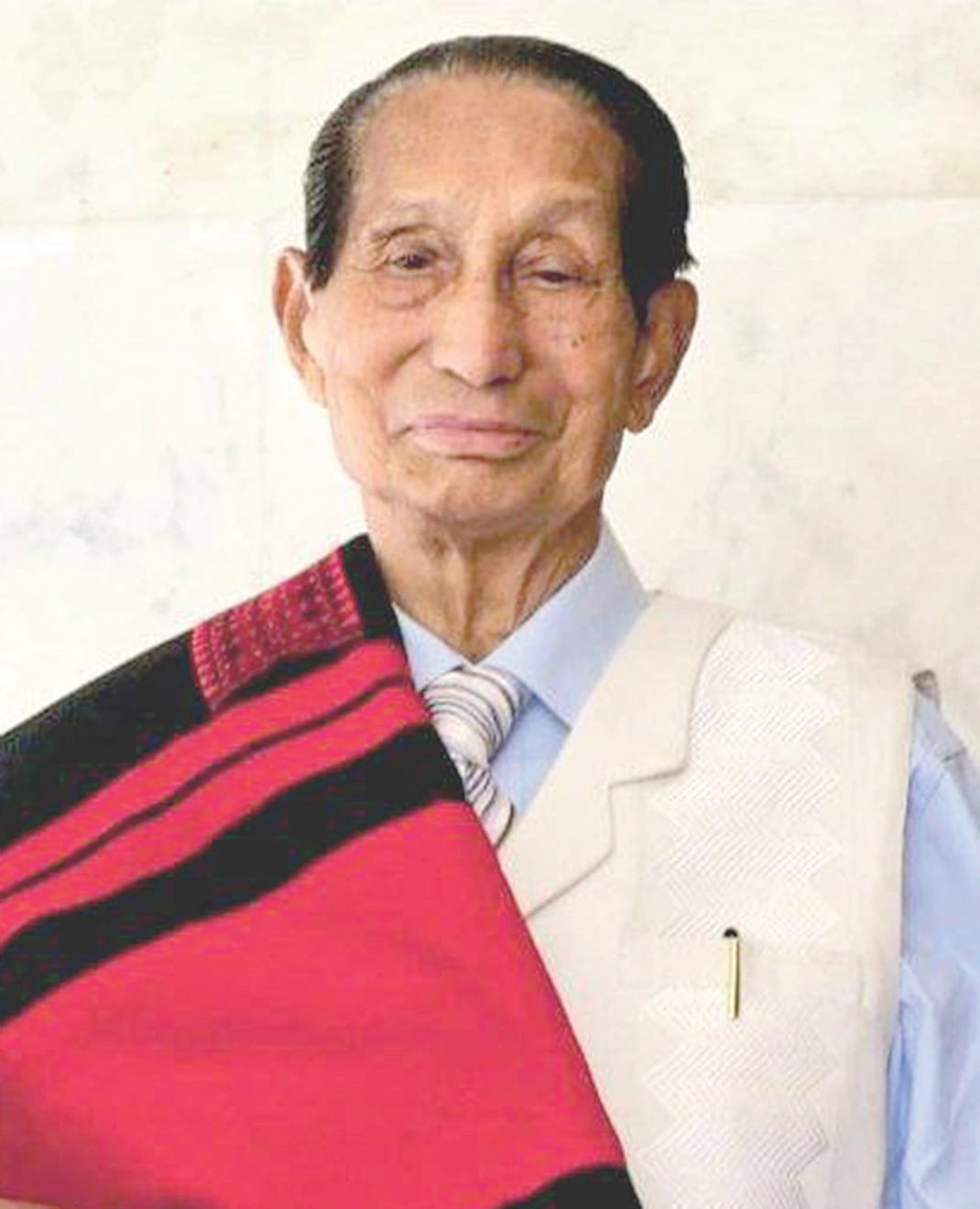
DIMAPUR, SEP 19 (NPN): Former Nagaland chief minister and governor Dr S.C. Jamir has asserted that the Naga political struggle originated and matured in Nagaland, arguing that the question of mandate and advocacy should be left to the people of Nagaland.
In a statement titled “Unveiling Bare Facts of Naga Political Struggle”, Jamir said the time had come to place before the public what he described as the “bare facts” of the Naga political struggle and correct what he termed “imaginary or exaggerated depictions” of the Naga political saga.
Jamir said the submission of a memorandum to the Simon Commission in 1929 was made by the people of Nagaland and represented the first explicit expression of their political aspiration. He said the Simon Commission, headed by Sir John Allsebrook Simon, was constituted to study constitutional reforms in India.
He said the Naga National Council (NNC) was formed at Wokha and that, following World War II, when several colonies under the British Empire began freedom movements, the Nagas of Nagaland also launched a movement for a separate homeland.
According to Jamir, no other Naga tribes outside Nagaland participated in the movement at that time, which he said “was born and fully matured in the soil of Nagaland”. He alleged that it had subsequently been “hijacked by alien elements”.
Jamir said the voluntary plebiscite conducted by the NNC under the leadership of A.Z. Phizo in 1951 was carried out by the people of Nagaland, then known as the Naga Hills, and that the mandate was given to the NNC.
He maintained that the NNC was not an underground organisation but “the political institution of the people of Nagaland”. However, he noted that the NNC had since fragmented into several factions, saying it had become difficult to identify the different groups and that the NNC had given rise to nearly 37 factions.
Recalling the period between 1946 and 1954, Jamir said the people of Nagaland had stood behind the NNC. He said the outbreak of armed conflict in the early part of 1955 engulfed Naga areas in violence and bloodshed.
Jamir questioned whether Nagas from southern areas had shown sympathy when the people of Nagaland were going through what he described as a period of “terrible agony”.
According to Jamir, armed conflict between Indian security forces and Naga underground groups had brought the Naga movement to the brink of a precipice. He said it was through the initiative of leaders from Nagaland that the hopes and aspirations of its people were salvaged.
Against this backdrop, he appealed to all sections of the Naga community to leave the issue of mandate and advocacy to the people of Nagaland, saying historical records would establish what he described as the “legitimate progenitor/precursor” of the Naga political struggle. Jamir also appealed to the NSCN (I-M) and NPF leadership to implement the Framework Agreement, saying people in Nagaland had become victims of what he termed “no solution” and were yearning for peace and normalcy.