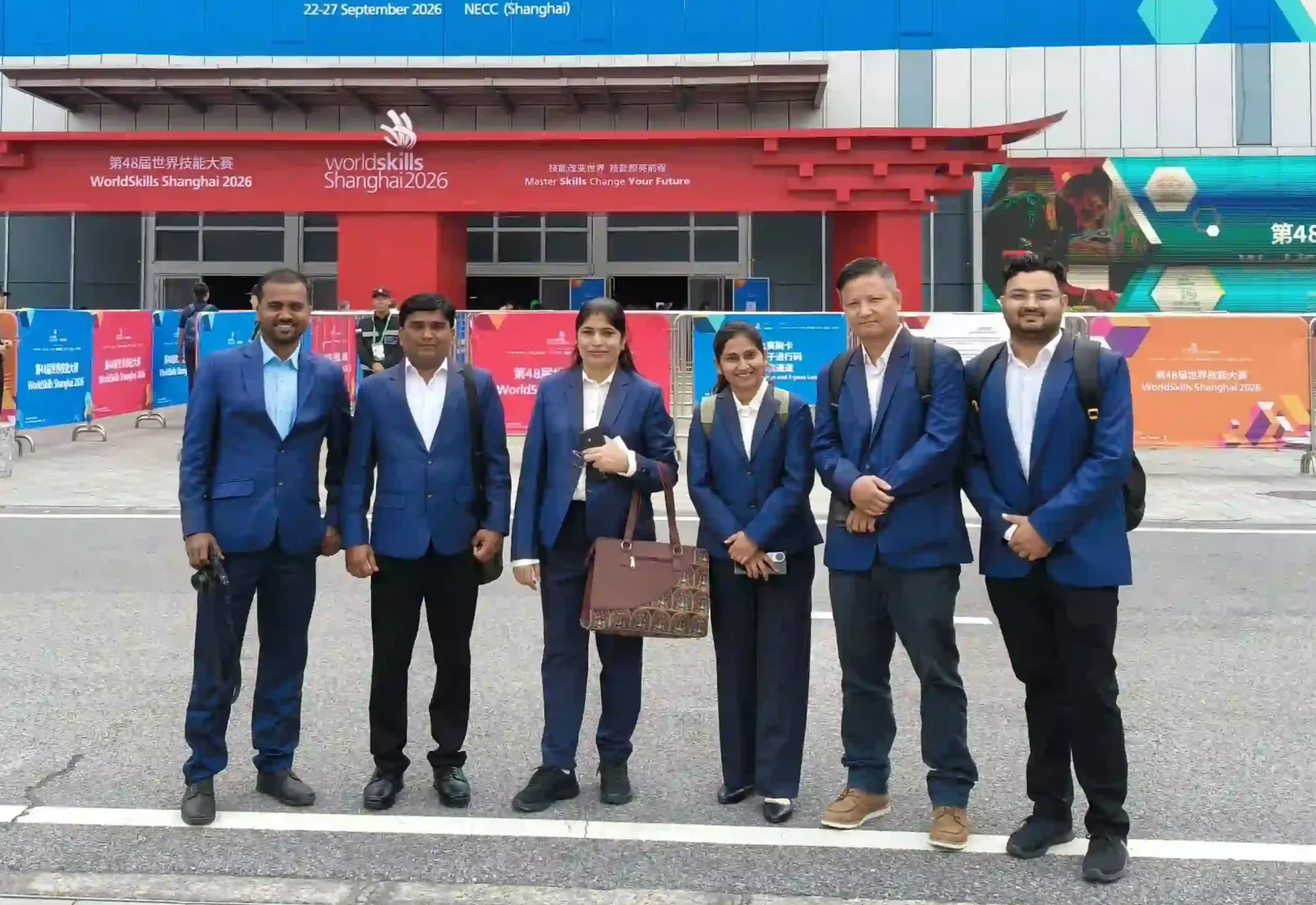
DIMAPUR: Metseruyi Tetseo, Vocational Trainer and Senior Instructor with Lend A Hand India (LAHI), Kohima, recently attended the 48th WorldSkills Competition held from September 22 to 27 at the National Exhibition and Convention Center (NECC), Shanghai, China.
Tetseo was part of a team of LAHI colleagues who travelled to Shanghai to witness the international skills competition and gain exposure to global practices in vocational education and skill development.
The competition brought together 1,385 competitors from 68 countries and regions across 64 skill categories, providing a global platform to showcase excellence in vocational skills, technical education and skilled professions.
During the visit, Tetseo observed a wide range of skill areas including CNC Milling, Carpentry, Plumbing and Heating, Water Technology, Chemical Laboratory Technology, Robotics and other advanced technical and industrial skills. The event offered valuable exposure to modern equipment, precision work, automation, digital technologies and the growing influence of Industry 4.0 in vocational education and workplaces.
The experience highlighted the importance of strengthening hands on learning among students, with emphasis on precision, safety, problem solving, quality standards, time management and independent practical work. It also provided insights into how international approaches to skills training could be adapted to the local context of vocational education in Nagaland, even where access to advanced equipment may be limited.
Following the WorldSkills programme, the visit also included cultural and historical exposure to Shanghai. Visits to The Bund, Yu Garden and other historic landmarks, along with modern commercial and technological districts, offered participants a broader understanding of China’s culture, heritage, architecture and rapid urban development.
The combination of technical exposure at WorldSkills and cultural learning made the visit a meaningful educational experience, offering a wider perspective on how skills, technology, culture and innovation contribute to the development of individuals and communities.
The experience is expected to contribute to future efforts in promoting practical, skill based learning among young people in Nagaland, with emphasis not only on modern technology but also on effective teaching methods, structured practical activities and opportunities for students to build confidence and professional skills.