
Securities and Exchange Board of India (SEBI) has underscored the need to strengthen financial literacy among Nagas, particularly the youth, stating that lack of awareness and interest continues to expose many to risks, including Ponzi schemes.
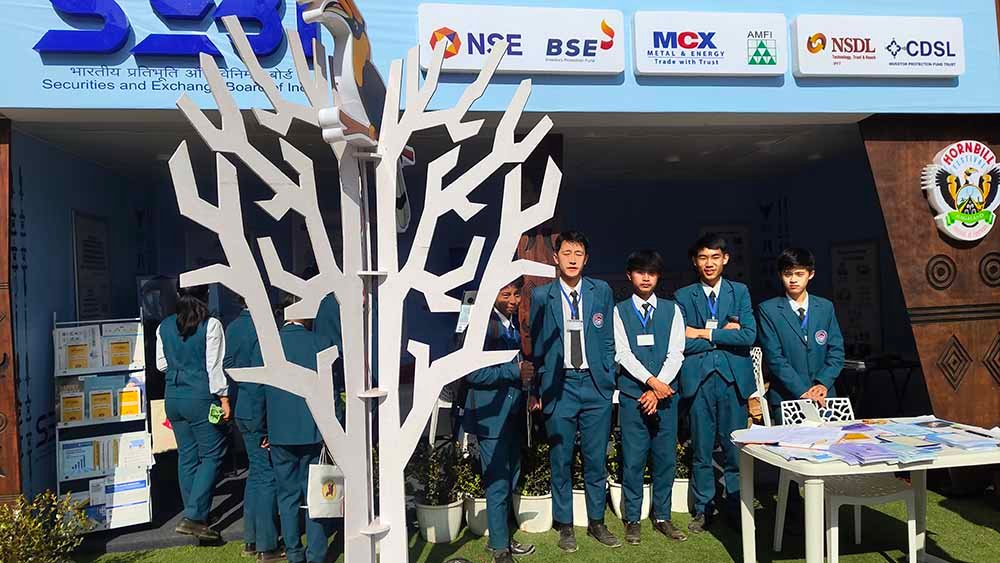
Speaking to Nagaland Post at the SEBI financial literacy stall set up at the Hornbill Festival, securities market trainer Chenio Lotha said the initiative, established in 2022, aims to educate visitors—especially locals—on basic financial management, investment avenues and fraud prevention. He noted that financial awareness in the State remained low, with many showing limited interest in learning about investments or savings.
According to Lotha, SEBI regularly conducts financial literacy programmes in government offices and educational institutions, focusing on investment basics, mutual funds, securities markets and identifying fraudulent schemes. At the Hornbill Festival, he said the SEBI stall distributes free booklets and engages visitors through interactive sessions and gift-based participation. “We have been receiving good response from local people,” he added.
On common financial mistakes, Lotha pointed out that though many youths currently lack earnings, the larger concern lies with working individuals—government employees, private workers and businesspersons—who often avoid learning about banking, insurance, pension schemes or investment products. He said many cite lack of money as a reason, while simultaneously seeking “quick money”, which makes them vulnerable to Ponzi and collective investment schemes. In most cases, early investors are shown high returns and more people join before promoters disappear with the collected funds, he stated.
Highlighting the importance of financial literacy for young people, Lotha said the Government of India has placed strong emphasis on nationwide financial education as it equips individuals to make informed decisions once they begin earning. He added that financial literacy is increasingly relevant in competitive examinations and that the financial sector offers significant job opportunities. For this purpose, the National Institute of Securities Markets (NISM), an entity under SEBI, conducts certificate courses on financial literacy for college and university students, he informed.
Explaining the benefits of financial awareness, Lotha said individuals who understand savings and investment options are better positioned to meet their financial goals. While fixed deposits or recurring deposits may offer around 6–7% returns annually, he pointed out that long-term investments in stocks or mutual funds can yield more than 20% if maintained over five to ten years. With inflation hovering around 7%, he observed that bank deposits often provide limited real gains and should be used for short-term goals, whereas long-term goals require investments in instruments offering higher returns.
Lotha also noted that financial literacy has been introduced as an optional subject in schools from Class 9 onwards.
At the higher education level, he said the University Grants Commission (UGC) has encouraged universities to incorporate financial education into degree programmes to further strengthen financial understanding among students.
Nagaland: Naga youths need financial literacy: SEBI official
CorrespondentKOHIMA, DEC 3 (NPN)