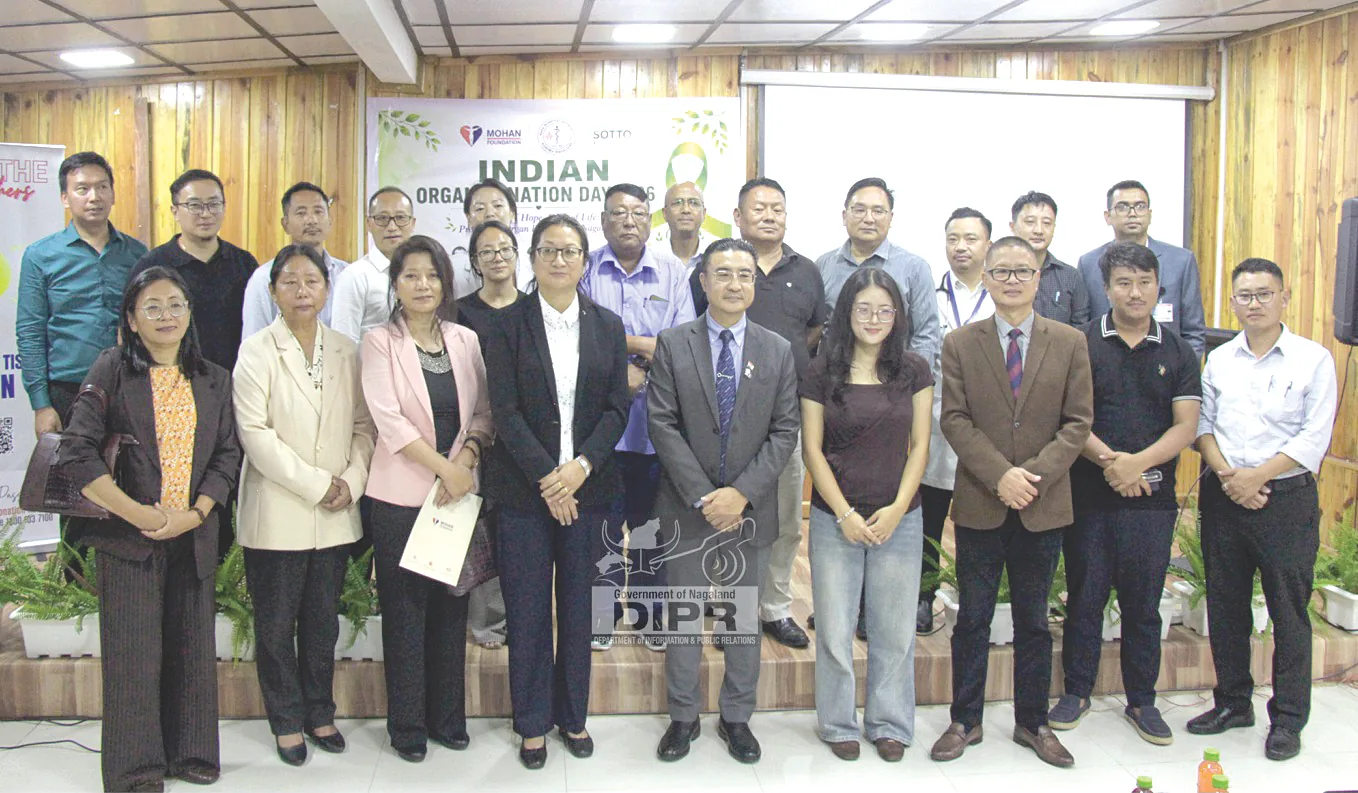
DIMAPUR, AUG 3 (NPN): Nagaland has taken a significant step towards introducing organ transplant services, with the Naga Hospital Authority Kohima (NHAK) initiating the process for registration and licensing to become an organ transplant centre.
The announcement was made by principal director of Health & Family Welfare, Dr. Mereninla Senlem, at the Indian Organ Donation Day programme organised by MOHAN Foundation in association with NHAK and State Organ and Tissue Transplant Organisation (SOTTO), Nagaland, on Monday. The programme was held under the theme, “Stories of Hope, Gifts of Life: Promoting Organ Donation in Nagaland.”
Addressing the gathering, Dr. Senlem said Nagaland was at a crucial stage in strengthening its organ donation and transplant services. Although transplant services are not yet available in the state, she said efforts were underway to establish the required infrastructure and build capacity.
She informed that NHAK had already initiated the registration and licensing process to begin organ transplant services, describing it as a major milestone reflecting the government’s commitment to expanding access to advanced healthcare.
Calling organ donation one of humanity’s noblest acts, Dr. Senlem said a single donor could save and transform multiple lives. Referring to the theme, she said every transplant represented a story of courage, compassion and generosity.
She highlighted the urgent need for greater public participation, noting that India continues to face a huge burden of kidney diseases, with around 90,000 patients awaiting organ transplants. While surgical expertise has advanced significantly, she said increasing public awareness and participation remained essential to bridge the gap between organ demand and availability.
Dr. Senlem acknowledged the contributions of the MOHAN Foundation, SOTTO Nagaland, NHAK, healthcare professionals and other stakeholders working to develop organ donation and transplant services.
She stressed that the success of organ donation depended not only on government agencies and healthcare institutions but also on active public participation. Urging greater awareness in families, communities and educational institutions, she encouraged people to learn about organ donation, pledge their support and spread the message across Nagaland. The programme also featured testimonies from organ donors and transplant recipients, along with the screening of a testimonial video.