
Yashi Wapang, along with another core team member of the Sanitation Support Team, shared their story on sanitation and waste management of the 26th hornbill festival sanitation.
Their team was created as a simple, collective effort to provide opportunities for local people around Kohima. Every day, 90-100 individuals join the work on daily wages, though some leave if they feel uncomfortable or tired in between.
The team includes mothers, youths, and youngsters, using their shared experiences as a means to educate participants while they work and learn during the process.
Currently, about 10-15 mothers and 70-80 youths are working at the station.
Their day begins early. They leave home at 5:00 am, arrive by 5:30 am, eat breakfast, and start work at 6:00 am. Dressed in protective gear—a vest and five layers of gloves—they begin by sweeping assigned areas before moving into collection and thorough segregation. They sanitize the waste areas twice daily and meticulously sort each waste bin to ensure proper maintenance.
Wet waste is the most commonly collected, followed by significant amounts of plastic—especially water bottles and disposable plates. Beer cans and glass alcohol bottles are also prominent.
All recyclables are sent to a recycling centre, with most other waste given to the Kohima Municipal Council (KMC). No medical waste has been collected so far, though they are planning to include it.
The team uses plastic garbage bags for collection, noting that avoiding plastic isn’t yet feasible due to a lack of alternatives. They believe the waste management skills learned here by the participants can be passed on to others in village areas.
They expressed concern over disappointing public waste management habits. “People often fail to use bins, and some even dispose of human waste in plastic bags or containers, leaving them in public spaces,” they mentioned .
They also mentioned that despite cleaning tirelessly from 6:00 am to 6:00 pm, their work often goes unnoticed.
They expressed their disappointment starting that public awareness of segregation into biodegradable and non-biodegradable waste remains low.
Team member Neiketou Theyo added that while they placed two dustbins in various morungs and areas, some stalls or morungs have taken them for personal use, and several bins have gone missing. On Sunday morning, they found human feces packed in a disposable tiffin near the entrance gate which was really disappointing.
He emphasized that waste management is challenging when public sensitivity toward the issue is virtually zero. Each day begins with a briefing, roll call, and then work.
They noted that the second gate is the dirtiest area in all of Kisama, where even volunteers and security personnel sometimes neglect the bins.
Their message to the public is,“Please respect where you are and use dustbins.” The team also urges everyone to learn and practice waste segregation.
Despite the challenges, they find moments of happiness and creativity—their waste disposal booth has been transformed into an impromptu Photo Booth-, adorned with a banner reading “Hornbill – Land of Festival,” cleverly concealing the waste while adding a festive touch.” We wanted to hide the waste so we created a banner to hide the collected bins but people started coming and clicking pictures using as a Photo Booth and it was great to see that.”he said.
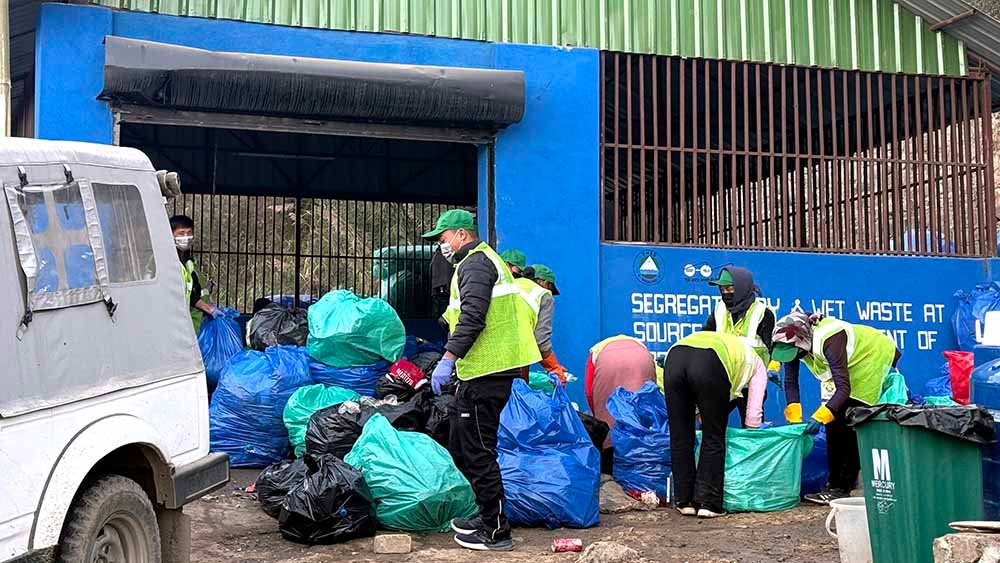
Nagaland: Sanitation Team highlights challenges at Kisama
CorrespondentKohima , Dec 7(NPN)