
A seminar on “orality and indigenous systems” of the Lotha community was held Saturday at the VDB Association Building, Wokha, jointly organised by Log Drum Foundation, Lotha Academy and Lotha Eloe Hoho, with focus on preserving oral traditions and safeguarding cultural identity.
Delivering the keynote address on “Oral Memory,” Log Drum Foundation director Mmhonlumo Kikon stressed that oral traditions were gradually losing importance in modern times. He said earlier generations relied on storytelling and meaningful conversations as primary mediums of instruction, transmitting knowledge, governance systems and customary laws without written texts or libraries. Cautioning that neglecting oral traditions could lead to cultural amnesia and identity crisis, he emphasised the importance of valuing institutions such as the Lotha Academy and apex bodies, mentioning that such seminars contributed to community growth. Kikon also shared that Log Drum Foundation aims to archive and document indigenous knowledge systems through structured conversations and research, and plans to collaborate with communities across the region.
Author Abeni TCK, speaking on “The Story of Our Threads,” highlighted weaving and traditional attire as expressions of identity. She recalled that weaving was once considered an essential skill for women, with prospective brides often asked if they could weave, since garments were not readily available. She admired the intricate designs and intelligence of earlier generations reflected in traditional attire. In the second session, former principal of ETC Jorhat Dr. Ezamo spoke on “From Oral to Written Tradition,” noting that history, customs and language were preserved through storytelling, songs and conversations. While acknowledging the strength of oral foundations, he stressed the need to document grammar, vocabulary and expressions in written form to prevent loss of knowledge.
Ex-chairman of the Lotha Literature Committee, Thungjamo Tsanglao, spoke on traditional tiger hunting practices, explaining how ancestors organised hunts to protect livestock and humans. He described symbolic rituals such as tying the tiger’s mouth to prevent it from “uttering” names, reflecting communal trust and traditional beliefs.
On village formation and historical roots, Mount Tiyi College associate professor Dr. Libemo Kithan shared that symbolic items like branches, water, seeds and eggs were taken from parent villages to bless new settlements, with songs composed for the occasion. Citing archaeological evidence, he stated that Wokha village was formed in 1103 based on carbon dating records.
Briefly referring to his recent appointment as NPP general secretary, Mmhonlumo Kikon said the party remained a regional political force representing voices of the Northeast and was working to strengthen its presence.
The seminar underscored the urgent need to preserve oral traditions, indigenous systems and cultural heritage to ensure future generations remain connected to their roots.
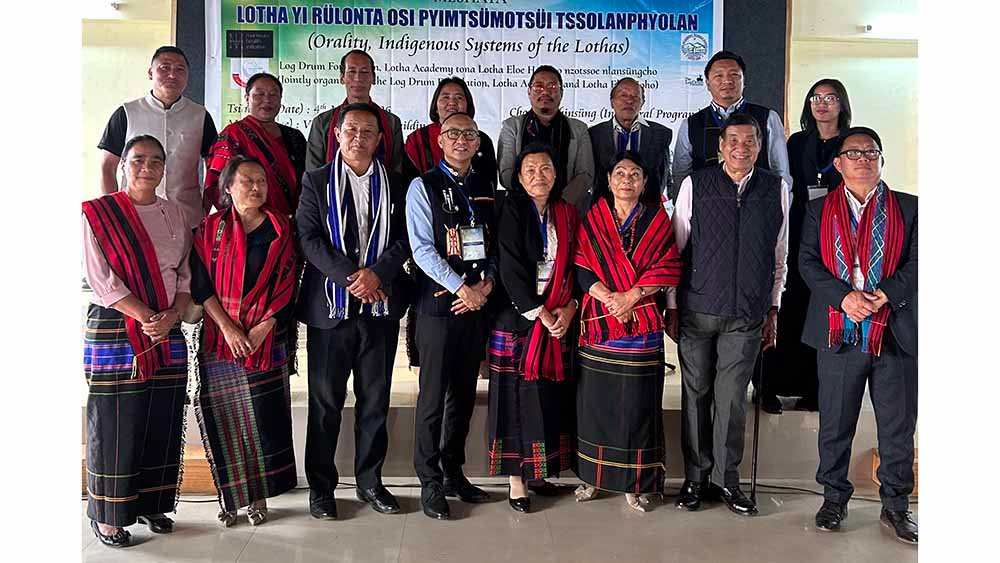
Nagaland: Seminar focuses on Lotha indigenous systems
CorrespondentWOKHA, MAY 4 (NPN)