
A state-level conference on the “implementation of Key Child Rights Legislation”: Education, Juvenile Justice and POCSO, organised by the National Commission for Protection of Child Rights (NCPCR) in collaboration with the Department of School Education (DSE), was held on November 20, at the Capital Convention Centre, Kohima.
Addressing the gathering, NSCPCR chairman (Retd.) Alun Hangsing stressed that in today’s digital age, science and technology play a major role in shaping children’s minds, often with both positive and negative consequences. He noted that this poses new challenges for all stakeholders, especially teachers, whose influence extends beyond academics to instilling values, ethics, social awareness, and a sense of responsibility in children. Hangsing highlighted that historically, Western nations recognized the importance of child rights as early as the 18th century, setting up mechanisms for protection and development that contributed significantly to their progress. He added that India too can achieve similar outcomes, as the government today is committed to ensuring the well-being and rights of children. He expressed hope that participants would gain valuable insights from the conference.
Commissioner secretary, DSE and SCERT, Kevileno Angami, outlined the ten fundamental rights of children in India, including the rights to survival, education, protection, participation, development, health, identity, expression, non-discrimination, and a safe environment. These rights, she said, ensure children grow up in a supportive and empowering environment, with guaranteed access to education, healthcare, and safeguards against exploitation or harmful practices. She emphasized the need for continuous efforts from government, communities, and individuals to protect and uphold these rights. Angami also highlighted four core child rights central to national policy: the right to education, protection, participation, and development.
Senior Consultant, NCPCR, KPJ, Gerald, shared key achievements of the Commission over the past six months, noting that state and district officials have played a crucial role in enabling progress at the grassroots. He said around 26,000 complaints related to violations of child rights were resolved, while more than 2,300 children were rescued from sensitive situations such as trafficking, and over 1,000 were repatriated to Child Care Institutions in their home districts. The Commission has also incorporated advanced technology to improve transparency and efficiency, reviewed school-related issues including corporal punishment and mental health support, and conducted workshops across the country on preventing mental harassment and enforcing Juvenile Justice and POCSO provisions. Inspection visits to shelter homes, CCIs, and observation homes were also undertaken to ensure standards of care.
Gerald highlighted a major initiative, NCPCR’s advisory for installing “Sugar Boards” in schools to raise awareness on sugar consumption and promote healthier lifestyle habits among children. The initiative, which was praised by the Prime Minister during “Mann Ki Baat,” has since been adopted by 14 states, with nearly six lakh schools participating. He noted that the effort not only improves health awareness but also encourages values like empathy, discipline, and teamwork within school environments.
Looking ahead, Gerald said the Commission is placing renewed focus on mental health support for children in the post-pandemic period, ensuring counselling is accessible in schools and child care institutions. NCPCR is also expanding the use of AI and digital platforms to combat online Child Sexual Abuse Material (CSAM) and streamline complaint management. With 16 digital portals already in operation, efforts are underway to make the NCPCR website more user-friendly and to develop uniform data standards for a consolidated national database of child-rights-related complaints.
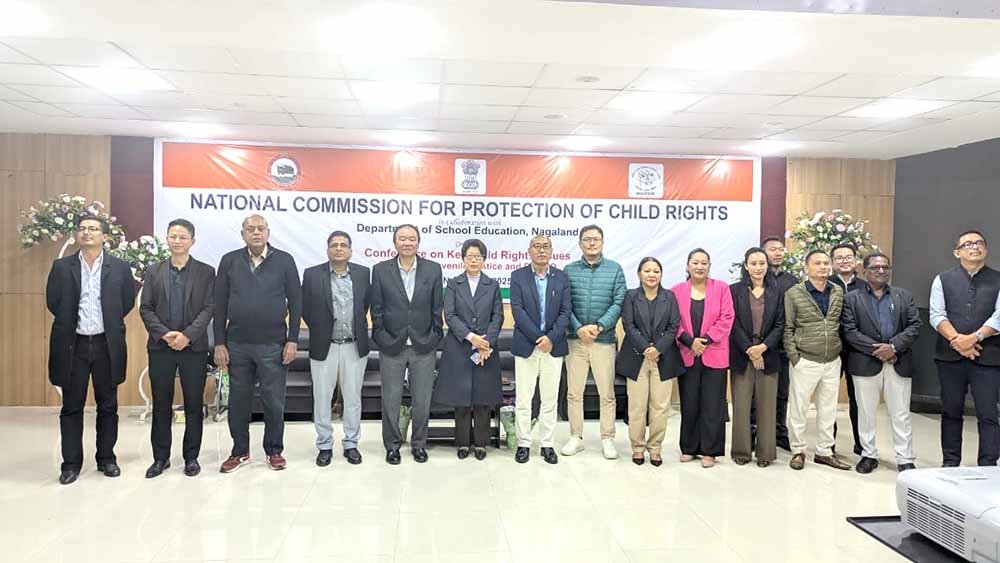
Nagaland State-level conference on child rights in Kohima
CorrespondentKOHIMA, NOV 20(NPN)